
 +86 15853145085

 National Service Hotline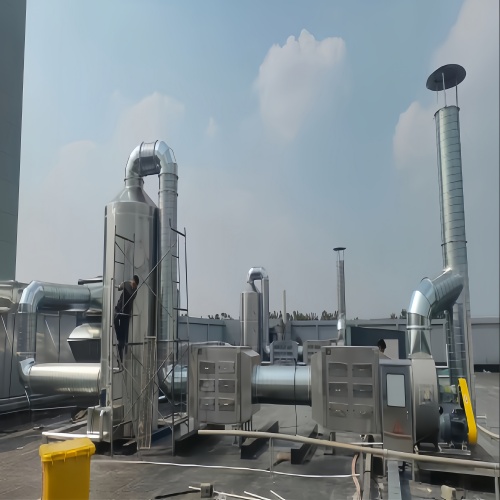
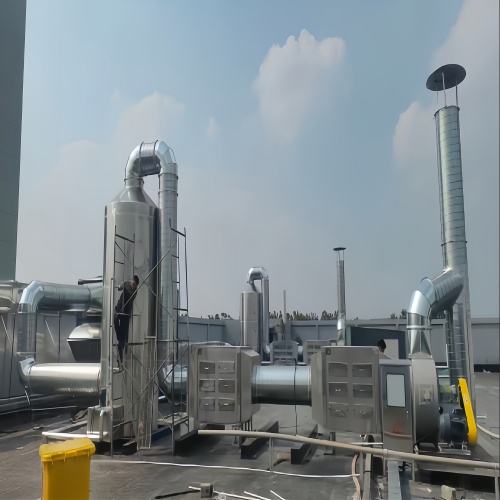
General introduction: A boiler flue gas spray tower is a common wet environmental protection equipment. It is mainly used to purify boiler flue gas and remove pollutants such as dust and sulfur dioxide through sufficient gas-liquid contact.
Detailed introduction is as follows:
Structural Composition
Tower body: Mostly vertical circular structure. Materials include PP, FRP and stainless steel, which can be selected according to flue gas properties and temperature.
Spraying system: Composed of circulating pumps and nozzles. The pump delivers liquid from the water tank to the spraying layer for atomization and downward spraying to contact with rising flue gas.
Packing layer: Located under the spraying device. Packing such as multi-surface hollow balls and pall rings increases gas-liquid contact area and reaction time to improve purification efficiency.
Demister: Installed at the top of the tower. Wire mesh type and baffle type are commonly used to remove entrained droplets and prevent secondary pollution.
Circulating water tank: Arranged at the bottom for storing spraying liquid. Some tanks are equipped with filtering and automatic water supply devices.
Working Principle
Boiler flue gas enters the tower through the air inlet section, evenly distributed by the gas distribution layer and rises slowly. The circulating pump transports water or chemical solution to the spraying layer. Atomized liquid droplets make counter-current contact with flue gas in the packing layer. Dust particles are captured by droplets, and acidic gas such as sulfur dioxide is neutralized by alkaline liquid. Pollutants are transferred into the liquid phase. Contaminated liquid flows into the sedimentation tank for recycling or standard discharge. The purified gas is dehydrated by the demister before emission.
Characteristics
Simple structure: Low manufacturing cost with convenient installation and maintenance.
Low operating cost: Low energy and water consumption; spraying liquid can be recycled.
Corrosion resistance: Adaptable to various corrosive flue gas with long service life.
Wide application range: Used for desulfurization and dust removal of boiler flue gas and other industrial waste gas treatment.
Application Scenarios
Widely applied in chemical, electroplating, coating and electronic industries. It treats hydrochloric acid mist, alkaline waste gas and boiler flue gas for desulfurization and dust removal.
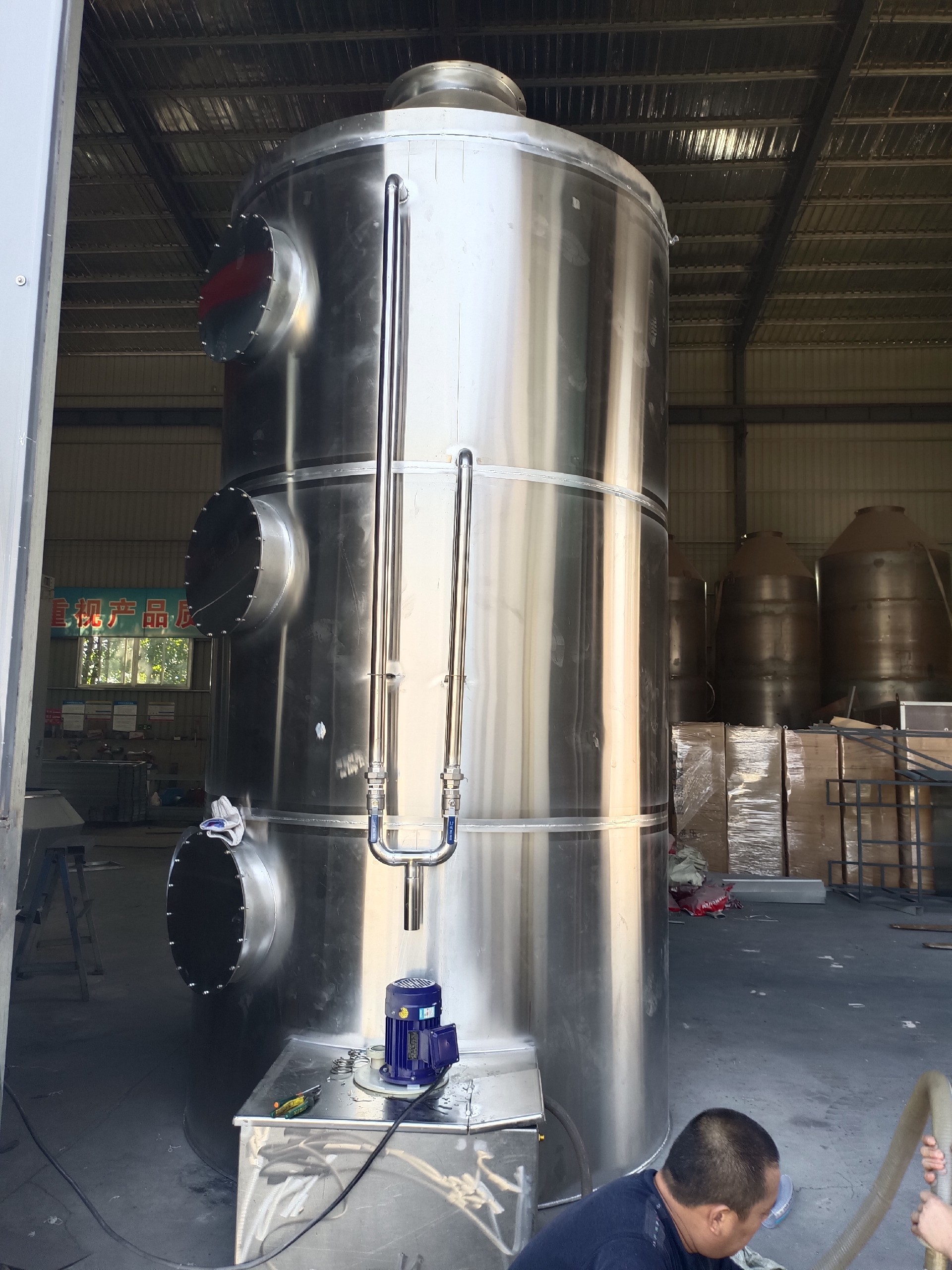
Stainless Steel Spray Tower and Rotating Flow Plate Water Spray Dust Removal Tower
General introduction: Stainless steel spray towers and rotating flow plate water spray dust removal towers belong to waste gas dust removal towers, which are widely used in industrial waste gas treatment.
Structural Composition
Main components: Air inlet section, gas distribution layer, packing layer, spraying section, dehydration and demisting layer, air outlet section, water tank, circulating pump, automatic dosing and PH monitoring device. The main material is stainless steel, while carbon steel, PP and FRP are optional.
Working Principle
Waste gas is pumped into the tower and flows through the packing layer. The washing liquid evenly covers the packing surface. Pollutants are absorbed into the liquid through physical adsorption and chemical reaction. Purified gas is dehydrated and discharged, and the washing liquid flows into the water tank for recycling or wastewater treatment.
Application Range
Commonly used in chemical, smelting, electroplating and printing industries. It treats sulfuric acid mist, hydrogen sulfide and other harmful gases, and removes paint mist in spraying industries.
Rotating Flow Plate Water Spray Dust Removal Tower
Structural Composition
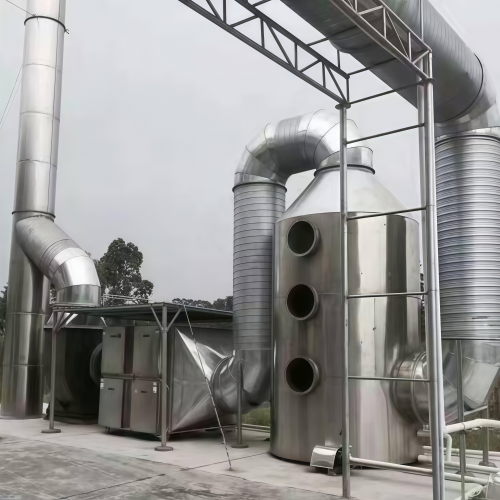
Main components: Rotating flow device, water spraying device and dehydration device. The core rotating flow device consists of two sets of tower plates. The spraying device adopts large-diameter nozzles, and the top dehydration device is composed of special dehydrators and dehydration rings.
Working Principle
Dust-laden gas enters the bottom cone and is washed by water bath. Dust particles combine with water mist and circulating spraying water. Dust is captured by water and separated by centrifugal force, then flows into the circulation tank by gravity. Purified gas is discharged outward.
Application Range
Suitable for industrial waste gas purification and black smoke desulfurization, including generator tail gas, boiler exhaust gas, paint mist and polishing dust treatment.
Waste Gas Dust Removal Tower
Definition and Classification
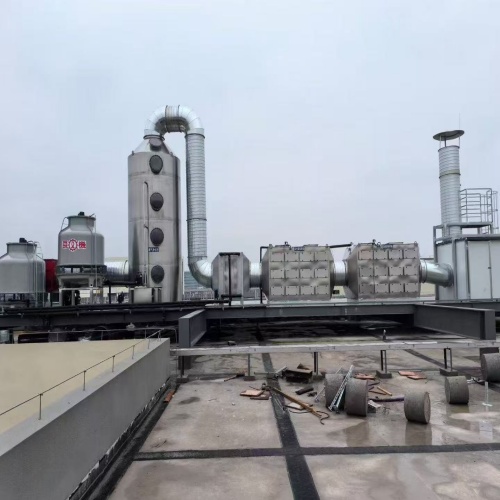
Waste gas dust removal tower is equipment for removing dust and other pollutants. According to working principle, it is divided into wet dust tower and dry dust tower. Stainless steel spray tower and rotating flow plate tower are wet-type equipment. Common types also include bag dust collector, electrostatic precipitator and cyclone dust collector.
Working Principle
Different types adopt different purification methods. Bag dust collectors filter dust through filter bags. Electrostatic precipitators adsorb charged dust on electrode plates. Cyclone dust collectors separate dust by centrifugal force. Wet dust towers capture particles and dissolve pollutants through gas-liquid contact.
Application Scenarios
Thermal power plants use electrostatic precipitators for high-temperature and large-flow flue gas. Metallurgical industry adopts cyclone and bag dust collectors for mineral crushing dust. Chemical and electroplating industries use stainless steel spray towers to treat corrosive waste gas.
Working Principle and Functions of Boiler Waste Gas Spray Tower
Core Working Principle
The boiler spray tower adopts gas-liquid mass transfer technology combining physical washing and chemical absorption for purification and cooling.
1. Waste gas introduction: High-temperature boiler flue gas containing SO₂, dust and NOₓ enters from the bottom and passes upward through the packing and spraying area.
2. Spray washing: The top spraying system atomizes absorbent such as limestone slurry and NaOH solution to form counter-current contact with rising waste gas.
3. Pollutant removal: Particulates are intercepted and settled; acidic sulfur dioxide is neutralized into salt substances; high-temperature flue gas is cooled by heat exchange.
4. Gas-liquid separation: Treated gas is dehydrated by the top demister and discharged. Contaminated slurry is precipitated and partially recycled, while the rest is discharged or recovered up to standard.
Main Functions
1. Flue gas desulfurization: Remove more than 90% of sulfur dioxide to prevent acid rain pollution.
2. Dust pretreatment: Intercept 60%-80% of large particles to reduce the load of subsequent dust removal equipment.
3. Flue gas cooling: Cool high-temperature flue gas from 150-200℃ to 100-150℃ to protect subsequent equipment.
4. Acidic gas removal: Neutralize HCl, HF and other acidic gases to reduce flue gas corrosion.
5. Emergency treatment: Adjust spraying volume and absorbant concentration to ensure stable emission under fluctuating working conditions.
National Standard Requirements
1. Conventional industrial boilers (GB 13271-2014): For coal-fired, oil-fired and gas-fired boilers, the emission limits of particulate matter, sulfur dioxide and nitrogen oxides are classified by usage status and key regions. Mercury compounds shall not exceed 0.05mg/m³, and the flue gas blackness shall not exceed Grade 1.
2. Large-capacity thermal power boilers (GB 13223-2011): Under ultra-low emission standards, smoke ≤5mg/m³, sulfur dioxide ≤25mg/m³, nitrogen oxides ≤35mg/m³.
Local Strict Standards
Regional standards are stricter than national standards. Zhejiang local standard (DB33/1415—2025) adds ammonia emission indicators. In Jiangsu and Shenzhen, the minimum NOₓ limit of new gas-fired boilers is as low as 15mg/m³.