
 +86 15853145085

 全国服务热线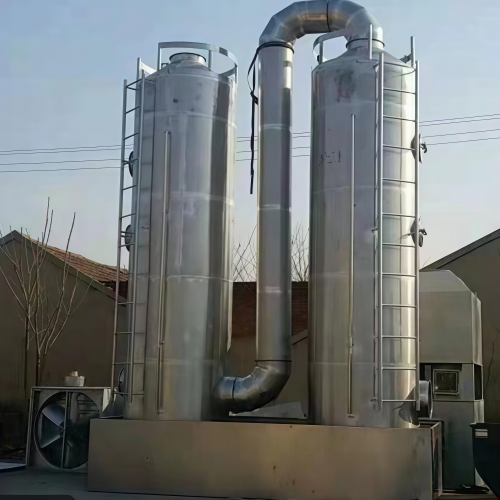
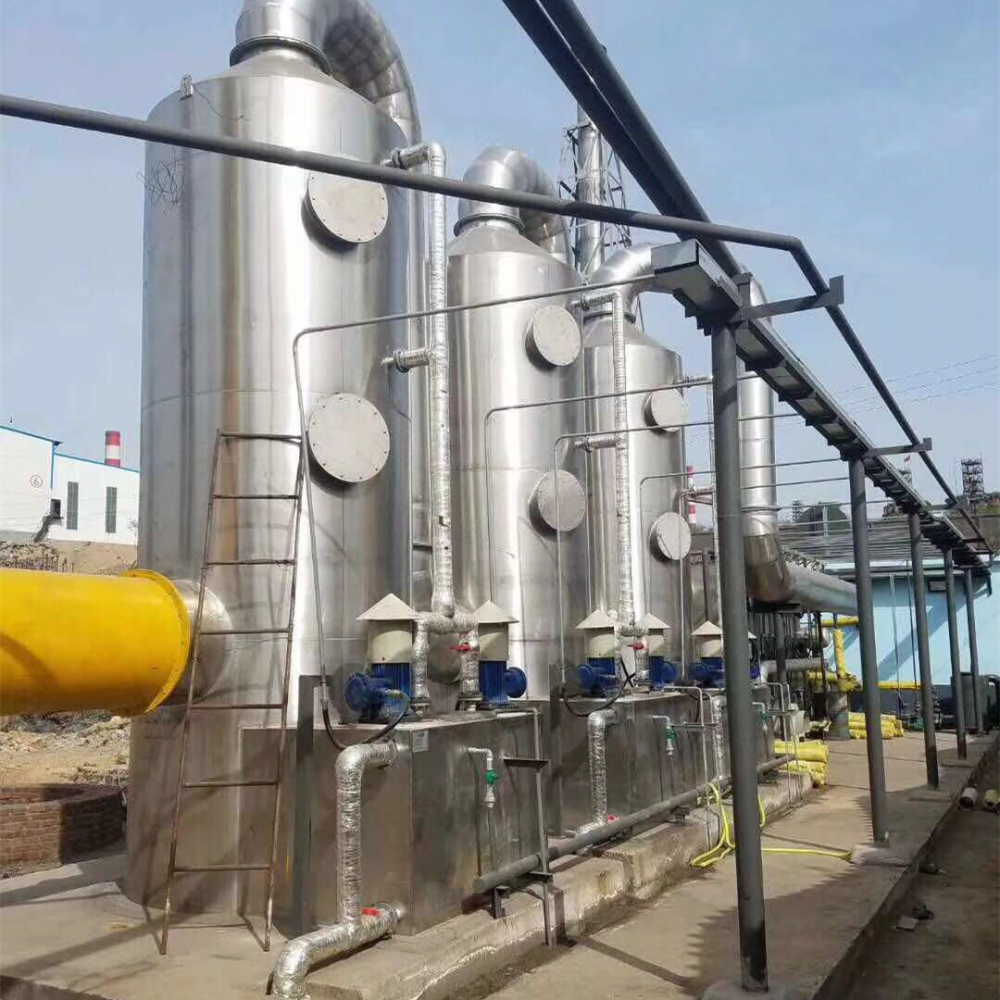
The spray tower is a commonly used wet purification process for quenching waste gas treatment. It relies on gas-liquid contact to remove pollutants through physical absorption or chemical neutralization of spray liquid. The process key points, applicable pollutants, design specifications and optimization suggestions are presented as follows:
Ⅰ. Main Pollutant Types of Quenching Waste Gas
Quenching processes, especially oil quenching and salt bath quenching, generate complex waste gas components, mainly including the following pollutants:
Oil-based Pollutants
Oil mist, lampblack and volatile organic compounds (VOCs) produced by high-temperature cracking of quenching oil, such as alkanes and aromatics.
Inorganic Pollutants
Acidic or alkaline gases generated during salt bath quenching, including hydrogen chloride (HCl), ammonia (NH₃) and nitrogen oxides (NOₓ).
Particulate Matter
Metal dust and salt dust entrained in the quenching process.
Ⅱ. Working Principle of Spray Tower for Quenching Waste Gas Treatment
Gas-Liquid Contact
Quenching waste gas enters from the bottom of the spray tower and makes countercurrent contact with absorption liquid (water, lye, surfactant solution, etc.) sprayed from the tower top.
Pollutant Removal
Oil mist and particulate matter: Removed by interception, condensation and washing of absorption liquid, forming droplets or flocs and settling with the liquid phase.
Acidic gas (HCl): Chemically neutralized with alkaline solution (such as NaOH solution) to generate salt and water.
Alkaline gas (NH₃): Neutralized with dilute sulfuric acid to form ammonium salt.
Gas-Liquid Separation
The purified gas passes through a top demister to remove entrained droplets and is discharged up to standard. Pollutant-containing liquid flows into the circulating water tank for recycling or external disposal after treatment.
Ⅲ. Selection and Key Design Points of Spray Tower
Spray Tower Type Selection
Ordinary Packed Tower: Suitable for working conditions with low pollutant concentration. Fillers expand the gas-liquid contact area to improve purification efficiency.
Swirl Plate Tower: Strong anti-blocking performance, suitable for quenching waste gas containing large amounts of dust and oil mist. The swirling structure strengthens gas-liquid mixing.
Venturi Spray Tower: Intense gas-liquid contact and high purification efficiency with relatively high pressure loss.
Absorption Liquid Formula
Oil mist-dominated treatment: Surfactants are added to reduce surface tension and improve oil mist capture capacity.
Acidic waste gas treatment: 5%~10% NaOH solution is adopted with regular pH detection and chemical replenishment.
Alkaline waste gas treatment: Dilute sulfuric acid is used to maintain pH within 2~4.
Key Parameter Design
Empty tower gas velocity: Controlled at 1.0~2.5m/s. Excessively high velocity causes liquid entrainment, while low velocity leads to insufficient contact.
Spray density: Generally 8~20m³/(m²・h) to ensure uniform liquid coverage on fillers or tower cross-section.
Residence time: Waste gas residence time in the tower shall be ≥3s for sufficient chemical reaction.
Demister: Baffle or wire mesh demister is selected with demisting efficiency ≥95% to prevent liquid entrainment in tail gas.
Ⅳ. Precautions for Operation and Maintenance
Regular cleaning: Oil and dust in quenching waste gas easily block nozzles, fillers and pipelines. Regular disassembly and cleaning are required to avoid rising system resistance.
Absorption liquid management: Monitor pH value, oil content and suspended solids of circulating liquid. Replace waste liquid timely to prevent secondary pollution.
Equipment anti-corrosion: The inner wall shall be treated with anti-corrosion materials such as rubber lining or FRP to resist acid and alkali corrosion.
Auxiliary treatment: For high VOCs concentration, single spray tower cannot meet emission standards. Supporting processes such as activated carbon adsorption and catalytic combustion are required for advanced treatment.
Ⅴ. Process Advantages and Disadvantages
Advantages | Disadvantages |
Simple structure and low investment cost | Limited purification efficiency for water-insoluble VOCs |
Convenient operation and stable performance | Oil-containing and salt-containing wastewater requires auxiliary treatment facilities |
Simultaneous removal of particles, acid-base gas and oil mist | Anti-freezing measures are required in winter |
Key Process Points of Spray Tower for Quenching Waste Gas Treatment
The core process points cover four dimensions: gas-liquid contact efficiency, absorption liquid adaptation, parameter control and daily maintenance, as detailed below:
Accurate Matching of Absorption Liquid Formula with Pollutant Types
Quenching waste gas has complex components, and absorption liquid shall be selected pertinently:
Oil mist and lampblack treatment: Non-ionic surfactants (dosage 0.1%~0.5%) are added to reduce surface tension and enhance oil mist condensation.
Acidic waste gas (HCl) from salt bath quenching: 5%~10% NaOH solution is used to maintain circulating liquid pH at 8~10 for neutralization.
Alkaline waste gas containing NH₃: Dilute sulfuric acid is applied to maintain pH at 2~4 and generate ammonium salt.
Composite pollutants: Surfactants are added for oil removal first, followed by segmented spraying for acid-base treatment to avoid oil interference.
Optimization of Equipment Structure and Parameters
Empty tower gas velocity: Controlled at 1.2~2.0m/s to balance contact time and liquid entrainment risk.
Spray density: Maintained at 10~18m³/(m²·h) to achieve full tower coverage without dead zones.
Gas-liquid contact time: Waste gas residence time ≥3s to ensure sufficient reaction.
Tower type selection: Swirl plate tower or Venturi tower is preferred for dusty and oily waste gas. Packed towers with polypropylene Pall rings are applicable for low-concentration pollutants.
Demister configuration: Wire mesh or baffle demister with efficiency ≥95% is installed to prevent secondary pollution and pipeline corrosion.
Pretreatment and Post-Treatment Matching
Pretreatment: Metal filter screens or cyclone separators are installed to remove large particles and oil droplets and avoid nozzle blockage.
Post-treatment: For high VOCs concentration, activated carbon adsorption or catalytic combustion is equipped for advanced purification.
Operation and Maintenance Management
Regular cleaning: Clean nozzles, fillers and pipelines every 1~2 weeks to prevent oil scaling and blockage.
Circulating liquid control: Monitor pH value, oil content and suspended solids. Replace waste liquid when oil content >500mg/L.
Anti-corrosion and anti-freezing measures: FRP, rubber lining or plastic lining is adopted; heating tapes are equipped in winter to prevent freezing.
Waste liquid disposal: Oil-containing wastewater is pretreated by oil separators and sedimentation tanks before being disposed by qualified institutions.
Equipment Design Precautions of Spray Tower
Considering the oil-containing, dusty and complex characteristics of quenching waste gas, the design focuses on material selection, structural optimization, parameter matching and auxiliary systems:
Material Selection: Corrosion Resistance and Easy Cleaning
Tower Body Material
FRP or PP is preferred for acid and alkali waste gas. Carbon steel with rubber lining is adopted for gas temperature >80℃ to avoid thermal deformation.
Spray Components
Nozzles are made of 316 stainless steel or PP. Aperture ≥2mm to prevent oil blockage.
Filler and Swirl Plate Material
Polypropylene Pall rings or cascade rings are used for fillers; 316 stainless steel with anti-stick coating is adopted for swirl plates.
Demister Material
Wire mesh demister uses PP or stainless steel; baffle demister adopts PP for easy disassembly.
Structural Design: Anti-Blocking and Easy Maintenance
Anti-Blocking Tower Type Priority
Swirl plate tower or unpacked tower is recommended for high oil mist and dust. Backwashing devices shall be equipped if packed tower is necessary.
Pretreatment Section
Detachable metal filter screens (5~10mm mesh) or small cyclone separators are installed at the air inlet to intercept large impurities.
Gas-Liquid Flow Direction
Adopt countercurrent flow. The conical liquid collection hopper at the tower bottom has an inclination ≥60° for smooth sludge discharge.
Maintenance Interface
Manholes (≥600mm), sight glasses and cleaning ports are reserved for daily inspection and maintenance.
Parameter Design Matching with Working Conditions
Empty Tower Gas Velocity
Controlled at 1.0~1.8m/s for oily waste gas to avoid droplet entrainment.
Spray Layer and Nozzle Layout
2~3 spray layers with spacing ≥600mm. Nozzles are arranged in plum blossom shape with spraying pressure of 0.2~0.4MPa.
Residence Time and Effective Height
Effective residence time ≥3.5s. Tower height is calculated based on gas velocity and residence time.
Demister Parameters
Demister wind speed is 2.0~3.0m/s. Wire mesh thickness ≥100mm to ensure demisting efficiency ≥95%.
Supporting System Design
Circulating Water System
The water tank is designed for 5~10min circulation volume with separation zones for sedimentation and oil removal.
Chemical Dosing System
Automatic pH monitoring and dosing devices are equipped for acid-base adjustment; surfactant dosing ports are reserved for oil mist treatment.
Waste Liquid Treatment System
The circulating tank is connected with oil separators and coagulation tanks. Waste liquid is treated and disposed by qualified companies.
Heat Preservation and Anti-Freezing Measures
Thermal insulation layers and heating tapes are installed for outdoor equipment to prevent liquid freezing in winter.
Safety and Monitoring System
Safety valves and vent pipes are installed; online monitoring interfaces are reserved for environmental supervision.
Treatment Effect of Spray Tower for Quenching Waste Gas
The purification performance varies for different pollutants, meeting emission standards for medium and low concentration quenching waste gas:
Purification Effect on Particulate Matter and Oil Mist
With pretreatment devices, the particle removal efficiency reaches 90%~98%. For oil mist, the purification efficiency is 85%~95% with surfactant added. Excessively high oil mist concentration (>500mg/m³) may cause liquid emulsification.
Purification Effect on Acid-Base Inorganic Gases
Acidic gases such as HCl are removed with efficiency of 90%~99% under pH 8~10. Ammonia removal efficiency is 85%~95% under acidic conditions. Automatic dosing systems are required for fluctuating gas concentration.
Purification Effect on VOCs
Single spray tower has limited VOCs removal efficiency (10%~30%). Combined processes such as activated carbon adsorption and catalytic combustion are required to achieve efficiency over 90%.
Key Factors Affecting Treatment Effect
Gas-liquid contact condition: Reasonable matching of gas velocity, spray density and residence time.
Absorption liquid formula: Select targeted chemicals according to pollutant characteristics.
Daily maintenance: Regular cleaning is essential to avoid oil blockage and efficiency decline.
Applicable Scope of Spray Tower for Quenching Waste Gas
The spray tower is suitable for medium and low concentration waste gas containing water-soluble or neutralizable pollutants:
Applicable Quenching Process Types
Salt bath quenching: Efficiently removes HCl, NH₃ and salt dust through neutralization and washing.
Oil quenching: Suitable for oil mist ≤500mg/m³ and metal dust.
Water-soluble quenching medium: Simple purification for trace organic waste gas and water mist.
Applicable Pollutant Concentration Range
Particulate matter / Oil mist: ≤800mg/m³.
Acidic gas: ≤1000mg/m³.
Alkaline gas: ≤800mg/m³.
Applicable Enterprises and Working Conditions
Suitable for small and medium-sized quenching enterprises. It can be used as pretreatment for composite waste gas and is applicable for limited workshop space.
Inapplicable Scenarios
Not applicable for waste gas dominated by high-concentration insoluble VOCs, sticky scaling pollutants, or continuously excessive temperature (>120℃).