
 +86 15853145085
In industrial production, the stable operation of deodorization and waste gas treatment equipment is directly linked to environmental compliance and production safety. Many enterprises entrust operation and maintenance work to professional third-party service providers. This model can not only cut management costs but also improve operation and maintenance efficiency. Why are an increasing number of enterprises inclined to outsource operation and maintenance? What exact values can third-party service providers deliver?
1. Professional teams ensure operational stability
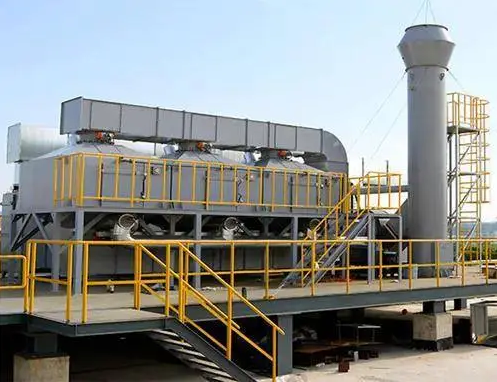
Deodorization and waste gas treatment equipment involves sophisticated process technologies, such as RTO regenerative thermal oxidation, RCO regenerative catalytic oxidation, and activated carbon adsorption-desorption catalytic combustion. Third-party operation and maintenance providers are staffed with seasoned technical teams who are well-versed in the operating characteristics, common faults and optimization solutions of various equipment. In-house operation and maintenance teams of enterprises are often restricted by staff turnover and insufficient technical reserves. In contrast, professional service providers deliver consistent and reliable technical support to ensure long-term efficient system operation.
2. Reduce overall enterprise costs
The operation and maintenance of deodorization and waste gas treatment equipment covers far more than daily operation, including equipment maintenance, spare parts management and energy consumption optimization. In-house management requires substantial human resources investment, as well as extra expenses on staff training, equipment wear and unexpected malfunctions. Leveraging large-scale operation and professional management, third-party providers optimize spare parts procurement and minimize energy waste, effectively lowering enterprises’ overall operation and maintenance expenses. Meanwhile, outsourcing enables enterprises to focus more on core businesses without diverting management resources to environmental issues.
3. Stronger compliance guarantee
With increasingly stringent environmental regulations, substandard waste gas emissions may lead to fines or even production suspension. Third-party operation and maintenance providers keep abreast of the latest environmental policies and adjust operating parameters in line with industrial standards to ensure the equipment always meets emission requirements. They also regularly submit operation reports and emission data to assist enterprises in environmental inspections. By comparison, internal teams may face delayed policy updates and insufficient practical experience, raising risks of abnormal emission data and regulatory violations.
4. Rapid response and fault troubleshooting
Sudden breakdowns of deodorization and waste gas treatment equipment may disrupt production schedules and even trigger environmental incidents. Most third-party providers offer 24-hour emergency response services to diagnose faults and deliver solutions in the shortest possible time. Supported by mature emergency procedures and sufficient spare parts inventory, they greatly shorten equipment downtime. In-house maintenance is usually limited by technical capabilities and resource allocation, resulting in slow fault repair and greater economic losses.
5. Continuous optimization and technological innovation
As technologies for deodorization and waste gas treatment keep upgrading, corresponding operation and maintenance strategies need timely adjustment. Having undertaken numerous waste gas treatment projects across diverse industries and enterprise scales, third-party providers accumulate abundant practical experience. They can put forward targeted optimization suggestions based on equipment operating data, such as adjusting air volume, upgrading spray systems and optimizing control systems, so as to boost treatment efficiency and reduce energy consumption. Such continuous technological upgrading capacity is hard to match by internal enterprise teams.
6. Alleviate management burdens
The operation and maintenance work includes daily inspections, data recording, equipment maintenance and other tedious procedures, which will greatly increase management pressure if undertaken entirely by enterprises. Third-party providers offer standardized and systematic operation and maintenance solutions covering personnel arrangement and data analysis. Enterprises only need to supervise final results without getting involved in specific implementation. This solution is especially suitable for small and medium-sized enterprises to obtain professional services at low costs.
Choosing third-party operation and maintenance services is not merely a temporary solution to equipment operation issues, but also a way to build a long-term and stable environmental management system. Supported by professional services, cost control, compliance assurance, rapid emergency response and technological upgrading, outsourced operation and maintenance has become the preferred choice for more and more enterprises.