Standardized Operation Procedures for Operation and Maintenance of Waste Gas Treatment Equipment
Author:中环绿洲Date:2026-05-18 14:24:1167
Information summary:
Waste gas treatment equipment serves as core infrastructure for industrial pollution prevention and control. Its operational performance directly determines whether enterprises can achieve stable and compliant emissions. A scientific and standardized operation and maintenance (O&M) process not o...
Waste gas treatment equipment serves as core infrastructure for industrial pollution prevention and control. Its operational performance directly determines whether enterprises can achieve stable and compliant emissions. A scientific and standardized operation and maintenance (O&M) process not only improves treatment efficiency but also effectively reduces equipment failure rates and environmental compliance risks. This article systematically introduces standardized O&M procedures for waste gas treatment facilities, covering daily inspection, periodic maintenance, emergency response, and other key aspects.
1. Daily Inspection and Recording of Waste Gas Treatment Equipment
O&M personnel shall conduct a comprehensive inspection of the waste gas treatment system every day, focusing on the operating status of key components such as fans, pumps, valves, and pipelines. Listen for abnormal noises, verify that pressure gauges, flow meters, and other instruments show readings within normal ranges, and check for unusual odors indicating leakage.
Inspect the spray tower for proper liquid level, blockage in the packing layer, and water accumulation in the demister. For activated carbon adsorption units, observe the pressure difference across the carbon bed to determine saturation. For baghouse dust collectors, monitor pressure changes to prevent bag breakage or clogging. All inspection results must be truthfully recorded. Any abnormalities must be reported and addressed immediately.
2. Periodic Maintenance of Waste Gas Treatment Equipment
Wear and aging are inevitable during long‑term operation. Regular maintenance is critical to ensuring stable performance.
Lubricate fan bearings monthly and adjust belt tension to an appropriate level.
Inspect water pump seals quarterly to prevent leakage.
Clean spray nozzles every two weeks to avoid scaling and maintain purification efficiency.
Drain circulating water tanks regularly to prevent sediment buildup.
Test the adsorption efficiency of activated carbon units every six months and replace saturated carbon promptly.
Conduct annual sampling tests on catalyst activity in catalytic combustion devices to ensure decomposition efficiency meets standards.
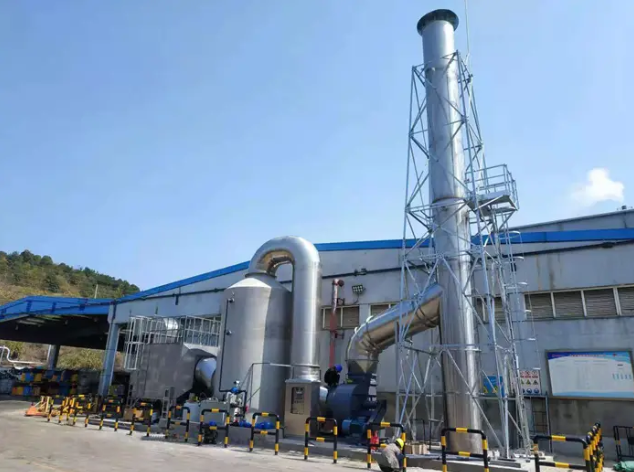
3. Emergency Response for Equipment Failures
Rapid response to unexpected failures is essential to avoid non‑compliant emissions.
Abnormal fan vibration may indicate bearing damage or dust buildup on impellers; shut down for inspection.
A sudden increase in pressure difference in the spray tower suggests packing clogging, requiring washing or replacement.
An abnormal rise in outlet concentration from activated carbon units indicates saturation; switch to spare carbon beds or replace carbon.
Unstable pressure in baghouse dust collectors signals potential bag failure or malfunctioning cleaning systems.
Detailed records must be kept for all fault responses, and root causes analyzed to prevent recurrence.
4. Data Monitoring and Analysis
Waste gas treatment systems are typically equipped with online monitoring systems that track real‑time emission concentration, air volume, temperature, and other parameters. O&M personnel must be proficient in data trend analysis to identify abnormal fluctuations and troubleshoot promptly.
Historical data should be regularly backed up and analyzed monthly to evaluate changes in treatment efficiency. Data not only reflects equipment performance but also serves as important evidence for environmental inspections. Ensure monitoring instruments are calibrated regularly to avoid data distortion.
5. Safe Operating Procedures
Waste gas treatment systems involve fans, motors, chemicals, and other hazards, making safe operation critical.
Isolate power and attach lockout/tagout signs before maintenance.
Test oxygen and toxic gas levels before entering confined spaces.
Install emergency washing facilities near acid and alkali storage areas.
Require operators to wear protective equipment.
Control dust exposure when replacing activated carbon.
Prohibit flammable materials near high‑temperature zones of catalytic combustion units.
Regularly verify the effectiveness of safety devices such as explosion vents and flame arresters.
6. Personnel Training and Management
A qualified O&M team is essential for stable facility performance. New employees must receive systematic training covering process flow, equipment principles, and emergency plans. Regular skill assessments ensure compliance with operating standards.
Establish a complete shift handover system with written documentation of critical information. Maintain full and traceable O&M records covering inspections, maintenance, fault handling, and all other activities. Clarify responsibilities to eliminate management gaps.
Operation and maintenance of waste gas treatment equipment is not simply about turning systems on or off. It is a systematic project requiring scientific management and standardized procedures. Standardized processes maximize equipment performance and ensure stable, compliant emissions. O&M personnel must possess professional expertise and a strong sense of responsibility to implement every operation effectively, thereby safeguarding the enterprise’s environmental compliance lifeline.

 +86 15853145085