
 +86 15853145085
Waste gas treatment equipment is an indispensable pollution control facility in industrial production. Various faults are inevitable during long-term operation. Mastering scientific troubleshooting methods helps quickly locate problems, shorten downtime and ensure compliant emissions. Below are common faults and corresponding solutions.
1. Excessive Emission Concentration
If the emission concentration exceeds the standard suddenly, first inspect the front-end waste gas collection system. Air leakage in ducts, displaced or blocked gas collecting hoods will reduce collection efficiency and weaken treatment effect.
If the collection system works normally, check the core treatment equipment. For activated carbon adsorption devices, saturated activated carbon will lose adsorption capacity and shall be replaced timely. For catalytic combustion equipment, deactivated catalysts will lower purification efficiency, so regular activity inspection of catalysts is essential.
2. Abnormal System Pressure Analysis
Fluctuations in fan and pipeline pressure indicate changed system resistance. Blocked filter bags of bag dust collectors and scaling inside spray layers of wet desulfurization towers will increase system resistance, causing higher fan current and even overload.
In such cases, shut down the equipment first to inspect key components, then clean or replace blocked filter bags and nozzles. A sudden pressure drop is usually caused by pipeline rupture or incorrect valve operation, and air leakage points shall be checked promptly.
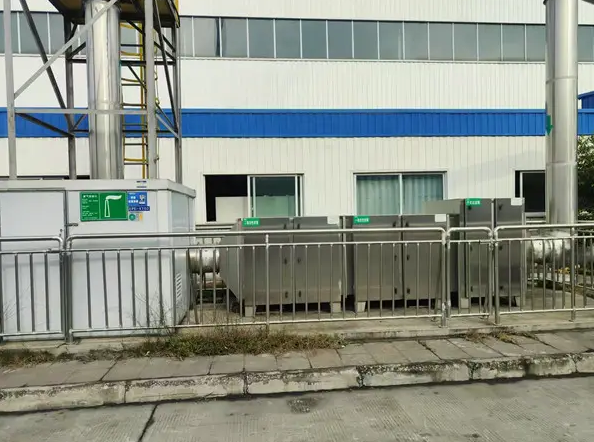
3. Troubleshooting of Failed Spray System
In wet waste gas treatment facilities, faulty spray systems directly impair gas absorption effect. Nozzle blockage is the most frequent issue, mainly caused by poor water quality and excessive sediments in circulating liquid. Regular nozzle cleaning and circulating liquid filtration are effective preventive measures.
Insufficient water pressure may also result from abnormal spray pumps. Check air leakage of pump bodies and wear of impellers, and replace sealing parts or the whole pump when necessary.
4. Electrical Control Fault Troubleshooting
Faults in automatic control systems may paralyze the entire waste gas treatment system. When the PLC module gives an alarm, check fault codes to quickly find out causes such as damaged sensors and loose signal wires, which can be verified by testing circuit continuity with a multimeter.
Frequency converter faults lead to abnormal fan speed. If resetting fails to solve the problem, the drive module may need replacement. Keeping control cabinets dry and regularly fastening wiring terminals can effectively reduce such failures.
5. Odor and Secondary Pollution Control
Persistent odor in treated exhaust gas usually results from incomplete chemical reaction. Insufficient microbial activity in biofilters will reduce VOCs decomposition efficiency; it is required to adjust humidity and pH value and add nutritional agents.
Aging UV lamps in photo-oxidation catalytic equipment produce insufficient free radicals and leave residual odor, so regular lamp intensity detection is necessary. Secondary pollution such as gas leakage and wastewater overflow is mostly caused by poor equipment sealing and unreasonable pipeline design, which shall be reinforced and reconstructed pertinently.
6. Judgment of Abnormal Noise of Waste Gas Treatment Equipment
Worn fan bearings produce sharp friction noise, which may cause rotor unbalance if not replaced in time. Broken reducer gears bring periodic knocking sound and can only be solved by shutdown disassembly and inspection.
Pipeline vibration noise is generally triggered by loose fixing brackets and disordered airflow, which can be alleviated by reinforcing brackets and installing buffer gaskets.
7. Preventive Maintenance Management Strategy
Most faults can be avoided through daily patrol inspection. Check the oil level of lubrication systems weekly, clean sensor probes monthly and calibrate instrument accuracy quarterly. These routine operations can greatly reduce unexpected failures.
It is also vital to establish complete operation records. Recording changing trends of pressure, temperature and emission data helps discover potential risks before they worsen.
There is no shortcut to the operation and maintenance of waste gas treatment equipment, yet scientific troubleshooting can get twice the result with half the effort. Deduce root causes from symptoms, locate faulty sections section by section, and eliminate defects according to equipment characteristics to fix most faults efficiently. Strict daily management and risk elimination at early stage guarantee long-term stable operation of pollution control facilities.