Operation and Maintenance of Water Spray Waste Gas Treatment Equipment, How to Choose Reliable Third-party Operation and Maintenance Service Providers
作者:中环绿洲时间:2026-05-18 14:21:0646次浏览
信息摘要:
The stable operation of water spray waste gas treatment equipment directly affects corporate environmental compliance and production safety. Many enterprises outsource the operation and maintenance of waste gas treatment equipment to third-party service providers to reduce management costs and impro...
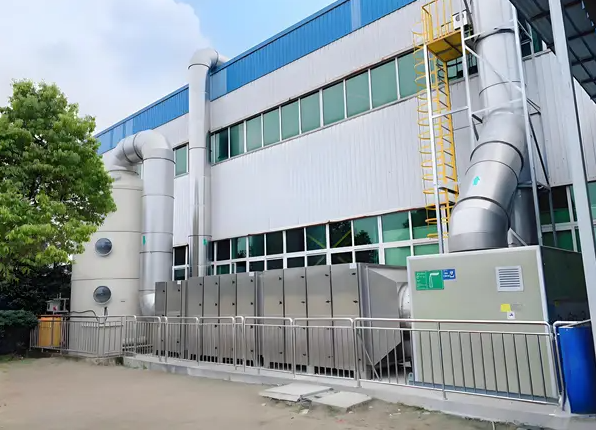
The stable operation of water spray waste gas treatment equipment directly affects corporate environmental compliance and production safety. Many enterprises outsource the operation and maintenance of waste gas treatment equipment to third-party service providers to reduce management costs and improve operational efficiency. However, service providers in the market vary greatly in professionalism. Choosing an unqualified supplier may lead to frequent equipment failures, excessive emissions, and even environmental penalties. How to identify a reliable third-party operation and maintenance provider? The key evaluation criteria are listed as follows.
1. Technical capability as the core criterion
A professional operation and maintenance team for water spray waste gas treatment equipment must be proficient in various waste gas treatment processes, including RTO regenerative thermal oxidation, catalytic combustion, condensation recovery, activated carbon adsorption, spray absorption, bag dust removal, and cartridge dust removal. It is essential to verify whether the technicians are familiar with these processes and understand industry-specific emission standards, which directly determine the feasibility of the maintenance plan.
Some service providers offer low quotations but lack sufficient technical reserves. When encountering complex failures, they rely entirely on equipment manufacturers, resulting in delayed responses. A truly professional team is capable of not only daily maintenance but also putting forward optimization suggestions for equipment aging and fluctuating working conditions, helping enterprises reduce overall operating costs.
2. Industrial experience determines operational reliability
Experienced service providers are more aware of industrial pain points. For example, chemical plants feature complex waste gas components with corrosive substances, while the spraying industry faces fluctuating VOCs concentrations that require flexible parameter adjustment. If the service provider has mature service cases in similar industries, the cooperation risk will be greatly reduced.
Enterprises may request past service records, especially maintenance cases from peer manufacturers. Conducting on-site inspections to observe actual equipment conditions and standardized data records is more credible than verbal introductions.
3. Response speed and emergency handling capability
Sudden failures of water spray waste gas treatment equipment may lead to production shutdowns and environmental violations, making response efficiency extremely critical. Confirm whether the provider offers 24-hour emergency support and maintains local resident teams. Service providers relying on temporary outsourced workers usually fail to ensure timely troubleshooting.
Clarify failure response time and spare parts supply cycle before signing contracts. Reliable suppliers formulate complete emergency plans to minimize corporate losses during unexpected malfunctions.
4. Digital and data-based management capability
Modern environmental operation and maintenance relies heavily on data. It is necessary to confirm whether the supplier adopts intelligent monitoring systems to track emission data, energy consumption, and equipment operating status. Manual inspection alone cannot effectively identify hidden risks.
High-quality operation and maintenance teams apply Internet of Things (IoT) technology to realize remote monitoring and early warnings, preventing minor faults from escalating into severe breakdowns. Enterprises can check historical operating data through the backend system to ensure transparent and controllable maintenance procedures.
5. Compliance capability and risk prevention
With increasingly stringent environmental policies, service providers must keep updated with the latest regulations. Verify whether they conduct regular staff training and master local emission standard updates. The contract shall clearly define liability allocation if corporate penalties are incurred due to improper maintenance.
The contract should specify service scope, including environmental monitoring, account ledger management, and inspection assistance, to avoid disputes caused by ambiguous responsibilities.
6. Cost performance rather than the lowest price
Cutthroat low-price competition is common in the environmental protection industry. However, excessively low quotations usually mean degraded service quality. Some providers cut costs by reducing inspection frequency and adopting inferior spare parts, eventually causing shortened equipment service life and excessive emissions.
A reasonable quotation covers labor costs, technical investment, and emergency guarantees. Enterprises are recommended to compare multiple proposals and select moderately priced suppliers with solid technology and transparent services for better long-term economic benefits.
Selecting a qualified waste gas treatment maintenance supplier should not merely depend on low prices or verbal promises. Technical strength, industrial experience, emergency response speed, digital management, and compliance awareness are all indispensable factors. Enterprises shall reduce cooperation risks through on-site investigations, case verification, and refined contract clauses. A reliable third-party operation and maintenance provider can ensure the stable operation of water spray waste gas treatment equipment, optimize energy consumption, and avoid environmental risks, ultimately achieving a win-win situation for both economic development and environmental protection.
水喷淋废气处理设备稳定运行直接影响企业的环保合规和生产安全。许多企业选择将废气处理设备运维工作交给第三方服务商,以降低管理成本、提高运行效率。然而,市场上服务商水平参差不齐,选错合作方可能导致废气处理设备故障频发、排放超标甚至环保处罚。如何辨别真正靠谱第三方运维服务商?以下几个关键点值得关注。
1.技术能力是核心
优秀水喷淋废气处理设备运维团队必须熟悉各类废气处理工艺,比如RTO蓄热式焚烧、催化燃烧、冷凝回收、活性炭吸附、喷淋吸收、布袋除尘、滤筒除尘等工艺,服务商的运维人员是否熟悉这些废气处理工艺?是否了解不同行业的排放标准?这些直接影响运维方案的可行性。
有些服务商虽然报价低,但技术储备不足,遇到复杂问题只能依赖设备厂商,导致响应滞后。真正专业的团队不仅能处理日常维护,还能针对设备老化、工况变化提出优化建议,帮助企业降低运行成本。
2.行业经验决定可靠性
经验丰富的服务商更清楚不同行业的痛点,例如化工企业的废气成分复杂,可能存在腐蚀性气体,喷涂行业VOCs浓度波动大需要灵活调整运行参数。如果服务商在类似行业有成功案例合作风险会大大降低。
企业在选择服务商时,可以要求服务商提供过往服务案例,尤其是同类型企业的运维记录。实地考察服务商的服务现场,观察设备运行状态、数据记录是否规范,比单纯听介绍更有说服力。
3.响应速度与应急能力
水喷淋废气处理设备一旦故障,可能导致停产或环保违规,服务商的响应速度至关重要。他们是否提供24小时应急支持?本地是否有常驻团队?如果服务商主要依赖外包人员紧急情况下很难保证及时处理。
签订合同前明确故障响应时间、备件供应周期等细节。靠谱的服务商通常会制定应急预案,确保突发问题时能快速介入减少企业损失。
4.数据化管理水平
现代环保运维离不开数据支持,服务商是否采用智能化监控系统?能否实时跟踪排放数据、能耗、设备状态?如果仅靠人工巡检,很难发现潜在问题。
优秀水喷淋废气处理设备运维团队会利用物联网技术,通过远程监控预警异常,避免小故障演变成大问题。企业可以通过后台查看历史数据,确保运维过程透明可控。
5.合规性与风险规避
环保政策不断收紧,运维服务商必须熟悉最新环保法规。他们是否定期培训员工?是否了解地方排放标准的变化?如果因运维不当导致企业被处罚,责任如何划分?
合同里需明确服务商的责任范围,例如是否包含环保监测、台账管理、协助应对检查等,避免因权责不清引发纠纷。
6.性价比不是唯一标准
低价竞争在环保行业很常见,但过低的价格往往意味着服务缩水。有些服务商通过减少巡检频次、使用劣质备件降低成本,最终导致设备寿命缩短或排放超标。
合理的报价应包含人员成本、技术投入和应急保障。企业可以对比多家服务方案选择技术扎实、服务透明的中等价位服务商长期来看更划算。
选择废气处理运维服务商,不能只看价格或口头承诺。技术实力、行业经验、响应速度、数据化管理、合规意识缺一不可。企业可以通过实地考察、案例验证、合同细化等方式降低合作风险。靠谱的第三方运维服务商不仅能保障水喷淋废气处理设备稳定运行,还能帮助企业优化能耗、规避环保风险,最终实现经济与环保的双赢。

 +86 15853145085