
 +86 15853145085

 全国服务热线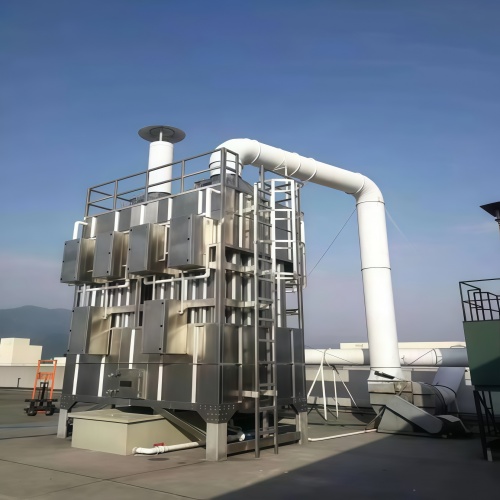
1. Working Principle
I. Core Working Process (Four-step Closed Loop)
1. Flue Gas Pre-treatment and Uniform Distribution
2. High-voltage Ionization and Dust Charging
3. Adsorption and Collection of Charged Dust
4. Ash Cleaning and Dust Recovery
II. Exclusive Adaptive Design for Foundry Flue Gas (Key Differences)
1. High-temperature Resistant Insulation Design
2. Wear-resistant Electrode Materials
3. Explosion-proof Safety Design
Application Cases of Electrostatic Precipitators for Foundry Flue Gas
I. Application Cases in Iron and Steel Casting Industry
1. Smelting Flue Gas Treatment for Large Iron Foundry
Enterprise Background
Technical Scheme
Source Control: Full workshop negative pressure gas collection + closed conveying system.
Pre-treatment: Dry cyclone duster (removes coarse particles larger than 10μm with efficiency ≥85%).
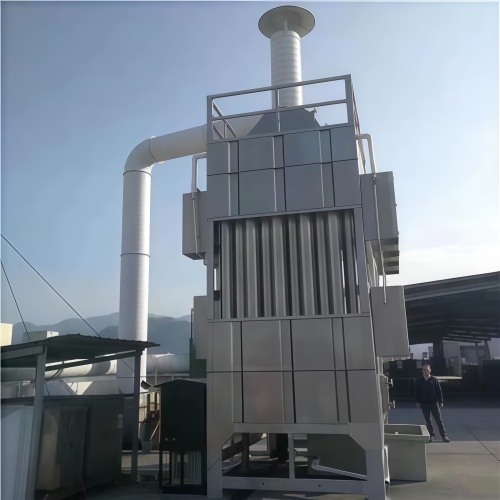
Core Equipment: High-temperature electrostatic precipitator (temperature resistance ≤300℃) with plate electrode and thorn wire structure.
Auxiliary System: Rapping ash cleaning + explosion-proof design (flame isolation valve + explosion venting sheet).
Treatment Effect
Dust collection efficiency ≥95%, outlet emission concentration drops below 5mg/m³ (national standard: 30mg/m³).
Workshop PM2.5 concentration decreases by 90%, and occupational disease complaint rate of employees reduces by 80%.
Annual activated carbon procurement cost is saved by 2 million RMB, and equipment energy consumption is reduced by 30% (about 700,000 RMB/year).
2. Renovation Project of Heavy Machinery Foundry
Before Renovation
Renovation Scheme
Remove original cyclone dusters and adopt pulse bag + electrostatic composite system.
The electrostatic unit adopts wide-spacing design (350mm) to adapt to large-size metallic dust.
Upgrade control system with intelligent spark tracking and automatic ash cleaning function.
Renovation Achievements
Dust concentration drops to 4.2mg/m³ to meet emission standards.
Annual risk capital of environmental penalty is saved by 1.08 million RMB with a payback period of only 3 months.
Equipment maintenance cycle is extended from once a month to once a quarter, and maintenance cost is reduced by 60%.
II. Application Cases in Aluminum Alloy Casting Industry
1. Waste Gas Treatment for Recycled Aluminum Melting Furnace
Project Challenge
Innovative Scheme
Combined process: Swirl tower pre-dedusting + high-voltage electrostatic advanced purification.
The electrostatic unit is equipped with self-cleaning electrodes with special surface treatment to reduce dust adhesion.
Add waste heat recovery system to preheat combustion air by utilizing flue gas waste heat.
Economic and Technical Indicators
Particulate emission concentration ≤5mg/m³, 6 times better than national standard.
No consumable cost, annual operation and maintenance cost is saved by 1.8 million RMB.
Annual energy-saving benefit of waste heat recovery is about 300,000 RMB with a payback period of 2.1 years.
2. Production of Automotive Aluminum Alloy Die-castings
Enterprise Scale
Process Pain Points
Solutions
Annular air suction hood is installed above the die-casting machine (capture efficiency ≥95%), matched with pipeline electrostatic grounding.
Treatment system: Combined unit of electrostatic oil remover + bag dust collector + activated carbon adsorption.
The electrostatic oil remover adopts a honeycomb structure, specially designed for mixed pollution of oil mist and fine metal powder.
Application Effects
Oil mist removal efficiency ≥98%, particulate emission ≤2mg/m³.
The annual recovery value of aluminum powder is about 250,000 RMB (purity > 95%, directly reusable for smelting).
Workshop air oil content drops from 50mg/m³ to below 0.5mg/m³, greatly improving working conditions.
III. Application Cases in Magnesium and Zinc Alloy Casting Industry
1. Explosion-proof Project for Magnesium Alloy Die-casting Factory
Safety Challenge
Customized Scheme
Adopt wet electrostatic precipitator (no spark hazard) equipped with nitrogen protection system.
Full-system anti-static design: Conductive rubber lining and grounding devices are installed for all pipelines.
Oxygen content monitoring device is added (alarm value < 8%), interlocked with fans and electrostatic power supply.
Safety Benefits
Dust concentration decreases from 25mg/m³ to 2mg/m³, eliminating explosion risks.
Magnesium powder recovery rate reaches 90% with an annual recovery value of about 150,000 RMB.
The equipment has operated safely and continuously for 5 years without any safety accidents.
2. Comprehensive Waste Gas Treatment for Zinc Alloy Die-casting
Project Features
Technical Route
The tubular electrostatic precipitator is adopted to adapt to the high specific resistance characteristics of zinc oxide fume.
Pt/Pd precious metal catalyst is selected with VOCs removal efficiency exceeding 95%.
Dual Benefits
Zinc fume emission concentration drops to 0.1-0.2mg/m³ (EU standard: 0.5mg/m³).
Annual zinc powder recovery capacity is about 5 tons with an economic value of 300,000 RMB.
Equipment maintenance cost is reduced by 30% due to zero filter bag consumption of electrostatic precipitators.
IV. Application of Typical Process Combinations
1. General Foundry Waste Gas Treatment Scheme (Recommended)
Applicable Scenarios
Optimal Process Configuration
Configuration Description
Air collection system: Top suction hood for smelting furnaces and side suction hood for pouring areas according to dust generation characteristics.
Pre-treatment: Cyclone dust remover removes coarse particles (>10μm) to reduce electric field load and prevent corona shielding.
Core equipment: Plate-type electrostatic precipitator with airflow treatment capacity designed as 15,000-20,000m³/h per ton of castings.
Ash cleaning mode: Mechanical rapping for anodes + electromagnetic rapping for cathodes; cleaning cycle adjusted from 1 to 4 hours according to dust characteristics.
Technical and Economic Indicators
Investment cost: About 1.2-1.8 million RMB for airflow of 100,000 m³/h.
Operating cost: Power consumption ≈ 0.3kW·h/1000m³, saving over 40% electricity compared with bag dust collectors.
Maintenance cost: Annual maintenance expense is about 50,000-80,000 RMB, mainly for equipment inspection and ash cleaning system maintenance.
Return on investment: Annual comprehensive benefit (cost saving + dust recovery) is about 600,000 RMB with a payback period of 2-3 years.
2. Special Scheme for High-temperature Complex Working Conditions
Applicable Conditions
Enhanced Configuration
Key Technologies
The electrostatic precipitator is equipped with high-temperature ceramic insulators and electric heating protection to prevent condensation and creepage.
Electrode material is upgraded to 2205 duplex stainless steel for both high temperature resistance and wear resistance.
Optimized ash cleaning system: Increased rapping intensity and shortened cleaning cycle (0.5-1 hour) to avoid high-temperature dust sintering.
Application Case
V. Selection Guidelines and Application Suggestions
1. Selection of Electrostatic Precipitator Types
Casting Type | Recommended Type | Core Advantages |
Iron/Steel Casting (High Temperature) | Dry Plate-type ESP | High temperature resistance (≤300℃), suitable for coarse dust particles |
Aluminum Alloy (Oil Mist Contained) | Wet ESP | Integrated oil and dust removal, prevent electrode adhesion |
Magnesium Alloy (Explosion-proof Demand) | Wet ESP + Nitrogen Protection | Zero spark risk, intrinsic safety |
Precision Casting (Ultra-low Emission) | Wide-spacing ESP + Rear Bag Filter | Efficiency >99.9%, emission <5mg/m³ |
2. Application Precautions
(1) Temperature Control
(2) Explosion-proof Safety
(3) Maintenance Optimization
Inspect the rapping device once a week to ensure ash cleaning performance.
Calibrate electrode spacing every quarter (allowable error ≤±5mm) to guarantee uniform electric field distribution.
Conduct high-voltage insulation test once a year to replace aging components in a timely manner.
VI. Investment Return Analysis
1. Annual Operating Cost Comparison of Different Dust Removal Schemes
Dust Removal Scheme | Consumable Cost (10,000 RMB/Year) | Electricity Cost (10,000 RMB/Year) | Maintenance Cost (10,000 RMB/Year) | Comprehensive Cost (10,000 RMB/Year) |
Electrostatic Precipitator | 0 (Almost no consumables) | 15-25 | 5-8 | 20-33 |
Bag Dust Collector | 30-50 (Filter bag replacement) | 25-40 | 8-12 | 63-102 |
Cartridge Dust Collector | 40-60 | 20-30 | 10-15 | 70-125 |
Wet ESP + Bag Filter | 10-15 (Only a small amount of chemicals) | 20-30 | 10-15 | 40-60 |
2. Typical Investment Return Case
VII. Summary and Selection Recommendations
1. Applicable Working Conditions Summary
High-temperature flue gas (>150℃) treatment, such as flue gas emitted from smelting furnaces and electric furnaces.
Working conditions with large flue gas volume (>50,000 m³/h) and fluctuating dust concentration.
Enterprises requiring continuous production with low maintenance cost and long service life.
Enterprises in environmentally sensitive areas with strict emission standards (≤10mg/m³) and long-term stable compliance requirements.
Recommended Selection Steps
Determine flue gas parameters: Temperature (judge pre-cooling demand), dust concentration (judge pre-dedusting demand), composition (determine equipment material).
Select equipment type: Dry type for high temperature, wet type for oil mist-containing flue gas, wet type plus protection system for explosion-proof requirements.
Confirm treatment air volume: Calculate based on 15,000-20,000m³/h·t castings or actual air volume measurement of dust generation points.
Select configuration: Standard type (economic type) → enhanced type (high temperature/humidity) → explosion-proof type (magnesium/aluminum alloy).
Supporting system: Pre-treatment (cyclone) → electrostatic dust removal → post-treatment (according to emission requirements) → intelligent control system.