
 +86 15853145085
With the action of catalysts, hydrocarbons in waste gas are oxidized into water and carbon dioxide at low temperature to achieve exhaust gas purification. The waste gas is firstly pretreated to remove most dust, particulate matter and grease. After pretreatment, the waste gas flows into the flame arrester.
Subsequently, the gas is delivered to the concentration system to separate air from waste gas. The separated air is discharged directly, while the waste gas proceeds to the next working procedure. The waste gas is heated to ignition temperature by the heat storage system and then enters the catalytic chamber for catalytic combustion.
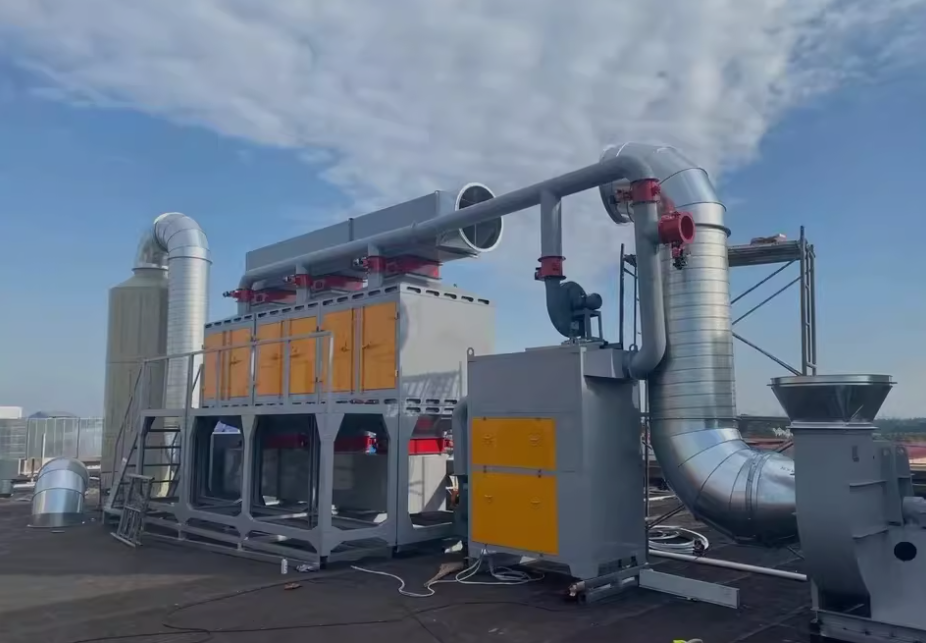
Industrial catalytic combustion reduces energy consumption by relying on catalysts. Electric heating is required to reach the ignition temperature in the initial operation stage, so the equipment is not suitable for frequent start and stop. The main disadvantages of catalytic combustion technology are listed below.
Self-thermal Balance System
For waste gas with high temperature and high organic content, the electric heater is only used for ignition. The heat generated by purified gas is recycled through the heat exchanger to maintain thermal balance during normal operation, without extra heat supplementation.
Major Technical Defects
1. High temperature easily causes damage to pipelines and equipment;
2. The heat regenerator is prone to caking, resulting in short service life;
3. Intense pressure fluctuation inside the furnace leads to massive heat dissipation, failing to achieve the expected energy-saving effect;
4. Heavy daily maintenance workload and high maintenance cost.
In fact, every waste gas treatment process has its own advantages. Catalytic combustion is applicable to continuously discharged waste gas. Intermittent operation will cause huge energy waste due to repeated preheating and unrecoverable reaction heat. For working conditions with high exhaust gas temperature (over 300°C), such as drying waste gas generated by enameled wires, insulating materials and paint baking processes, preheating devices can be cancelled.