
 +86 15853145085
1. Sources and Hazards of Organic Waste Gas
Organic waste gas is mainly generated from industries such as coating, printing, chemical engineering, plastics and rubber. Typical emission links include coating volatilization in spraying workshops, ink solvent dissipation during printing, synthesis and storage of organic raw materials in chemical plants, and plasticizer release during rubber and plastic processing. The waste gas is dominated by VOCs, including benzene, toluene, xylene, ethyl acetate and acetone, which are toxic, flammable and explosive. Long-term exposure may cause dizziness, nausea, fatigue and other respiratory and neurological discomforts. Some components are carcinogenic and increase cancer risks. In addition, discharged VOCs participate in photochemical reactions to form ozone and smog, damage the ozone layer and deteriorate air quality, causing dual harm to ecological environment and human health.
2. Organic Waste Gas Treatment Technology
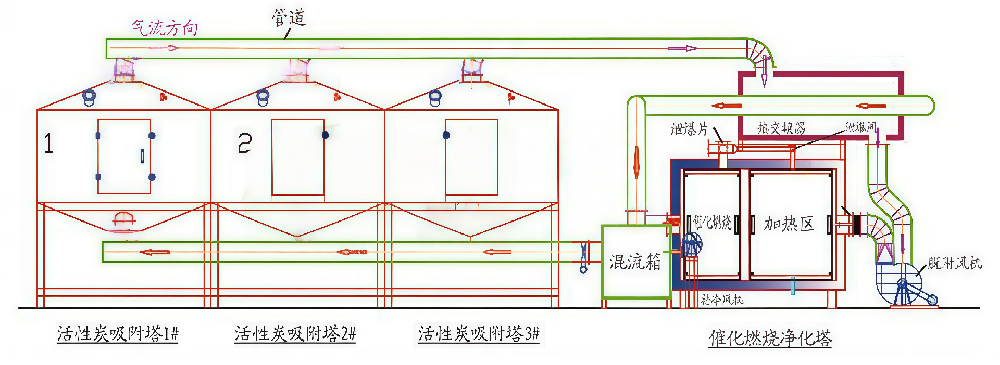
Considering the volatility, flammability and explosiveness of organic waste gas, the combined process of activated carbon adsorption + catalytic combustion is adopted. After collection, the waste gas firstly flows into the activated carbon adsorption tower to capture organic pollutants by porous carbon materials. When the carbon reaches adsorption saturation, hot air desorption is triggered to separate concentrated organic gas. The high-concentration waste gas enters the catalytic combustion furnace and undergoes low-temperature oxidative decomposition (250-350℃) under catalyst action. Finally, pollutants are completely converted into carbon dioxide and water, and the purified gas is discharged up to standard.
3. Detailed Treatment Process Description
Waste gas is collected through closed gas-collecting hoods and anti-corrosion pipelines to prevent gas diffusion and safety hazards. The collected flue gas passes through pretreatment equipment such as dry filters to remove dust particles and avoid carbon pore blockage, and then enters the adsorption tower filled with honeycomb activated carbon. Organic pollutants are trapped on the carbon surface during gas penetration, and the preliminarily purified gas can be discharged directly.
After carbon saturation, the system automatically switches to the desorption mode. Hot air generated by the heating furnace circulates inside the tower to desorb organic pollutants and form high-concentration waste gas. The concentrated gas is preheated by a heat exchanger and then sent to the catalytic combustion furnace. With precious metal catalysts such as platinum and palladium, organic substances are oxidized into harmless carbon dioxide and water. The reaction heat is recycled by the heat exchanger to preheat subsequent flue gas, greatly reducing overall energy consumption.
The purified gas is cooled by the heat exchanger and discharged through the exhaust funnel. The system is equipped with online temperature and concentration monitors to record operating parameters in real time. Once the temperature or concentration exceeds the threshold, alarm and emergency devices will be activated automatically to ensure safe and stable operation.
4. Advantages of Waste Gas Treatment Equipment
High purification efficiency: The removal rate of common organic pollutants such as benzene, toluene and xylene exceeds 98%, fully complying with local VOC emission standards.
Low operating cost: Waste heat recovery technology reuses combustion heat for gas preheating to reduce fuel consumption. Activated carbon can be regenerated and reused through thermal desorption, lowering material replacement cost.
High safety performance: Equipped with explosion-proof, flame-retardant and pressure relief devices. The PLC automatic control system realizes unmanned operation of adsorption, desorption and combustion processes to eliminate flammable and explosive risks.
Wide application range: Suitable for medium-and-low-concentration and large-air-volume organic waste gas. It meets treatment demands of coating, printing, chemical and other industries, and supports customized design.
No secondary pollution: The final products of purification reaction are carbon dioxide and water without any secondary pollutants, conforming to green environmental protection concepts.
5. Engineering Application Case
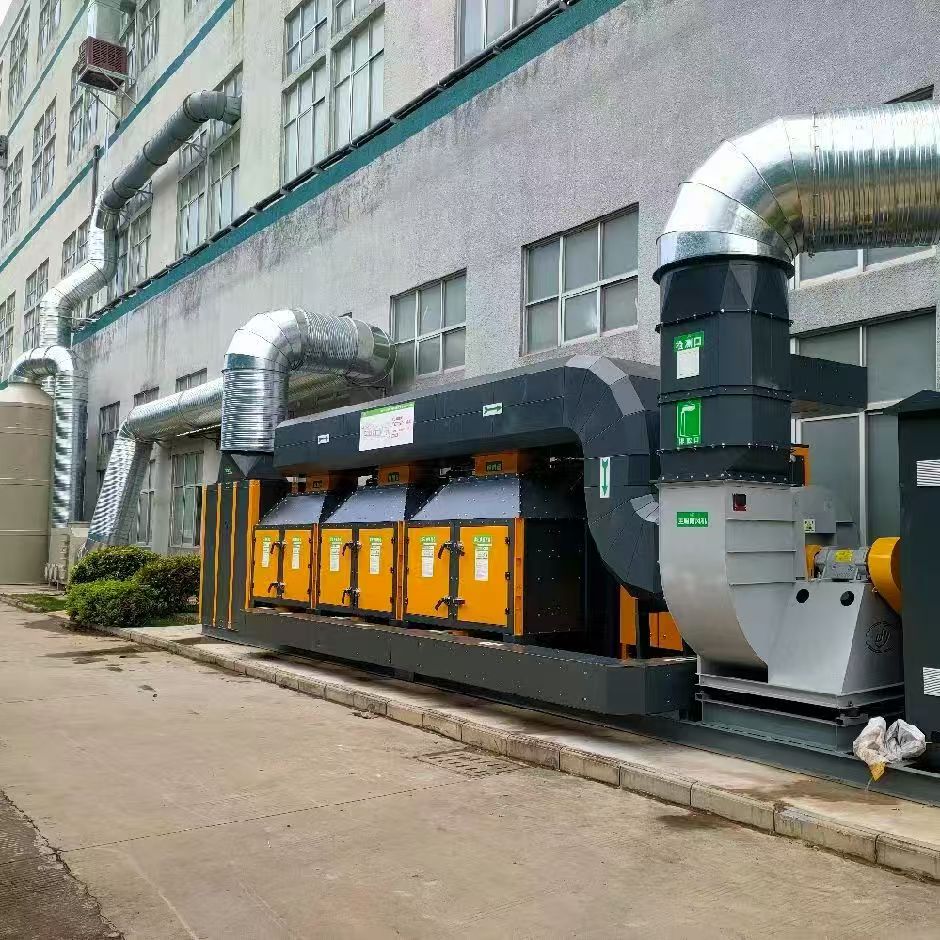
A large automobile parts spraying factory produces spraying waste gas with an air volume of 30,000 m³/h. The concentration of toluene and xylene ranges from 150 mg/m³ to 200 mg/m³. After adopting the combined adsorption and catalytic combustion process, the organic removal rate remains steadily above 98.5%. The final concentration of toluene and xylene is lower than 2 mg/m³, fully meeting local emission requirements. Pungent odor in the workshop is completely eliminated, and the working environment is significantly improved. The enterprise successfully passed special environmental inspections.
If you need customized organic waste gas treatment equipment and engineering design solutions, please contact Zhonghuan Lvzhou Environmental Protection. We provide professional technical consultation and equipment selection suggestions for industrial customers.