
 +86 15853145085
A large amount of organic waste gas containing benzene, alcohol, ketone and other volatile substances is discharged during industrial production, which endangers workers’ health and causes environmental pollution. Since the 1980s, catalytic combustion devices have been widely applied for waste gas treatment and have achieved remarkable treatment effects in China. However, potential safety risks still exist in the design, manufacturing and application processes. Fires and explosion accidents have occurred in Beijing, Shanghai, Shenyang and other regions due to inadequate safety measures. Therefore, sufficient attention must be paid to the safe application of catalytic combustion equipment.
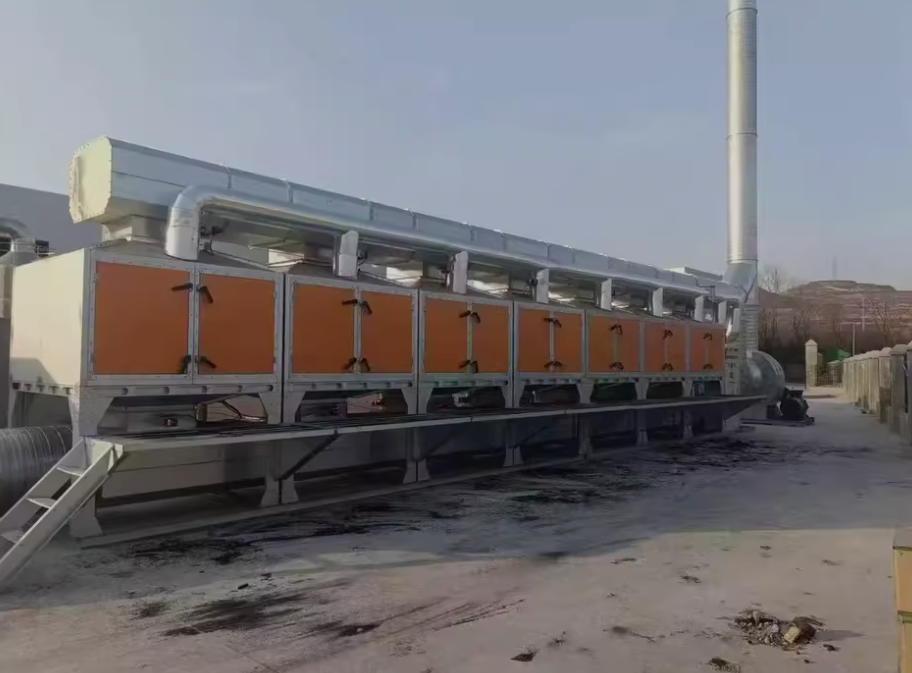
Improper operation may lead to severe accidents such as fire and explosion. Unified concentration control standards and design specifications for catalytic combustion waste gas treatment shall be formulated. In addition, other technical safety risk factors are analyzed as follows:
1. Relationship Between Explosion Lower Limit and Temperature
Generally, higher temperature accelerates chemical reaction rate and expands the explosion concentration range. Excessively high waste gas concentration will cause temperature rise inside the catalytic combustion device. Most domestic equipment lacks automatic gas concentration detection and control systems. The actual lower explosion limit at high temperature is lower than the standard data provided in equipment manuals. In addition, uneven gas mixing may cause local concentration to exceed the real high-temperature explosion limit, resulting in explosion hazards.
2. Combustion Calorific Value of Organic Waste Gas
Under the same lower explosion limit, most organic waste gas components have approximately equal combustion calorific value. Every 1% lower explosion limit contains a calorific value of 18.68 kJ/Nm³. If all heat is used for gas self-heating, every 1% explosion limit concentration can raise the gas temperature by 15.3°C. When the waste gas concentration reaches 25% of the lower explosion limit, significant temperature rise will occur inside the equipment.
在工业生产中,有大量的含苯类、醇类、酮类等废气散发。危害工人的健康并污染环境。80年代以来,催化燃烧装置作为一种治理废气污染的手段,在我国取得了相当大的成效。但是,在催化燃烧装置的设计、加工、应用过程中,还存在一些潜在的不因素。在北京、上海、沈阳等地就曾出现过因措施不得力而发生起火、爆炸的事故。因此,应用催化燃烧装置的问题应引起足够的重视。
催化燃烧设备应用事故隐患,重时装置将发生火灾和爆炸。为此,应统一制定关于催化燃烧治理废气的浓度控制标准或设计规范。除上述因素外,从技术角度考虑,以下几点不因素也值得注意:
一、气体的爆炸下限与温度有关。
通常,温度愈高,反应速度愈快,爆炸范围愈大。当进入催化燃烧装置的废气浓度过大时,催化燃烧装置的温度将会升高,加之自前国产催化燃烧装置均未设置废气浓度检测和控制设备,而温度升高后的废气的爆炸下限值将比手册给出的值要小,再加上装置中废气成分混合的不均匀性,在局部区域可能超过高温条件下废气的真实爆炸下限,则有爆炸的危险。
二、一般来讲,大多数废气中的成份在同样爆炸下限浓度下,所含的燃烧热值可视为相同值,每1%的爆炸下限值约含热值18.68千焦/牛·米勺如果燃烧,即热值全部用于使废气本身升温,则1%的爆炸下限值的废气燃烧可使废气升温15.3℃;当废气浓度达到25%的爆炸下限值时,可使废气本身温度升高。