
 +86 15853145085
Ⅰ. Scheme Background and Applicable Scenarios
In chemical production such as coal chemical industry, coking and asphalt processing, the emission of tar-containing waste gas not only causes resource waste, but also leads to equipment corrosion, environmental pollution and potential safety hazards. As an efficient tar recovery and waste gas purification technology, the electric tar catcher is suitable for industrial waste gas containing tar mist and dust. It is especially applicable to working conditions with gas flow of 1000-100000 Nm³/h and tar content of 50-500 mg/Nm³, with purification efficiency exceeding 95%. It serves as the core solution for environmental compliance and resource recovery in the chemical industry.
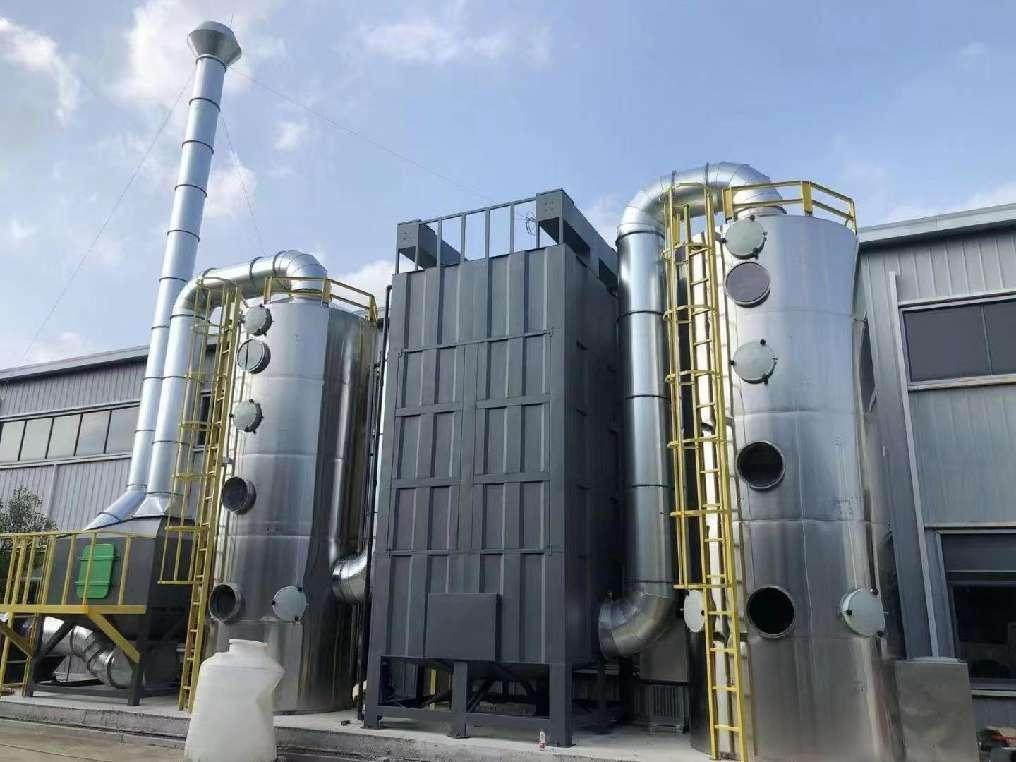
Ⅱ. Core Process Principle
Based on corona discharge and electrostatic adsorption principles, the electric tar catcher generates a strong electric field between cathode wires and anode plates through a high-voltage DC power supply. The specific process is as follows:
1. Ionization and Charging: The cathode wires emit high-energy electrons to ionize tar droplets and dust particles in the waste gas with negative charges.
2. Directional Migration: Charged tar particles move directionally toward the anode plates under the action of electric field force.
3. Capture and Separation: Particles adhere to the surface of anode plates and fall into the bottom tar tank by gravity or mechanical rapping.
4. Purification and Discharge: The clean gas after tar removal is discharged through the chimney up to standard, and the collected tar can be recycled for reuse.
Ⅲ. Key Equipment and System Composition
1. Core Equipment Selection
Electric Tar Catcher Body: Adopting vertical cylindrical structure with optional materials including Q235B and 304 stainless steel according to gas corrosivity. It is internally equipped with cathode wires (barbed wires / corona wires for enhanced discharge strength) and anode plates (plate type / tube type for enlarged capturing area). The design pressure ranges from -0.05 to 0.1 MPa, and the working temperature is maintained at 80~150℃ to avoid tar condensation and blockage.
High-voltage DC Power Supply: Constant current and constant voltage power supply with output voltage of 30-60 kV and current of 50-500 mA. It is equipped with over-current, over-voltage and short-circuit protection to realize adjustable electric field strength for different working conditions.
Tar Recovery System: Consisting of tar tank, tar discharge pump and thermal insulation device to prevent tar solidification. The recycled tar can be returned to the production system or sold as by-products.
Auxiliary System: Including gas distributor for uniform airflow distribution, flushing device for regular tar cleaning on plates, explosion-proof device for flammable and explosive waste gas, and online monitoring system for real-time detection of tar content and electric field parameters.
2. System Process Design
Waste gas → Pretreatment (cooling and dust removal to eliminate large particles and avoid electrode short circuit) → Electric tar catcher body (tar capture under electric field) → Tar recovery (bottom collection + regular discharge) → Clean gas → Compliant discharge / waste heat recovery
Ⅳ. Scheme Advantages and Benefit Analysis
1. Technical Advantages
High Purification Efficiency: Stable capture performance for tar mist and fine dust.
Resource Recycling: Recyclable tar creates considerable economic benefits.
Stable Operation: Adaptable to fluctuations in waste gas flow and composition with low failure rate.
Low Energy Consumption: Lower power consumption and operating cost compared with other treatment processes.
2. Economic Benefits
Direct Income: Recycled tar is priced at 3000-5000 yuan per ton. Taking a gas flow of 10000 Nm³/h and inlet tar content of 200 mg/Nm³ as an example, the annual tar recovery capacity reaches approximately 1752 tons, bringing an annual income of 5.25 to 8.76 million yuan.
Indirect Income: Reduced maintenance cost caused by equipment corrosion, avoidance of environmental fines (maximum 1 million yuan per violation), and lower load of subsequent waste gas treatment equipment.
3. Environmental Benefits
Air Pollution Reduction: Sharply decreased tar mist emission improves air quality.
Carbon Emission Reduction: Recycled tar replaces fossil fuel to indirectly reduce CO₂ emission.
Policy Compliance: Meeting environmental inspection requirements and assisting enterprises in green transformation.