
 +86 15853145085
1. Source and Hazard of Coating Waste Gas
Coating waste gas is mainly generated in the production processes such as ship coating, bridge coating and building steel structure coating. During the coating operation, various coatings and diluents volatilize a large amount of volatile organic compounds (VOCs), accompanied by the generation of coating particles. The main organic components include toluene, xylene, n-butanol and cyclohexane.
Coating particles drift in the workshop and adhere to equipment, ground and walls, which not only affects the cleanliness of the workshop, but also interferes with the normal operation of equipment and increases equipment maintenance costs. Organic waste gas has strong pungent odor. Inhalation will irritate respiratory tract and eyes, causing tearing, coughing, dyspnea and other symptoms. Long-term exposure will damage human nervous system and immune system. Some organic components have carcinogenic, teratogenic and mutagenic risks. In addition, the emission of such waste gas into the atmosphere will aggravate air pollution and damage the ecological environment, failing to meet national strict environmental protection emission standards. Enterprises will face severe environmental penalties without effective treatment.
2. Coating Waste Gas Treatment Process
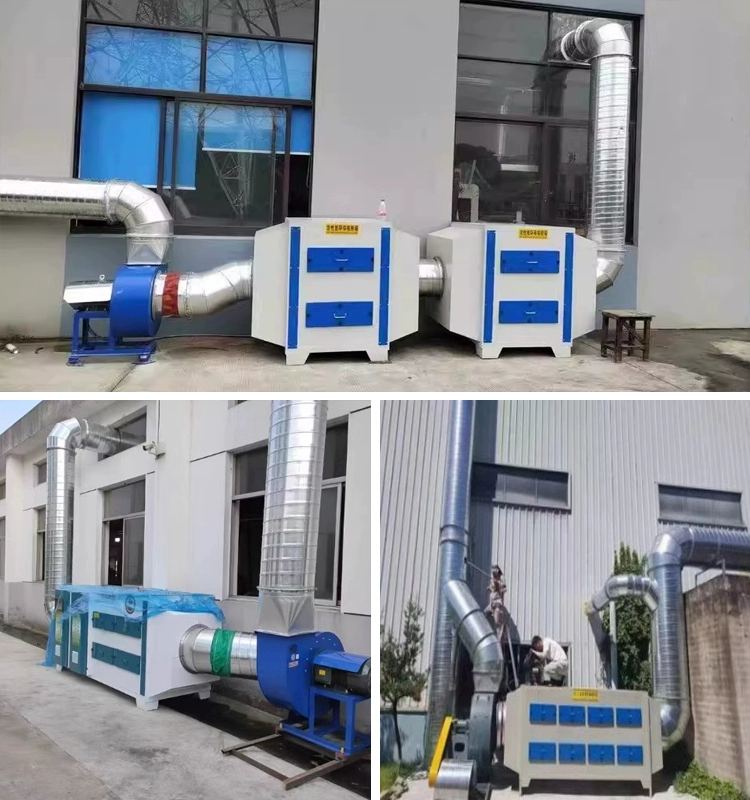
According to the characteristics of coating waste gas containing coating particles and medium-low organic gas concentration, the treatment process is adopted as follows: the coating waste gas firstly passes through the coating pretreatment device to remove coating particles, and then enters the activated carbon adsorber to adsorb organic waste gas. The purified gas is discharged up to standard through fan. The saturated activated carbon shall be treated correspondingly.
3. Process Description of Activated Carbon Adsorber for Coating Waste Gas Treatment
Coating waste gas firstly enters the coating pretreatment device, commonly including cyclone dust collector and bag dust collector. The cyclone dust collector separates large coating particles by centrifugal force. The bag dust collector further intercepts fine coating particles through filter bags to ensure effective removal of coating particles in waste gas.
The waste gas after pretreatment is transported to the activated carbon adsorber through pipelines. High-quality honeycomb activated carbon or granular activated carbon is adopted inside the adsorber. Its unique micropore structure and huge specific surface area can quickly adsorb VOCs molecules in waste gas. The purified gas is discharged through the exhaust pipe at the top of the adsorber and introduced into the exhaust funnel by fan for compliant discharge.
When the activated carbon reaches adsorption saturation, the system will send an alarm signal in time. At this time, the operation of the adsorber shall be suspended, the air inlet and outlet valves shall be closed, and new activated carbon shall be replaced. The waste saturated activated carbon is recycled and treated by professional environmental protection companies to avoid secondary pollution and ensure that the whole treatment process complies with environmental protection requirements. For enterprises requiring continuous production, two or more activated carbon adsorbers can be configured for alternate use to ensure the continuity of coating operation.
4. Advantages of Activated Carbon Adsorber Equipment
1. Efficient removal of coating particles: The pretreatment device is closely matched with the activated carbon adsorber. Coating particles are removed before VOCs adsorption, which effectively prevents activated carbon pores from being blocked by coating particles and ensures long-term stable adsorption efficiency.
2. Remarkable VOCs purification effect: High-quality activated carbon has an adsorption efficiency of more than 90% for common VOCs such as benzene series and alcohols in coating waste gas. It can effectively eliminate pungent odor and improve air quality of workshop and surrounding environment.
3. Economical equipment cost: Compared with combined waste gas treatment equipment, single activated carbon adsorber has low initial investment cost. It is very suitable for small and medium-sized coating enterprises to reduce environmental protection investment cost.
4. Convenient operation and maintenance: The equipment has simple structure. It is only necessary to regularly check the use state of filter materials and activated carbon. The replacement cycle is clear without long-term on-duty of professional technicians, reducing enterprise operation cost.
5. Flexible installation and layout: The equipment can be customized according to workshop space and actual layout. The modular structure is convenient for later capacity expansion and transformation according to production demand, improving equipment applicability.
6. Safe, reliable and stable operation: There are no dangerous links such as high temperature and high pressure in the activated carbon adsorption process. There is no potential safety hazard such as fire and explosion. The operation stability is high, providing strong guarantee for enterprise safe production.
If you need to solve the waste gas pollution problem for your ship, bridge or building steel structure coating workshop, please contact Zhonghuan Lvzhou Environmental Protection. Tel: 158-5314-5085. We provide full-process professional services including coating pretreatment and customized installation of activated carbon adsorbers to ensure that the coating operation fully complies with environmental protection standards.