
 +86 15853145085
Black Smoke Waste Gas Comprehensive Treatment Scheme
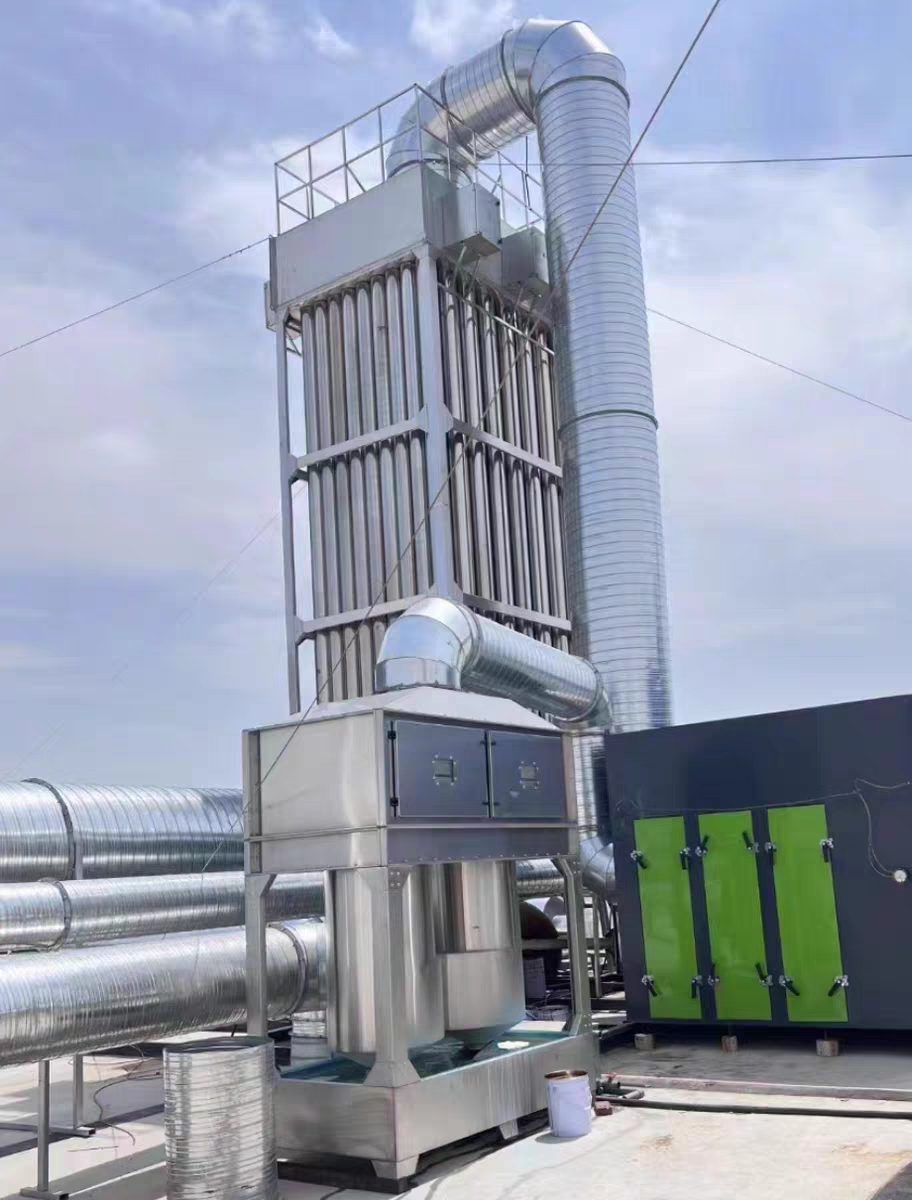
Ⅰ. Scheme Background and Pollution Source Analysis
The main pollutants of black smoke waste gas include particulate matter (PM), sulfur oxides (SOx), nitrogen oxides (NOx), and volatile organic compounds (VOCs). The pollution sources are divided into three categories:
1. Industrial Emission Sources: Black smoke is generated due to insufficient combustion or high sulfur content of raw materials in coal-fired boilers, iron and steel smelting, chemical production, waste incineration and other production processes.
2. Mobile Emission Sources: Exhaust black smoke is caused by aging engines or poor fuel quality of diesel trucks, ships, construction machinery and other mobile equipment.
3. Scattered Small Sources: Unorganized emissions from catering oil fume, small coal-fired furnaces, agricultural straw burning and other activities form local black smoke pollution.
Black smoke reduces atmospheric visibility. Hazardous substances contained in black smoke such as heavy metals and polycyclic aromatic hydrocarbons seriously endanger human health. Therefore, targeted treatment schemes are required for pollution control.
Ⅱ. Core Treatment Technology System (Classified by Scenarios)
(Ⅰ) Treatment Scheme for Industrial Stationary Source Black Smoke
A three-stage process of pretreatment + core purification + advanced treatment is adopted to adapt to the characteristics of high concentration and continuous emission of industrial black smoke.
1. Pretreatment Stage
A gravity settling chamber or cyclone dust collector is installed to remove large particles with a particle size larger than 10μm and reduce the load of subsequent equipment. For black smoke containing oil mist and water vapor, a gas-liquid separator is equipped to prevent equipment corrosion and blockage.
2. Core Purification Stage (Optional or Combined)
Scheme A: Electrostatic Precipitator (ESP): Suitable for large-air-volume waste gas from coal-fired boilers and steel plants. The dust removal efficiency exceeds 99.5%, which can remove fine particles such as PM2.5. It is matched with a desulfurization tower (limestone-gypsum method) to synchronously remove SOx.
Scheme B: Bag Dust Collector: Suitable for waste gas containing viscous dust from chemical industry and waste incineration. It features high filtration precision and can intercept fine particles and part of VOCs simultaneously. Filter bags (PTFE, glass fiber and other materials) need regular replacement.
3. Advanced Treatment Stage
Low-temperature plasma reactor or photocatalytic oxidation equipment is added to decompose residual VOCs and partial NOx. For scenarios with excessive nitrogen oxides, a supporting SCR (Selective Catalytic Reduction) denitrification system is equipped. Under the temperature of 300-400℃, ammonia water converts NOx into nitrogen and water.
(Ⅱ) Treatment Scheme for Mobile Source Black Smoke
1. Motor Vehicles (Mainly Diesel Trucks)
Mandatorily upgrade China VI emission standard exhaust treatment device with the combined structure of DPF (Diesel Particulate Filter) + SCR. DPF captures particulate matter and realizes combustion regeneration at high temperature; SCR is used for denitrification. Low-sulfur diesel (sulfur content ≤10ppm) is mandatory. Old vehicles are restricted and eliminated, while new energy trucks and LNG clean energy vehicles are vigorously promoted.
2. Ships & Construction Machinery
Ships are equipped with exhaust gas scrubbers (seawater or fresh water washing type) to remove more than 80% of SOx and partial particulate matter. Ocean-going ships can switch to low-sulfur fuel (sulfur content ≤0.5%). Portable exhaust purification devices with honeycomb ceramic catalysts are installed on construction machinery to oxidize and decompose particulate matter and CO, which is applicable for non-road mobile machinery.
(Ⅲ) Treatment Scheme for Scattered Small Source Black Smoke
1. Catering Oil Fume
High-efficiency oil fume purifiers (electrostatic type or composite type) with purification efficiency ≥95% are installed, matched with special smoke exhaust pipelines to avoid low-altitude emission.
2. Small Coal-fired Furnaces & Straw Burning
Open straw burning is prohibited, and straw returning and biomass power generation are promoted. Small coal-fired furnaces are replaced with clean energy equipment such as electric and natural gas furnaces. Otherwise, small cyclone dust collectors and activated carbon adsorption devices shall be installed to achieve compliant discharge after simple treatment.
Ⅲ. Auxiliary Guarantee Measures
1. Monitoring and Supervision System
Online monitoring devices are installed for industrial sources to real-timely monitor the concentration of PM, SOx and NOx with data connected to environmental protection departments. Mobile sources adopt remote sensing monitoring and road inspection to strictly investigate vehicles with excessive exhaust emission. OBD (On-Board Diagnostics) system is promoted to monitor real-time emission status.
2. Operation and Maintenance Requirements
Industrial treatment equipment shall be cleaned regularly (such as electrostatic precipitator plates and bag filter bags), and catalysts shall be replaced to ensure stable treatment efficiency. DPF of mobile equipment requires regular regeneration to prevent dust accumulation and blockage, with complete maintenance records.
3. Policy and Economic Support
Tax reductions and financial subsidies are provided for enterprises purchasing environmental protection equipment. Penalties for inferior fuel and excessive emission are increased to force pollution source rectification.
Ⅳ. Scheme Advantages and Expected Effects
1. Mature Technology: Core technologies (electrostatic dust removal, SCR, DPF, etc.) are mainstream industrial technologies with stable operation, adapting to various emission scenarios.
2. High Compliance Rate: Industrial sources meet theIntegrated Emission Standard of Air Pollutants (GB 16297). Mobile sources comply with China VI and IMO (International Maritime Organization) standards.
3. Excellent Environmental Benefits: After implementation, the regional PM2.5 concentration can be reduced by 30%-50%, and the emission of SOx and NOx can be decreased by more than 40%. The black smoke phenomenon is basically eliminated, and atmospheric visibility is significantly improved.