
 +86 15853145085
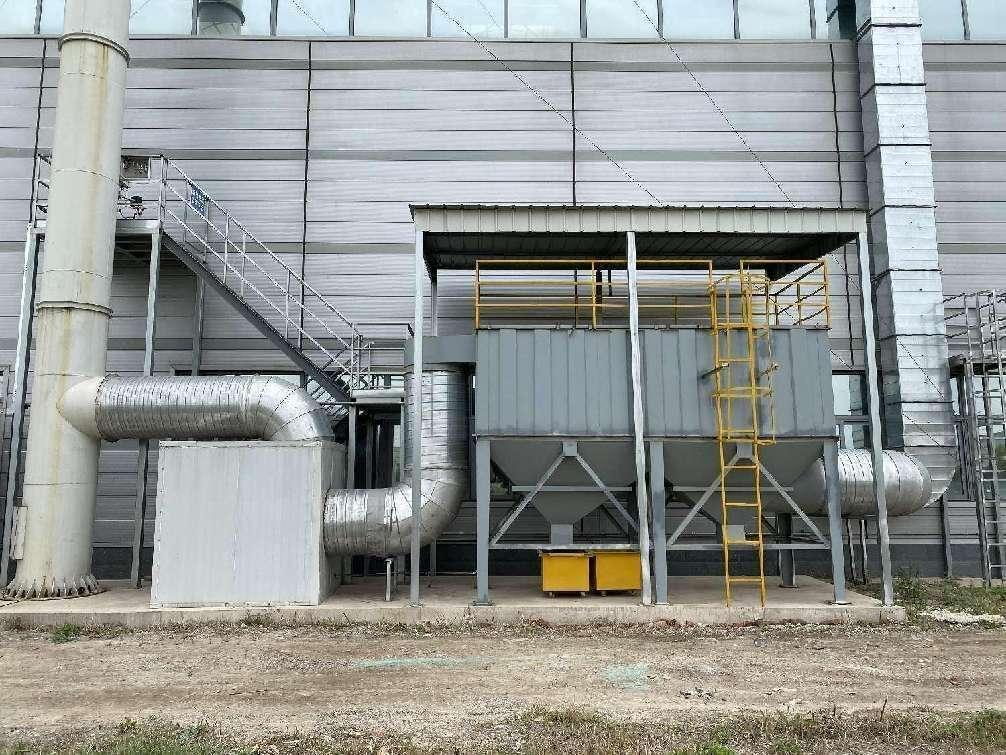
Bag dust collectors and spray towers are widely used in industrial waste gas treatment. The combined application of the two equipment can achieve superior purification efficiency. The detailed introduction is as follows:
Ⅰ. Bag Dust Collector
1. Working Principle
The bag dust collector adopts dry dust removal technology. When dust-containing gas passes through filter bags, dust particles are intercepted on the surface of the filter material, while clean gas penetrates the bags to complete the dust removal process.
2. Structural Composition
It mainly consists of a filter bag chamber, ash cleaning system, ash hopper, fan and valve group, and control system. The filter bag chamber serves as the core filtering area; the ash cleaning system removes accumulated dust on the bag surface; the ash hopper collects settled dust; the fan provides induced draft power; the air valve controls airflow direction; the control system monitors real-time operating parameters.
3. Advantages
It features high filtration accuracy, compact structure and stable operation. The dust removal efficiency can exceed 99.5%, achieving excellent interception effect on fine particulate matter.
4. Applicable Scenarios
Suitable for low-temperature, low-humidity and non-flammable dust-containing gas. It is widely applied in metallurgy, building materials, chemical industry and other industries.
Ⅱ. Spray Tower
1. Working Principle
The spray tower belongs to wet dust removal equipment. The spraying system disperses liquid into fine water mist. When dust-containing gas flows through the tower, particulate matter is adsorbed by mist droplets and separated from the gas through gravity sedimentation and centrifugal separation.
2. Structural Composition
It is composed of five parts: tower body, spraying system, mist removal device, circulation system and control system. The tower body is generally cylindrical; the spraying system includes pipelines and nozzles; the mist eliminator removes entrained liquid droplets from purified gas; the circulation system realizes the recycling of detergent; the control system monitors and adjusts operating parameters.
3. Advantages
The equipment has simple structure and low operating cost. It can efficiently remove particulate matter as well as acidic and alkaline pollutants. Different absorbents can be selected according to waste gas components.
4. Applicable Scenarios
Suitable for high-temperature, high-humidity and flammable dust-containing gas, commonly used in chemical, metallurgical and power industries.
Ⅲ. Combined Application of Spray Tower and Bag Dust Collector
1. Process Sequence
2. Process Logic
The spray tower firstly removes high-temperature flue gas, corrosive gas, coarse particles and viscous dust, creating stable and qualified working conditions for the subsequent bag dust collector.
3. Key Precautions
Ensure the efficient operation of the gas-water separator to prevent water droplets from entering the bag dust collector and causing bag hardening; control flue gas temperature and dew point to avoid condensation; balance system resistance and select matched fans; adopt water-repellent and oil-proof filter materials for filter bags.
Ⅳ. Scheme A: Electrostatic Precipitator (ESP)
1. Core Advantages
Large Air Volume Adaptability: A single unit can process air volume ranging from 10⁵ to 10⁶ m³/h, which is highly suitable for large-flow flue gas such as coal-fired boilers and steel sintering machines. The wind resistance loss is only 50-200Pa, having little impact on the energy consumption of the original production system.
Stable Dust Removal Efficiency for Fine Particles: The removal efficiency of fine particles such as PM2.5 exceeds 99.5%. It can operate stably under fluctuating dust concentration (inlet concentration ≤30g/m³), permanently meeting the emission requirement of particulate matter ≤10mg/m³ stipulated in GB 16297.
Low Operating Cost and Long Service Life: The equipment has few vulnerable parts. The service life of electrode plates and discharge lines reaches 8-10 years. Its energy consumption is only one-third of that of bag dust collectors (power consumption: 0.3-0.5kWh per 1000m³ waste gas), making it suitable for 24-hour continuous industrial operation.
Excellent High-temperature and Corrosion Resistance: Conventional models can withstand 250-350℃ high temperature. Special coated electrodes can adapt to acid-containing flue gas such as SOx to prevent equipment corrosion.
2. Core Disadvantages
Unsuitable for Viscous and High-resistivity Dust: Viscous pollutants such as tar and asphalt will cause dust agglomeration on electrode plates and cannot be removed by back corona discharge. When dust resistivity exceeds 10¹¹Ω·cm, the dust removal efficiency will drop below 85%.
Large Occupied Area and High Initial Investment: A single ESP with air volume of 10⁵ m³/h covers an area of 50-80㎡ with equipment weight of 30-50 tons, requiring independent plant space. The initial investment is 1.5-2 times that of bag dust collectors.
Need Auxiliary Equipment for Desulfurization and Denitrification: ESP only removes particulate matter. Additional supporting facilities such as desulfurization towers and SCR denitrification systems are required for SOx and NOx treatment, increasing system integration complexity.
Ⅴ. Scheme B: Bag Dust Collector
1. Core Advantages
High Filtration Precision and Multi-pollutant Synergistic Removal: The filtration aperture of PTFE or glass fiber filter bags is 1-5μm. The removal efficiency of viscous dust and ultra-fine particles (PM1) exceeds 99.9%. Modified composite filter bags can synchronously adsorb VOCs and dioxins, applicable for waste incineration and chemical spraying working conditions.
Compact Structure and Flexible Installation: The floor area is only 1/3-1/2 of ESP. Modular assembly is available for space-limited factories. The initial investment is low, which is convenient for renovation projects.
Insensitive to Dust Characteristics: It is not affected by dust resistivity and viscosity. Stable purification efficiency can be maintained under high humidity (relative humidity ≤80%), high concentration (inlet concentration ≤50g/m³) and mixed dust conditions with wide adaptability.
Convenient Operation, Maintenance and Upgrading: Simple structure facilitates manual bag replacement. Upgrading can be completed by replacing high-precision filter bags without overall equipment reconstruction.
2. Core Disadvantages
High Wind Resistance and Large Energy Consumption: The wind resistance loss reaches 800-1500Pa, requiring high-pressure induced draft fans. The long-term power consumption is 3-4 times that of ESP.
Consumable Filter Bags with Regular Replacement: The service life of conventional filter bags is 1-3 years, while only 6-12 months under viscous dust conditions. Frequent replacement leads to high later maintenance cost. Damaged filter bags will cause excessive emission.
Limited High-temperature Resistance: The temperature resistance of ordinary glass fiber bags is ≤260℃. High-temperature flue gas requires special high-temperature resistant materials with increased cost and shortened service life.
Not Applicable for Ultra-large Air Volume: The maximum processing air volume of a single unit is about 8×10⁴ m³/h. Parallel connection of multiple units is required for larger air volume, resulting in higher system complexity and floor cost.