
 +86 15853145085
Ⅰ. Source and Treatment Method of Metal Spray Paint Waste Gas
During the spraying operation in the metal workshop, spraying agents such as paint generate organic waste gas containing paint mist, dust and benzene series (such as thinner). Direct discharge of such waste gas will cause pollution to the surrounding environment. To meet environmental protection requirements, Zhonghuan Lvzhou adopts a combined process of cyclone spray tower, dry filtration and two-stage activated carbon adsorption to realize efficient purification of spray paint waste gas.
Ⅱ. Treatment Process of Metal Spray Paint Waste Gas
Core Treatment Process
Waste Gas Collection: Hoods and pipeline systems are used to collect paint mist and VOCs waste gas generated at spraying stations to avoid unorganized emission.
Pretreatment (Paint Mist Removal): Spray towers or dry filter cotton are applied to remove liquid paint mist and particulate matter in waste gas and prevent subsequent equipment blockage.
Core Purification (VOCs Removal): Mainstream purification technologies include activated carbon adsorption, catalytic oxidation (CO), and combined adsorption-catalytic oxidation process to adsorb or decompose VOCs for compliant discharge.
Tail Gas Discharge: The purified gas is pressurized by a fan and discharged through a high-altitude chimney in accordance with local environmental emission standards.
Key Link Description
Necessity of Pretreatment: Unremoved paint mist will adhere to subsequent purification equipment, reduce adsorption and catalytic efficiency, and shorten equipment service life.
Core Process Selection: Activated carbon adsorption is commonly used for small and medium-sized enterprises due to low cost; catalytic oxidation is preferred for large-scale production with high treatment efficiency and no secondary pollution.
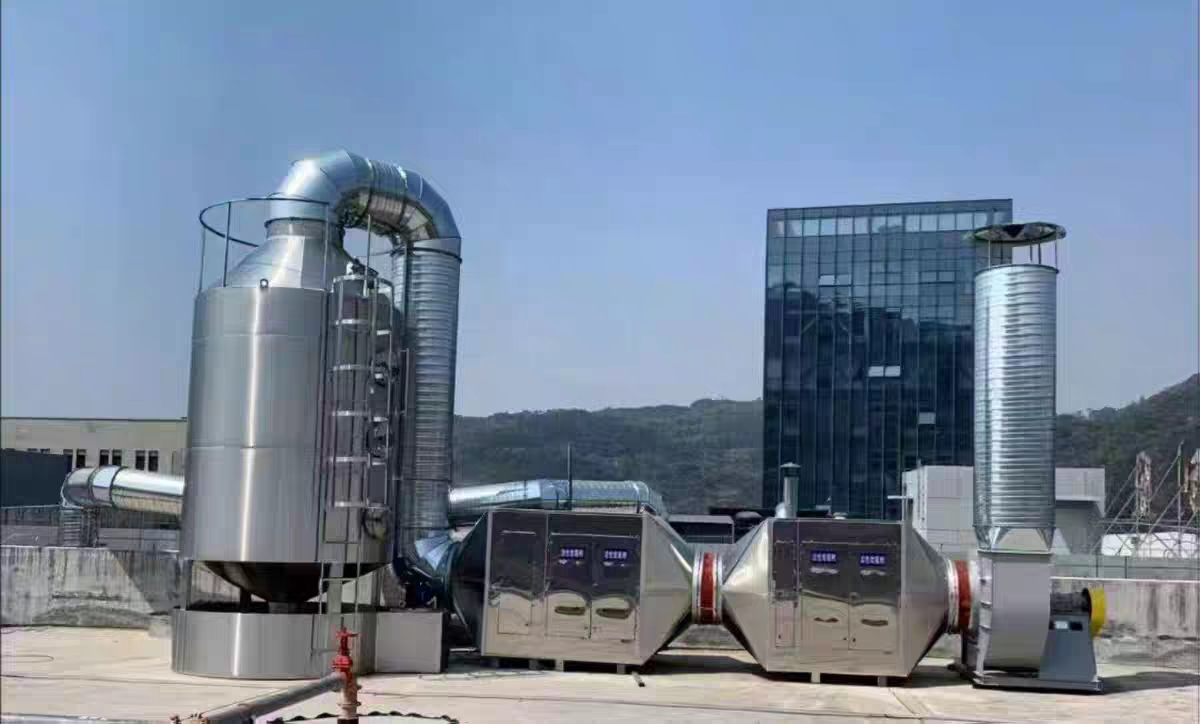
Ⅲ. Description of Metal Spray Paint Waste Gas Treatment Process
Cyclone Spray Tower
As the first line of defense for waste gas treatment, it adopts dual effects of cyclone centrifugal force and spray absorption to rapidly remove more than 80% of paint mist, dust and large particle pollutants. Sufficient gas-liquid contact reduces the load of subsequent filtering equipment and preliminarily absorbs part of soluble organic pollutants, laying a foundation for deep purification.
Dry Filtration Device
Treating waste gas discharged from the cyclone tower, it adopts a composite structure of high-efficiency filter cotton and filter screens to secondarily intercept residual tiny paint mist particles and droplets. The filtration accuracy can reach below 1μm, ensuring oil-free and mist-free waste gas before adsorption, preventing blockage of activated carbon pores and extending the service life of adsorption materials.
Primary and Secondary Activated Carbon Adsorption Tower
Serving as the core purification unit, it uses high iodine value columnar activated carbon as the adsorption medium. After pre-treatment, organic pollutants such as benzene, toluene and xylene are efficiently adsorbed by the porous structure of activated carbon. The dual-tower design further improves the removal efficiency of organic waste gas and ensures stable and reliable purification performance.
High-pressure Induced Draft Fan
It provides stable negative pressure suction to ensure no waste gas leakage in the workshop. The whole system operates in a fully enclosed state and provides sufficient power for gas flowing through each treatment unit.
Compliant Discharge System
According to on-site working conditions and environmental requirements, high-altitude chimney discharge or low-altitude discharge can be selected. High-altitude discharge enhances gas diffusion and reduces surrounding impact, while low-altitude discharge shall comply with regional specifications. The final discharged gas meets the Integrated Emission Standard of Air Pollutants (GB 16297-1996) and relevant local regulations.
Ⅳ. Technical Characteristics
High Purification Efficiency: The comprehensive purification efficiency of the whole process for metal spray paint waste gas can exceed 90%. Organic pollutants are thoroughly removed with emission indexes far better than standard limits.
Stable Operation: The graded treatment mode reduces the risk of single equipment failure. Featuring simple operation and low maintenance cost, the system adapts to continuous production in workshops.
Strong Environmental Compliance: The process design conforms to current environmental policies. No secondary pollution is generated after treatment, helping enterprises pass environmental acceptance and daily supervision.
Ⅴ. Engineering Cases and Company Introduction
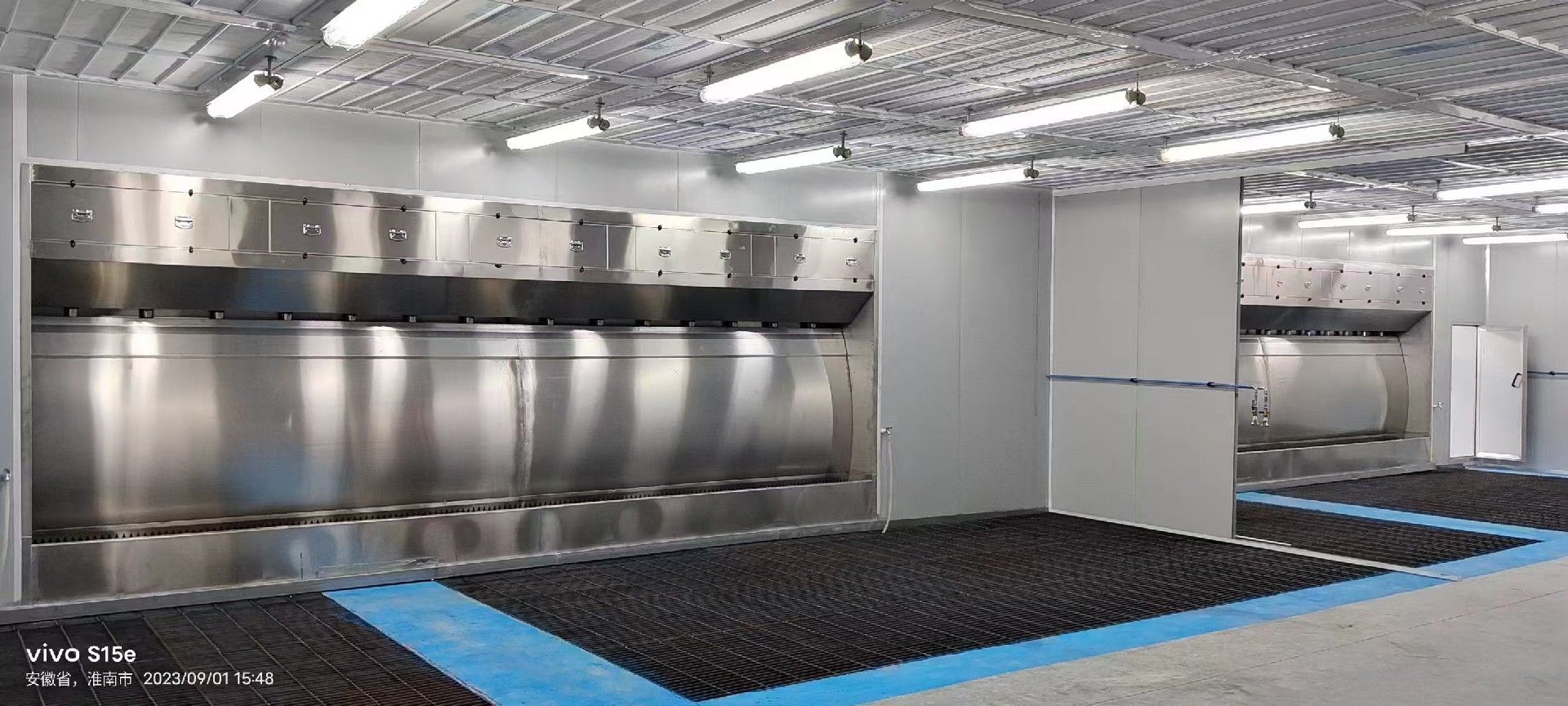
Zhonghuan Lvzhou (Shandong) Equipment Co., Ltd. is a high-tech enterprise focusing on industrial waste gas, wastewater and solid waste treatment. With nearly 20 years of pollution control experience in electronic manufacturing, metal processing, plastic production and other industries, the company provides one-stop services including customized environmental protection solutions, equipment research and manufacturing, construction and installation, commissioning operation and environmental acceptance. Relying on a professional technical team and complete service system, the company provides all-round technical support to ensure stable and long-term operation of waste gas treatment projects, and help enterprises realize coordinated development of production and environmental protection. Service Hotline: 15853145085.