 +86 15853145085
Entrusting Unit: Yongkang Dazheng Door Industry Co., Ltd.
Design Unit: Zhonghuan Oasis (Shandong) Equipment Manufacturing Co., Ltd.
1. Project Overview
Headquartered in Jiangshan, Zhejiang Province, Yongkang Dazheng Door Industry Co., Ltd. produces a large amount of dust during wood door production processes such as wood cutting, planing, sanding and post-spray polishing. Among them, the paint-containing dust generated from sanding and post-polishing processes features fine particle size and complex composition.
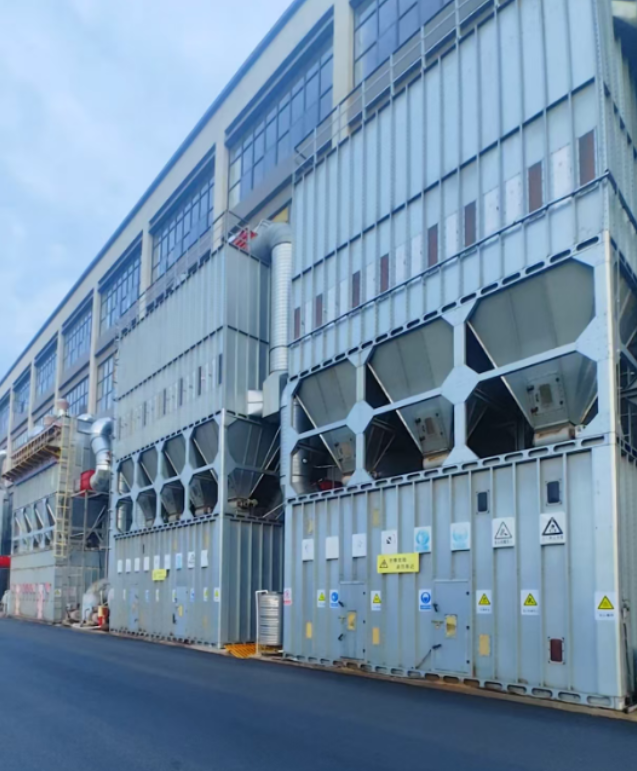
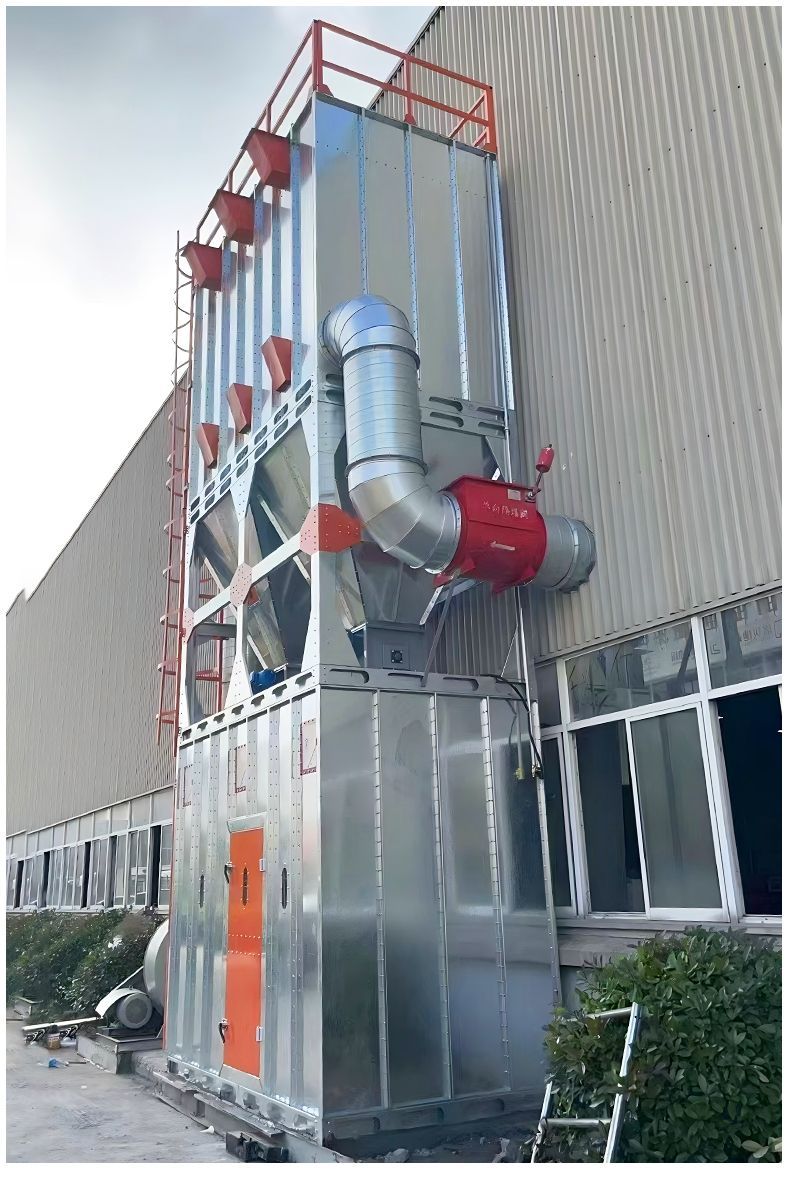
Such dust not only pollutes the production workshop environment and affects product processing precision, but also endangers the physical health of front-line employees, and brings potential safety risks caused by dust accumulation. To fulfill the environmental protection responsibilities of listed enterprises, ensure employees' occupational health and maintain the regional ecological environment of "China Wood Door Capital", Yongkang Dazheng Door Industry Co., Ltd. specially entrusts Zhonghuan Oasis (Shandong) Equipment Manufacturing Co., Ltd. to formulate this special treatment design scheme with pulse bag dust collector as the core aiming at dust problems in production processes.
2. Pollutant Analysis and Hazards
2.1 Main Pollutants
The core pollutants of this project are wood dust and paint-containing dust, which are airborne solid particles generated in various working procedures of wood door production, mainly composed of wood fibers, resin, paint residues and a small number of processing auxiliaries.
2.2 Formation and Hazards of Pollutants
This kind of dust is mainly generated from high-speed operation between wood processing equipment and workpieces, abrasive friction of sanders and paint surface polishing. Its hazard degree is directly related to particle size distribution and components, which are mainly reflected in the following three aspects:
Human Health Hazards
Fine particles with particle size of 0.5-5 microns account for a high proportion in wood dust, which can directly penetrate human respiratory barriers and deposit in lungs. Long-term inhalation is likely to cause pneumoconiosis, allergic rhinitis, asthma and other respiratory diseases. Organic compounds and auxiliaries attached to the surface of paint-containing dust may also irritate skin and mucous membranes, and even affect nervous system and visceral functions through blood circulation, posing serious threats to the health of front-line employees exposed for a long time.
Production Safety and Quality Risks
Wood dust belongs to combustible dust. When accumulated to a certain concentration in the closed space of the workshop, it is easy to cause explosion or combustion accidents in case of open fire and electric spark, bringing major hidden dangers to production facilities and personnel safety. Meanwhile, floating dust is easy to adhere to the surface of semi-finished wood doors, affecting the flatness of paint surface and product appearance quality, increasing rework costs and damaging corporate brand reputation.
Ecological Environmental Impact
Uncollected and untreated dust drifts to the surrounding areas of the factory, pollutes building surfaces and adheres to plant leaves, hinders plant photosynthesis and affects regional ecological landscape. Part of paint-containing dust infiltrates with rainwater and may cause slight pollution to soil, which is inconsistent with the enterprise's concept of green development.
3. Design Basis and Principles
3.1 Design Basis
Environmental Protection Law of the People's Republic of China
Air Pollution Prevention and Control Law of the People's Republic of China
GB 16297-1996 Integrated Emission Standard of Air Pollutants
Zhejiang Local Standard DB 33/2146-2018 Emission Standard of Industrial Air Pollutants
GBZ 2.1-2019 Occupational Exposure Limits for Hazardous Factors in Workplace Part 1: Chemical Hazardous Factors
Relevant technical specifications of Air Pollutant Control Engineering
GB 50243-2016 Code for Acceptance of Construction Quality of Ventilation and Air Conditioning Engineering
GB 50235-2010 Code for Construction and Acceptance of Industrial Pipeline Engineering
National Electrical Standards: GB 50054-2011 Code for Design of Low-Voltage Power Distribution
GB 50034-2013 Standard for Building Lighting Design
GB 50055-2011 Code for Power Distribution Design of General Electrical Equipment
On-site investigation data and actual production demands put forward by Yongkang Dazheng Door Industry Co., Ltd.
Mature practical experience and technical data of dust control projects in wood door industry at home and abroad
3.2 Design Principles
Compliance Principle: Ensure that the discharged dust fully complies with national and Zhejiang local environmental protection standards, the dust concentration in the workshop meets occupational health exposure limits, and conforms to ISO 14000 international environmental management system requirements.
Safety Principle: In view of the flammable characteristics of wood dust, strengthen anti-static, fire and explosion-proof measures in equipment and pipeline design, and equip complete monitoring and emergency devices to eliminate potential safety hazards from the source.
High-efficiency Adaptation Principle: Combined with the dust generation fluctuation characteristics of the enterprise's "mass production + customized production" mode, select processes with stable treatment efficiency and adaptability to load changes to ensure effective collection and treatment of dust in each process.
Economical and Convenient Principle: On the premise of ensuring treatment effect, optimize equipment selection and pipeline layout, reduce equipment investment, operating energy consumption and maintenance cost. The equipment is easy to operate and compatible with the existing production management system of the enterprise.
4. Design Objectives
Through targeted treatment by pulse bag dust removal system, this scheme achieves the following core objectives:
The dust emission concentration strictly complies with relevant requirements of Zhejiang DB 33/2146-2018 Emission Standard of Industrial Air Pollutants, the external emission concentration ≤10mg/m³, and the emission rate meets the limit value of corresponding exhaust funnel height.
Exhaust funnels shall be installed in accordance with specifications. The height of exhaust funnel matched with single dust collector shall not be less than 15 meters, and the height of combined exhaust funnel of multiple sets shall not be less than 20 meters, so as to ensure standard discharge of waste gas through high-altitude diffusion and avoid impact on surrounding environment.
The dust concentration at operating points in the workshop is controlled below 8mg/m³ (in line with GBZ 2.1-2019 standard), which significantly improves the operating environment and eliminates dust explosion risks.
The whole system operates stably with high automation degree, and the dust removal efficiency is no less than 99%, which meets the continuous production demands of enterprises and helps enterprises establish the image of green production benchmark.
5. Design and Description of Dust Treatment Process
5.1 Process Selection Basis
Dust generated in wood door production is featured by high proportion of fine particles, a small amount of viscous paint materials, scattered dust generating points and large load fluctuation. Combined with such dust characteristics and actual production situation of the enterprise, pulse bag dust removal process is adopted in this scheme, which is widely applied in dust control of wood door industry with the following core advantages:
High filtration precision. Membrane filter material can effectively capture fine dust particles above 0.1 micron, and its capture efficiency for paint-containing dust is far higher than traditional processes such as gravity dust removal and cyclone dust removal, ensuring standard emission.
High automation of pulse jet cleaning mode. The cleaning cycle can be automatically adjusted according to filter bag resistance to avoid filter bag blockage, adapting to dust generation fluctuation scenarios of high load in mass production and low load in customized production.
For dust with slight viscosity, anti-viscous and wear-resistant filter materials are selected and cleaning parameters are optimized to effectively reduce dust adhesion, extend the service life of filter bags and lower maintenance costs.
Dry treatment mode requires no additional water resources and avoids wastewater treatment problems caused by wet dust removal, complying with water-saving and environmental protection requirements in Zhejiang region. Collected wood dust can be recycled for reuse (such as biomass fuel) to realize resource recycling.
5.2 Process Flow Chart
Dust generating stations (Cutting / Planing / Sanding / Polishing) → Special Air Collecting Hood (Negative Pressure Collection) → Flame-retardant Ventilation Pipeline → Pulse Bag Dust Collector → Induced Draft Fan → Standard Exhaust Funnel → High-altitude Discharge
(Supporting System: Dust Discharge Valve → Closed Ash Storage Bin → Dust Recycling / External Transportation Device)
5.3 Detailed Process Description
Accurate Source Collection: Customize air collection devices according to characteristics of different dust generating processes. Enclosed air collecting hoods are adopted for cutting and planing stations, closed air collecting hoods are matched with sanders, and movable side suction air collecting hoods are used for polishing stations. A negative pressure area is formed by reasonably designing the hood air speed (1.2-1.5m/s) of each air collecting hood to directly collect dust from the source and minimize dust diffusion in the workshop.
Safe Conveyance: Flame-retardant cold-rolled steel plate ventilation pipelines are adopted. The pipeline layout is optimized according to the distribution of dust generating points to reduce elbows and lower resistance. The inner wall of pipelines is treated with anti-static measures, grounding devices are installed every 3 meters, and conductive gaskets are used at all flange connections to effectively avoid static electricity accumulation risks during dust conveyance.
Core Filtration and Purification: Dust-laden gas enters the pre-dust chamber of pulse bag dust collector, and large particle dust settles into ash hoppers under gravity. Fine dust enters the filtering chamber along with airflow and is intercepted through the filter layer on the outer surface of filter bags. The purified gas passes through filter bags into the clean gas chamber and is extracted by induced draft fan. When the filter bag resistance reaches the set value, the pulse valve opens automatically, and high-pressure airflow jets clean the filter bags to make attached dust fall into ash hoppers and realize filter bag regeneration.
Dust Collection and Recycling: Dust in ash hoppers is regularly discharged into closed ash storage bins through star-shaped discharge valves with air leakage prevention design. Collected wood dust can be processed into biomass pellet fuel by professional institutions, and paint-containing dust is transported and disposed by qualified units to realize waste reduction and resource utilization.
Tail Gas Discharge: The gas purified by dust collector (dust concentration ≤10mg/m³) is lifted by induced draft fan to exhaust funnels with specified height for high-altitude diffusion discharge, ensuring no impact on surrounding environment.