
 +86 15853145085
1. Project Overview
2. Pollutant Analysis and Hazards
2.1 Main Pollutants
2.2 Formation and Hazards of Pollutants
2.2.1 Hazards to Human Health
2.2.2 Production Safety and Quality Risks
2.2.3 Ecological Environmental Impacts
Uncollected dust drifts to the factory area and surrounding areas, polluting the atmospheric environment and surface vegetation. The infiltration of paint-containing dust with rainwater may pollute soil and water body. It is inconsistent with the development concept of harmonious coexistence between society and environment, and may damage the enterprise's environmental protection demonstration image.
3. Design Basis and Principles
3.1 Design Basis
Environmental Protection Law of the People's Republic of China
Atmospheric Pollution Prevention and Control Law of the People's Republic of China
GB 16297-1996 Comprehensive Emission Standard of Air Pollutants
GBZ 2.1-2019 Occupational Exposure Limits for Hazardous Factors in Workplace Part 1: Chemical Hazardous Factors
GB 3095-2012 Ambient Air Quality Standards
Relevant technical specifications of Air Pollution Control Engineering
GB 50243-2016 Code for Acceptance of Construction Quality of Ventilation and Air Conditioning Engineering
GB 50235-2010 Code for Construction and Acceptance of Industrial Pipeline Engineering
National electrical industry standards: GB 50054-2011 Code for Design of Low Voltage Power Distribution
GB 50034-2013 Standard for Lighting Design of Buildings
GB 50055-2011 Code for Design of General Electrical Equipment Distribution
3.2 Design Principles
Benchmark Compliance Principle: The emission concentration and rate of treated dust not only meet national mandatory standards, but also reach the international advanced level. It conforms to the enterprise's environmental positioning of "National Environment-Friendly Project" and meets the requirements of ISO 14000 environmental management system.
Safety Adaptation Principle: According to the characteristics of multi-component combustible dust, the equipment is strengthened with anti-explosion and anti-static design, equipped with dust concentration monitoring and automatic alarm system to adapt to the high automation and high continuity production rhythm of automobile manufacturing.
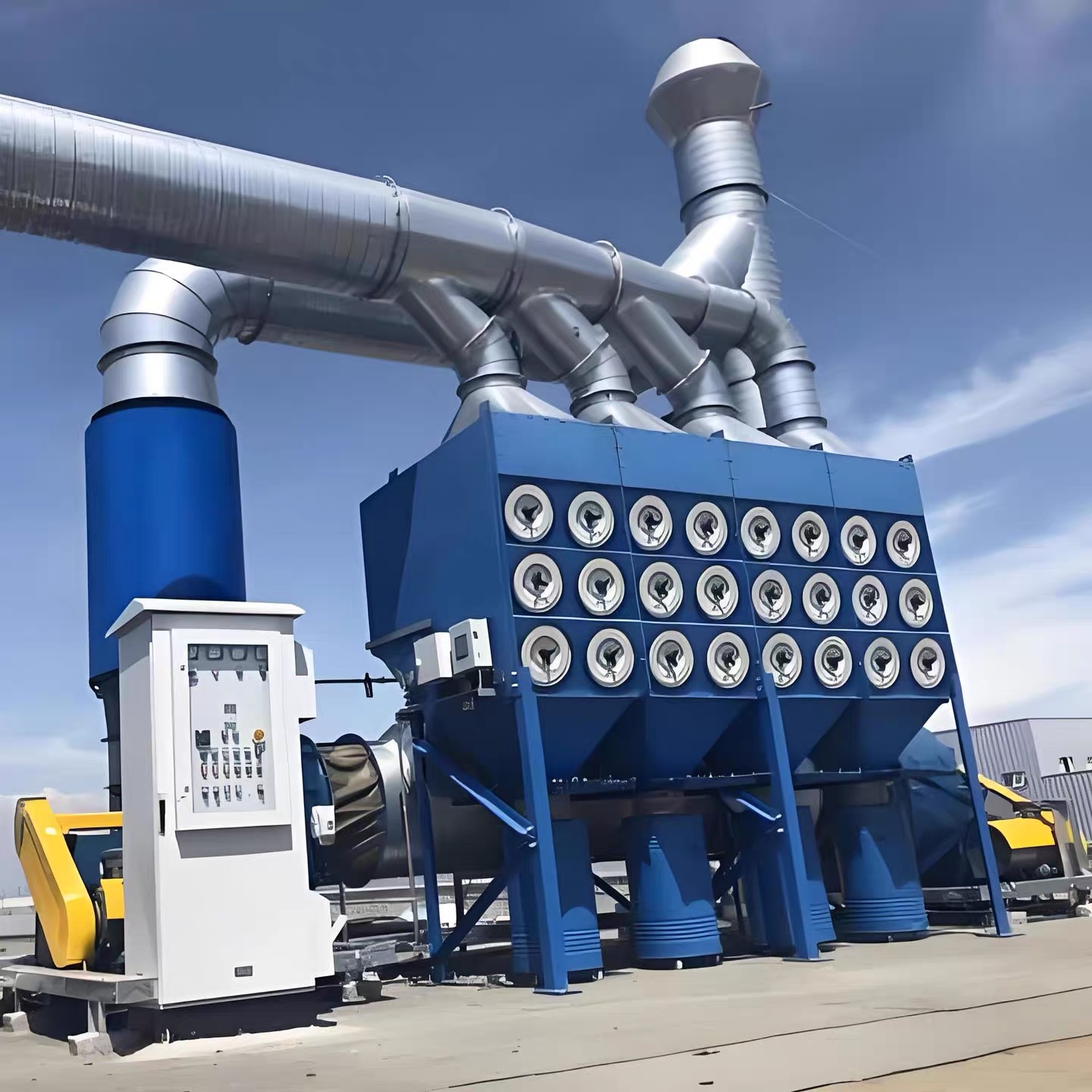
High-efficiency Precision Principle: Combined with the characteristics of multi-process and scattered dust generation points in multiple factories, the mode of zonal collection and centralized treatment is adopted. High-efficiency cartridge dust removal equipment is selected to realize accurate treatment of different types of dust.
Economic Long-term Principle: Optimize equipment layout and pipeline design to reduce system energy consumption. Special wear-resistant and anti-adhesive filter materials are selected to extend the service life of vulnerable parts, controlling operation and maintenance costs while ensuring treatment effect.
4. Design Objectives
The dust emission concentration strictly complies with GB 16297-1996 and local relevant standards. The external discharge concentration is ≤5mg/m³, which is better than the conventional standard to reflect the enterprise's environmental responsibility.
The exhaust funnel of each factory shall be set in accordance with specifications. The height of the main exhaust funnel of a single factory shall not be less than 25 meters to ensure sufficient high-altitude diffusion of purified waste gas and avoid impact on the surrounding environment.
The dust concentration at each operating point in the workshop is controlled below 4mg/m³ (in line with GBZ 2.1-2019 standard), which completely improves the operating environment, eliminates hidden dangers of dust explosion and ensures employees' occupational health.
The dust removal efficiency of the whole system is ≥99.5% with high automation. It can realize remote monitoring and intelligent operation and maintenance, meeting the enterprise's three-shift continuous production requirements and adapting to the intelligent manufacturing system.
5. Dust Treatment Process Design and Description
5.1 Process Selection Basis
Excellent filtration precision: PTFE membrane-coated filter cartridge is adopted. The collection efficiency for metal dust and plastic dust above 0.3μm can reach 99.9%, which can effectively control fine dust emission and ensure the external discharge concentration is far below the standard limit.
Large unit filtration area and compact equipment volume: It is suitable for the dense layout of each workshop of Qili, saving installation space and reducing plant renovation cost.
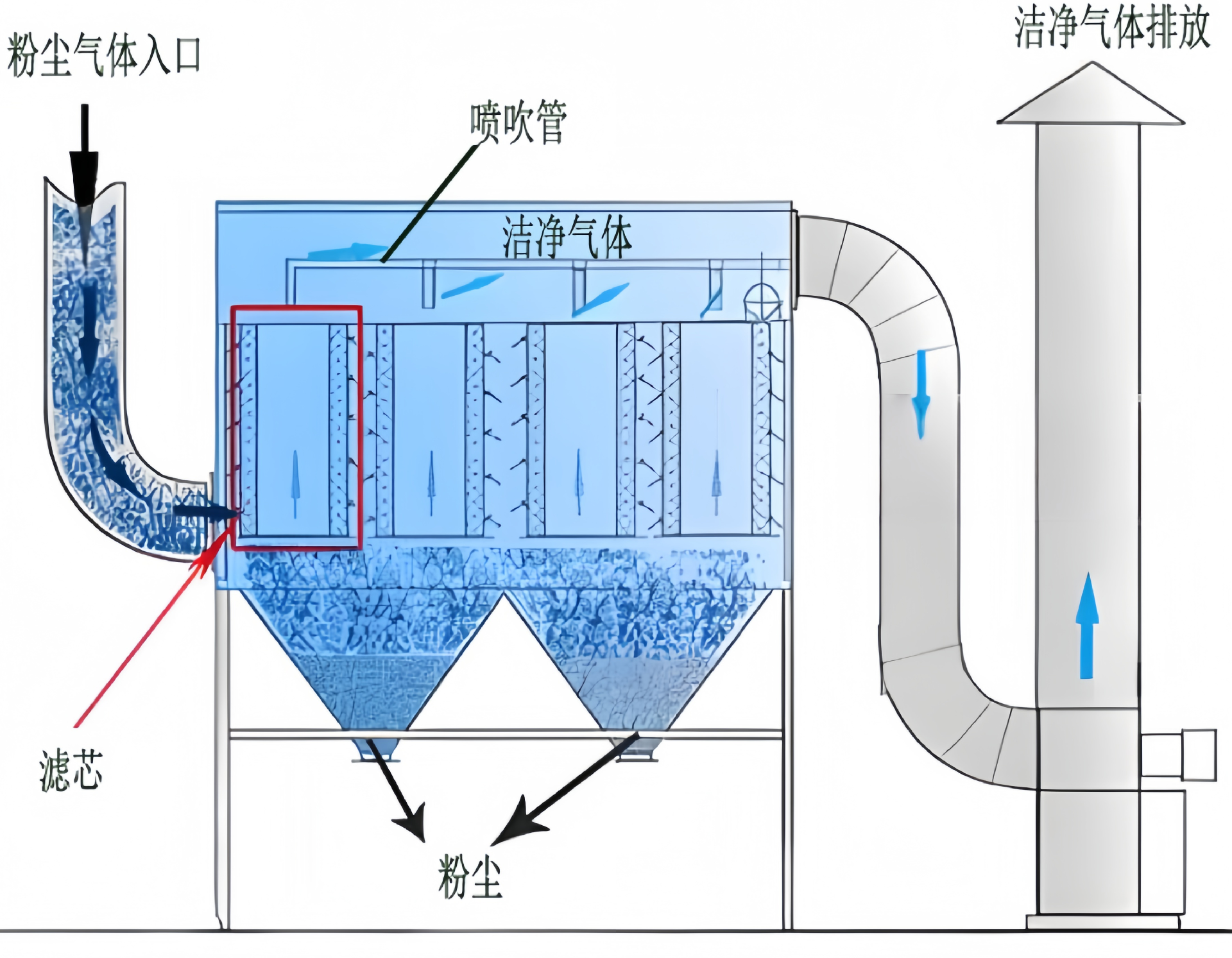
Strong pulse jet cleaning strength and high efficiency: The cleaning cycle and pressure can be accurately adjusted according to different dust types to avoid filter cartridge blockage. It can effectively reduce adhesion residue especially for slightly sticky coating dust.
High system intelligence: It can be linked with the enterprise's existing production monitoring system to realize real-time dust concentration monitoring, equipment operation status early warning and automatic start-stop control, adapting to the intelligent manufacturing needs of the automobile industry.
5.2 Process Flow Chart
Dust generation point → Dust collecting hood → Dust removal pipeline → Manual air valve → Pulse jet cartridge dust collector → Induced draft fan → High-altitude exhaust funnel → Standard discharge
6. Company Introduction
Zhonghuan Lvzhou Consulting Hotline: 158-5314-5085