
 +86 15853145085
Similar to general chemical production, the pharmaceutical industry, especially synthetic API production, discharges volatile organic compounds (VOCs). Due to the particularity of pharmaceutical manufacturing, pharmaceutical VOCs are usually characterized by large emission volume, relatively low concentration, high toxicity and strong sensitization. Therefore, conventional industrial waste gas treatment technologies are not applicable.
Research shows that human beings can distinguish approximately 4,000 kinds of organic gases by smell, including more than 100 types generated in pharmaceutical production. These substances can irritate human senses and cause nausea. Most pharmaceutical VOCs are highly toxic, flammable and explosive with unstable chemical properties. In addition, chlorinated hydrocarbons contained in some waste gas can severely damage the ozone layer.
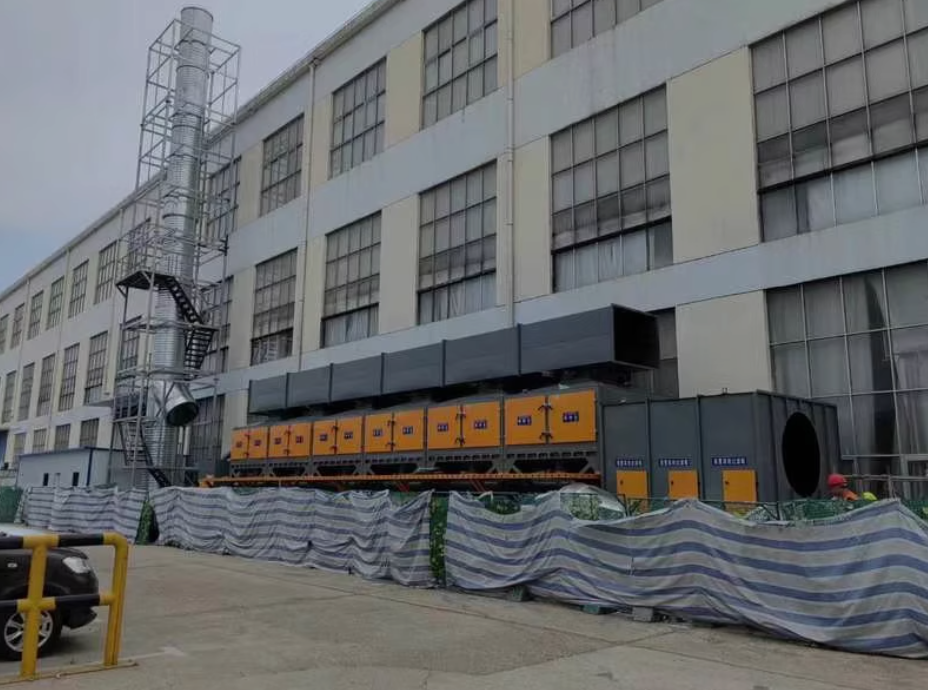
1. Sources and Characteristics of Pharmaceutical VOCs
1.1 Waste Gas Sources
By analyzing production procedures and material physical and chemical properties, pharmaceutical VOCs are mainly generated from the following links: ① Non-condensable gas produced in solvent distillation and rectification; ② Volatile gas generated during chemical reactions; ③ Exhaust gas from material drying processes; ④ Waste gas produced in centrifugal separation; ⑤ Organic gas generated by vacuum pumping during material transportation; ⑥ Breathing exhaust gas during material storage and transfer; ⑦ VOCs discharged from sewage treatment sections.
1.2 Waste Gas Characteristics
Due to complex physical and chemical reactions during pharmaceutical production, pharmaceutical VOCs are flammable, explosive, toxic and volatile. The chemical components include macromolecular substances such as ethyl acetate, ethanol and benzene compounds, as well as small molecular olefins and alkanes.
The selection of pharmaceutical waste gas treatment technology shall comprehensively consider gas characteristics, emission sources, temperature, pressure, chemical composition, concentration and exhaust volume to formulate scientific and reasonable purification solutions.
2. Common Treatment Technologies for Pharmaceutical VOCs
Effective purification of pharmaceutical organic waste gas is a mandatory environmental requirement. Treatment technologies are mainly divided into physical methods including condensation recovery, absorption and adsorption, and chemical reaction methods such as regenerative thermal oxidation and catalytic combustion.
2.1 Condensation Recovery Method
Different substances have different saturated vapor pressures varying with temperature and pressure. Based on this physical property, the condensation method separates gaseous pollutants by adjusting system temperature and pressure. This technology achieves high recovery efficiency for high-boiling solvents. It is suitable for pharmaceutical waste gas with high concentration and high recycling value.
2.2 Adsorption Method
The adsorption process consists of physical adsorption and adsorbent regeneration. Adsorbents are porous solid materials with large specific surface areas. Harmful substances are trapped on the adsorbent surface to purify waste gas. After regeneration, adsorbents can be reused, and organic compounds attached to the surface can be recycled. This method is suitable for low-concentration organic pollutants requiring strict emission standards.
2.3 Absorption Method
Based on the similar compatibility principle, the absorption method selects targeted liquid absorbents. Waste gas passes through the absorption liquid, and pollutants are separated according to different solubility. If the treated gas fails to meet emission standards, activated carbon or carbon fiber adsorption equipment can be added for secondary purification. Common absorbents include surfactant solution, water, petroleum mixture and compound liquid solvent.
2.4 Regenerative Thermal Oxidation (RTO)
Organic compounds are thermally oxidized and decomposed into carbon dioxide and water. A regenerative thermal oxidizer heats waste gas above 750°C to complete oxidation reaction. The generated heat is stored in ceramic regenerators for cyclic reuse. The combustion temperature is controlled between 750°C and 850°C with purification efficiency higher than 95%. Featuring an outstanding heat recovery rate of over 95%, RTO is an energy-saving environmental protection device. It is applicable to large-air-volume, low-concentration and complex pharmaceutical waste gas, especially for exhaust gas containing catalyst poisoning substances.
2.5 Catalytic Combustion Method
Catalytic combustion uses catalysts to oxidize hydrocarbons into carbon dioxide and water. Strict operating requirements must be followed: ① The organic concentration shall be lower than 25% of the lower explosion limit; ② Maintain stable gas concentration, uniform flow rate and appropriate temperature; ③ Particle concentration shall not exceed 10mg/m³; ④ Waste gas must not contain catalyst poisoning substances; ⑤ The maximum inlet temperature shall not exceed 400°C.
Catalyst performance determines purification efficiency. The catalyst can withstand instantaneous high temperature impact of 900°C, while the normal working temperature is kept below 700°C to maintain optimal activity. Under standard working conditions, the service life of the catalyst exceeds 8,500 working hours, and the regenerator service life is more than 24,000 hours. High-temperature flue gas heat can be recycled for energy conservation. Catalytic combustion is suitable for high-concentration, complex and flammable pharmaceutical organic waste gas.
3. Conclusion
Pharmaceutical VOCs are toxic, harmful to human health and likely to cause environmental pollution. In waste gas treatment, enterprises shall adhere to the principles of cyclic utilization and pollution-free disposal. Combining clean production technology and terminal treatment measures, factories shall strengthen pollution control from the source, production process and final discharging stage to achieve near-zero emission.
The selection of treatment technology shall comprehensively evaluate pollutant composition, concentration, temperature, flow rate, particle content, physical and chemical properties and recycling potential. Resource recovery and heat circulation are recommended to improve economic benefits. If a single treatment method cannot meet emission standards, combined multi-process technologies can be adopted to enhance purification performance.