 +86 15853145085

 全国服务热线
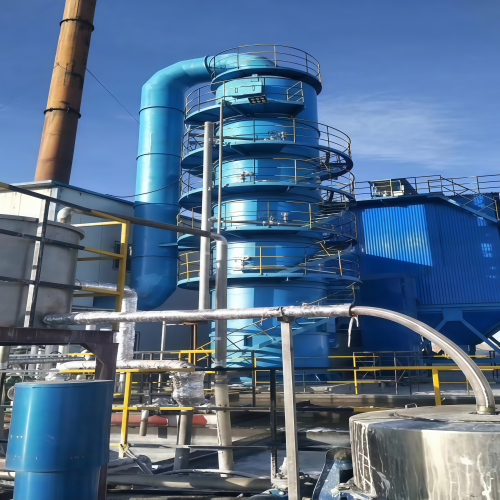
General introduction: A wet desulfurization tower is specialized equipment for removing sulfides from industrial waste gas. Solvent contacts flue gas in counter-current to absorb harmful substances, and the regenerated solvent can be recycled.
Working Principle
Limestone-gypsum desulfurization process: Limestone is used as absorbent to chemically react with sulfur dioxide. The reaction includes absorption, neutralization, oxidation and crystallization, eventually forming recyclable gypsum.
Absorption stage: Sulfur dioxide dissolves in water to form sulfurous acid.
Neutralization stage: Calcium carbonate reacts with hydrogen ions to generate calcium sulfite.
Oxidation stage: Oxidation air converts calcium sulfite into calcium sulfate.
Crystallization stage: Saturated calcium sulfate combines with water molecules to form gypsum crystals.
Basic Structure
Oxidation and crystallization zone: Located at the bottom slurry tank. Equipped with agitators and oxidation air pipes to prevent sedimentation and accelerate oxidation reaction. Emergency spraying devices reduce excessive flue gas temperature.
Absorption zone: The core area for sulfur dioxide removal. Circulating slurry is atomized by nozzles and makes counter-current contact with flue gas. Trays and turbulators optimize gas distribution and improve absorption efficiency.
Mist elimination zone: Installed at the top of the tower. Flat, ridge or tube-type demisters remove moisture and gypsum droplets. Regular flushing is required to avoid blockage.
Performance Characteristics
Advantages: Fast reaction speed and high desulfurization efficiency above 95%. Suitable for large flue gas volume and high sulfide concentration.
Disadvantages: High initial investment for towers and auxiliary equipment. High operating cost of reagents and power consumption. By-products may cause secondary pollution.
Application Fields
Application scope: Widely applied in thermal power, steel and chemical industries. As the most mature desulfurization technology, it is highly reliable for ultra-low emission requirements.