 +86 15853145085

 全国服务热线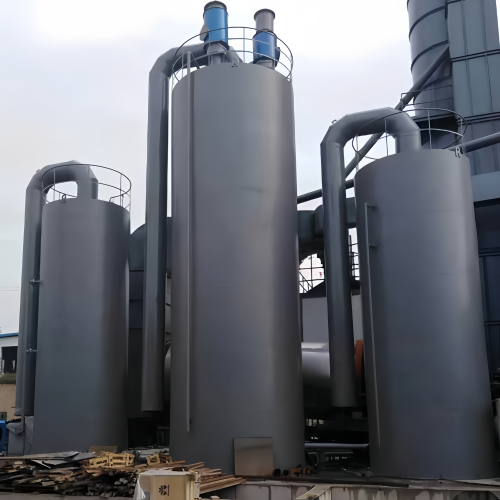
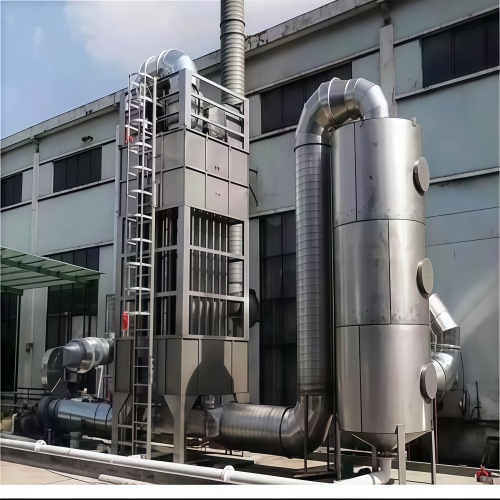
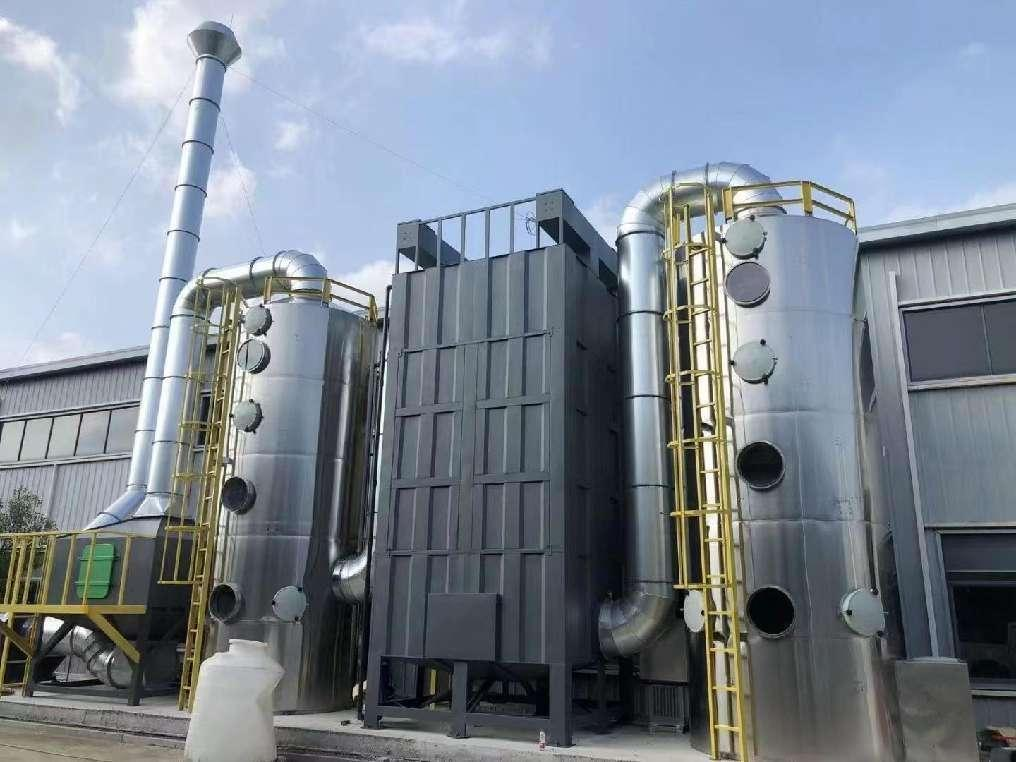
The treatment of asphalt flue gas by spray tower is a common wet purification process. Its core principle is to realize the absorption, washing and cooling of pollutants in asphalt flue gas through sufficient contact between spray liquid and flue gas to achieve purification purposes.
Ⅰ. Composition Characteristics of Asphalt Flue Gas
Asphalt flue gas mainly contains asphalt volatile matter, polycyclic aromatic hydrocarbons (PAHs), carbon black particles and other pollutants. It has the characteristics of high viscosity, complex components and toxic and harmful substances. The treatment process needs to take into account both particle capture and gaseous pollutant absorption.
Ⅱ. Working Process of Spray Tower for Asphalt Flue Gas Treatment
Flue Gas Pretreatment
Asphalt flue gas is usually at high temperature (sometimes above 100℃) and contains viscous dust. It needs to pass through the cooling section (such as heat exchanger and pre-washing section) to reduce temperature and viscosity, so as to prevent blockage of fillers and nozzles in the subsequent spray tower.
Tower Internal Spray Washing
Flue gas enters from the bottom of the spray tower and flows upward. The spray system sprays washing liquid (commonly water, lye or special absorbent) downward from the top to form liquid mist or liquid film. The gas and liquid phases fully contact inside the tower. Particulate matters in asphalt flue gas are captured by liquid droplets and condensed for sedimentation. Gaseous pollutants (such as partial aromatic hydrocarbons and acidic components) are dissolved and absorbed by the washing liquid. Fillers (such as polypropylene Pall rings and Raschig rings) or swirling plates can be installed inside the tower to increase gas-liquid contact area and improve purification efficiency.
Gas-Liquid Separation and Post-Treatment
The purified flue gas passes through the demister (such as baffle demister and wire mesh demister) at the top of the tower to remove entrained liquid droplets before discharge. The pollutant-containing washing liquid at the bottom of the tower needs to be treated by sedimentation tank, air flotation machine or biochemical equipment. The treated liquid can be recycled or discharged up to standard to avoid secondary pollution.
Ⅲ. Key Notes
Selection of Washing Liquid
Simple water washing has a good effect on particle capture but limited absorption capacity for gaseous aromatic hydrocarbons. Adding surfactants, lye or special adsorbents can improve the absorption efficiency of organic pollutants and reduce the adhesion of viscous asphalt substances inside the tower.
Anti-Blockage and Anti-Adhesion Measures
Asphalt flue gas has strong viscosity and is easy to block nozzles and fillers. It is necessary to select large-caliber anti-blocking nozzles (such as spiral nozzles); regularly clean and maintain the tower body, fillers and nozzles; control the inlet flue gas temperature to avoid aggravated asphalt adhesion caused by excessive temperature.
Combined Process for Efficiency Improvement
The purification efficiency of a single spray tower for asphalt flue gas is generally 60%~85%. To meet stricter emission standards, combined processes such as spray tower + activated carbon adsorption and spray tower + plasma can be adopted to further remove residual organic pollutants.
Ⅳ. Summary of Advantages and Disadvantages
Advantages | Disadvantages |
|---|---|
Simple equipment structure, low investment and operation cost | Limited absorption efficiency for gaseous organic pollutants |
Convenient operation and maintenance, strong adaptability | Washing liquid requires treatment to avoid secondary pollution |
Dual functions of cooling and dust removal | Viscous pollutants easily cause equipment blockage requiring frequent maintenance |
Core Advantages and Disadvantages
Ⅰ. Advantages
Dual Functions of Cooling and Dust Removal
Asphalt flue gas is usually at high temperature. After entering the spray tower, it can be cooled rapidly by contacting with washing liquid. Meanwhile, the activity of viscous carbon black particles in flue gas is greatly reduced to decrease equipment adhesion probability. The particle capture efficiency of liquid droplets can reach 60%~85%, which effectively removes dust impurities in flue gas.
Simple Equipment Structure and Low Cost
The main structure, spray system and demister of the spray tower are mature technologies with low manufacturing and installation difficulty. The initial investment is lower than activated carbon adsorption and plasma equipment. Daily operation only consumes washing liquid and a small amount of electric power with low maintenance threshold.
Strong Adaptability and Flexible Operation
The type of washing liquid (water, lye, special absorbent) and spray amount can be adjusted according to the concentration and temperature of asphalt flue gas. It is applicable to both small-scale asphalt flue gas (such as small asphalt mixing stations) and flue gas pretreatment of large industrial devices.
No Open Flame and No Secondary Dust Risk
As a wet process, purification is completed in the liquid phase, avoiding high-temperature dust spontaneous combustion and secondary dust problems existing in dry processes such as bag dust removal, which ensures high safety.
Ⅱ. Disadvantages
Limited Purification Effect on Gaseous Organic Pollutants
Core pollutants in asphalt flue gas such as polycyclic aromatic hydrocarbons (PAHs) are extremely insoluble in water. The removal rate of such substances is less than 30% by simple water spraying. Even with surfactants or absorbents added, the overall purification effect is far inferior to activated carbon adsorption and catalytic combustion.
Easy Blockage and Adhesion
Due to the high viscosity of asphalt flue gas, improper temperature control or small nozzle caliber will easily cause asphalt adhesion and blockage of nozzles and fillers. Frequent shutdown cleaning is required, increasing maintenance workload and shutdown loss.
Secondary Pollution Risk of Washing Liquid
The washing liquid discharged from the bottom of the tower accumulates a large number of asphalt particles and dissolved organic pollutants. Direct discharge will pollute water and soil. Supporting facilities such as sedimentation tank and air flotation equipment are indispensable to ensure compliance before recycling or discharge, which increases additional treatment costs.
High Humidity of Purified Flue Gas
The flue gas after spray washing carries a large amount of water vapor. Direct discharge is prone to form white smoke in low-temperature environment, affecting visual effect. If connected with subsequent dry treatment processes (such as activated carbon adsorption), high humidity will cause adsorbent failure and reduce the efficiency of subsequent processes.
Working Principle of Spray Tower for Asphalt Flue Gas
The core working principle of asphalt flue gas treatment by spray tower is gas-liquid countercurrent contact washing. Sufficient contact between liquid and flue gas realizes particle capture, gaseous pollutant absorption and flue gas cooling to complete purification. The specific process is divided into three core stages:
1. Pretreatment and Gas Distribution Stage
Asphalt flue gas is characterized by high temperature and high viscosity. It usually undergoes cooling pretreatment (such as heat exchanger and pre-washing section) before entering the spray tower to reduce temperature and viscosity for preventing equipment blockage. The cooled flue gas enters from the bottom of the tower and flows upward evenly through the gas distribution device to prepare for subsequent gas-liquid contact.
2. Gas-Liquid Contact and Pollutant Removal Stage
As the core purification link, the spray system sprays washing liquid (commonly water, lye or special absorbent with surfactant) downward from the top to form fine liquid droplets and liquid film, which makes countercurrent contact with upward flue gas. Carbon black particles and asphalt droplets in flue gas collide, intercept and condense with spray droplets, gradually increase in particle size, and finally settle to the tower bottom with liquid droplets. Fillers (such as polypropylene Pall rings) or swirling plates can be installed to greatly expand gas-liquid contact area and improve particle removal efficiency. Part of soluble gaseous pollutants (such as acidic components) in flue gas are dissolved in washing liquid. For insoluble organics such as polycyclic aromatic hydrocarbons, special absorbents or surfactants can capture pollutants through physical adsorption and chemical complexation. High-temperature flue gas exchanges heat with low-temperature washing liquid to rapidly reduce temperature, further decrease asphalt viscosity and reduce internal adhesion.
3. Gas-Liquid Separation and Post-Treatment Stage
The purified flue gas carrying liquid droplets flows upward. Liquid droplets are intercepted and separated by the top demister (such as baffle demister and wire mesh demister) and flow back to the tower bottom, avoiding visual impact and subsequent equipment corrosion caused by water vapor entrainment. Finally, the purified flue gas is discharged up to standard. The washing liquid enriched with asphalt particles and organic pollutants at the bottom needs supporting facilities such as sedimentation tank and air flotation machine for treatment. The qualified liquid can be recycled or discharged to avoid secondary pollution.
Applicable Scope of Spray Tower for Asphalt Flue Gas
The applicable scope mainly depends on the emission scale, pollutant concentration and combined process requirements of asphalt flue gas, which is divided into the following scenarios:
1. Small and Medium-Sized Asphalt Production and Processing Working Conditions
Such scenarios are characterized by low flue gas emission and medium pollutant concentration. The spray tower can be used as the main treatment process, including flue gas treatment of small asphalt mixing stations and asphalt heating tanks; organic waste gas purification of asphalt coiled material and waterproof coating production lines; temporary flue gas treatment for road maintenance and asphalt pavement repair. Under such working conditions, the advantages of low investment, low operation cost and simple operation can be fully exerted to meet conventional emission standards.
2. Pretreatment Link for Large-Scale Asphalt Working Conditions
For large asphalt refining devices and large-scale asphalt mixing stations, the flue gas is high-temperature, high-viscosity and high-concentration. A single spray tower cannot meet strict emission standards, so it is used as a pretreatment process. Its core functions include rapid cooling to protect subsequent equipment (such as bag dust collector and activated carbon adsorption device) from high-temperature damage; removing most viscous particles to reduce blockage and wear of subsequent equipment and extend service life; preliminarily washing partial soluble gaseous pollutants to reduce the treatment load of subsequent processes. Combined processes such as activated carbon adsorption, catalytic combustion and plasma are usually connected after pretreatment to form a complete treatment system.
3. Regional Working Conditions with Medium Environmental Protection Requirements
The spray tower has high removal efficiency (60%~85%) for particles in asphalt flue gas but limited purification capacity for insoluble gaseous organics such as polycyclic aromatic hydrocarbons. Therefore, it is more suitable for areas with relatively loose emission standards; working conditions with low requirement for white smoke elimination (flue gas reheating device is required for white smoke removal); and emergency treatment facilities to rapidly reduce pollutant concentration.
4. Inapplicable Scenarios
Independent application of spray tower is not recommended for the following working conditions: areas requiring ultra-low emission standards or projects with high removal requirements for toxic organics such as polycyclic aromatic hydrocarbons; working conditions with high concentration of insoluble organic pollutants without subsequent advanced treatment processes; areas with water shortage or strict secondary treatment restrictions for washing liquid (the spray tower consumes a large amount of washing liquid and requires supporting wastewater treatment facilities).