
 +86 15853145085
Entrusting Party: Luzhou Laojiao Co., Ltd.
Design Institution: Zhonghuan Lvzhou (Shandong) Equipment Manufacturing Co., Ltd.
1. Project Overview
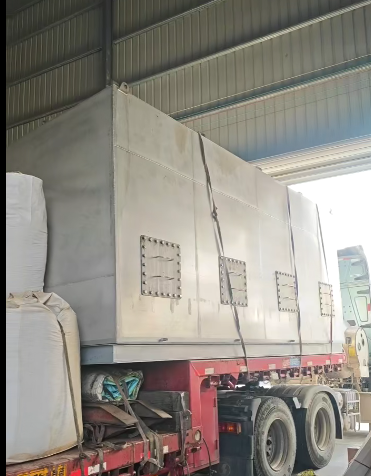
Hydrogen sulfide (H₂S) contained in biogas is a toxic and highly corrosive gas. It will not only endanger human health, corrode pipelines and equipment, but also reduce biogas combustion efficiency and produce polluting gas. Therefore, biogas desulfurization is the key process for biogas purification and utilization. Luzhou Laojiao Co., Ltd. entrusts Zhonghuan Lvzhou (Shandong) Equipment Manufacturing Co., Ltd. to customize a dry desulfurization waste gas treatment design scheme.
2. Classification of Biogas Desulfurization Process
According to the environment and principle of desulfurization reaction, biogas desulfurization processes are mainly divided into three categories: dry desulfurization, wet desulfurization and biological desulfurization.
2.1 Dry Desulfurization
Dry desulfurization is one of the most commonly used and mature biogas desulfurization processes. It is suitable for biogas projects with low hydrogen sulfide concentration (generally less than 5000ppm) and small treatment capacity.
2.1.1 Working Principle
Solid desulfurizer (mostly iron oxide based desulfurizer, activated carbon and zinc oxide are also available) is used to chemically react with hydrogen sulfide. H₂S is converted into solid sulfide or sulfate to remove hydrogen sulfide.
2.1.2 Process Characteristics
Advantages: Simple equipment structure, convenient operation, low investment cost, high desulfurization precision (export H₂S can be reduced below 50ppm), no additional power required.
Disadvantages: The desulfurizer needs regular replacement or regeneration. The operating cost increases with the rise of hydrogen sulfide concentration. It is not suitable for desulfurization of biogas with high concentration and large flow rate.
2.1.3 Application Scenarios
Household biogas digesters, small and medium-sized biogas projects (such as farms and small sewage treatment plants).
2.2 Wet Desulfurization
Wet desulfurization is suitable for biogas projects with high hydrogen sulfide concentration (more than 5000ppm) and large treatment capacity. It is the mainstream process of industrial biogas desulfurization. According to the properties of absorption liquid, it can be divided into chemical absorption method, physical absorption method and physical-chemical absorption method.
2.2.1 Chemical Absorption Method (Most Commonly Used)
Principle: Alkaline absorption liquid (such as sodium carbonate solution, ammonia water, sodium hydroxide solution, or special desulfurization liquid such as tannin extract desulfurization liquid and PDS desulfurization liquid) is used to chemically react with H₂S to dissolve and convert H₂S into salts. The rich absorption liquid can be recycled after oxidation and regeneration, and elemental sulfur can be recovered at the same time.
Typical Processes: Tannin extract desulfurization method, PDS desulfurization method, sodium carbonate-vanadium method.
Characteristics: High desulfurization efficiency (more than 99%), large processing capacity, recyclable absorption liquid and controllable operating cost. However, the equipment is complicated and supporting regeneration system is required.
2.2.2 Physical Absorption Method
Principle: Organic solvents (such as sulfolane and polyethylene glycol dimethyl ether) are used to remove hydrogen sulfide through physical dissolution of H₂S. The absorbent is regenerated by decompression or heating.
Characteristics: Suitable for high-pressure and high-concentration H₂S biogas desulfurization with low energy consumption. But the desulfurization precision is relatively low, and it needs to be combined with other processes for deep desulfurization.
2.2.3 Application Scenarios
Large-scale biogas projects, landfill biogas and industrial biogas (such as by-product biogas of chemical enterprises).
2.3 Biological Desulfurization
Biological desulfurization is a new green, environmental-friendly and low-cost desulfurization technology. It removes hydrogen sulfide based on microbial metabolism and has become a research and application hotspot in recent years.
2.3.1 Working Principle
Specific microorganisms (such as sulfur-oxidizing bacteria, including colorless sulfur bacteria and filamentous sulfur bacteria) oxidize H₂S into elemental sulfur or sulfate under aerobic conditions to realize desulfurization.
2.3.2 Process Type
Biological filter method: Biogas passes through the filter tank filled with microbial carrier, and H₂S is oxidized and decomposed by microorganisms.
Biological trickling filter method: The absorption liquid is circulated and sprayed. Microorganisms adhere to the filler surface with sufficient gas-liquid contact and higher desulfurization efficiency.
Biological washing method: Biogas is mixed and reacted with absorption liquid containing microorganisms in the washing tower. The rich liquid is recycled after regeneration.
2.3.3 Process Characteristics
Advantages: Green and environmental-friendly without secondary pollution; low operating cost without expensive chemical reagents; high desulfurization efficiency (more than 98%); elemental sulfur can be recovered.
Disadvantages: Microorganisms are sensitive to environmental conditions (temperature, pH, dissolved oxygen), and the operating parameters need to be strictly controlled; long start-up period and relatively large floor area.
2.3.4 Application Scenarios
Various scales of biogas projects, especially suitable for projects with high environmental protection requirements (such as municipal sewage treatment plant biogas and farm biogas).
3. Dry Desulfurization Process Flow
The core of dry desulfurization process is the contact reaction between biogas and solid desulfurizer. The process flow is relatively simple. Fixed bed reactor is usually used as the core equipment. According to actual demands, it can be designed as single tower, double tower or multi-tower series/parallel mode. The standard dry desulfurization process flow (taking the most commonly used iron oxide desulfurizer as an example) is as follows:
3.1 Biogas Pretreatment
After being extracted from the gas storage tank or gas production device, biogas firstly enters the pretreatment unit to remove impurities, condensed water and part of particles.
The saturated water vapor in biogas is removed through a steam-water separator or condenser to prevent moisture condensation in the desulfurization tower and avoid desulfurizer agglomeration and pore blockage.
Solid impurities such as dust and sludge are removed through filters (such as wire mesh filter and bag filter) to prevent abrasion or blockage of the packing layer of the desulfurization tower.
The biogas pressure (generally controlled at 5-50kPa) and flow velocity can be adjusted according to requirements to ensure sufficient contact with the desulfurizer.
3.2 Desulfurization Reaction (Core Step)
The pretreated biogas enters the dry desulfurization tower filled with iron oxide desulfurizer. Biogas passes through the desulfurizer bed from bottom to top or top to bottom, and H₂S is removed through chemical reaction.
To ensure desulfurization effect, the residence time of biogas in the desulfurization tower is generally controlled at 10-30 seconds, and the height of the desulfurizer bed is calculated according to the treatment capacity.
In actual engineering, double tower series connection is often adopted. The first tower is the main desulfurization tower, and the second tower is the fine desulfurization tower to ensure the export H₂S concentration meets the standard.
3.3 Desulfurizer Regeneration (Optional)
When the desulfurizer is saturated by adsorption, the desulfurization efficiency will decrease, and regeneration treatment can be carried out (suitable for renewable desulfurizer).
Stop biogas input, and inject air (or oxygen-containing gas) into the desulfurization tower. Oxygen in the air reacts with iron sulfide to restore the activity of the desulfurizer and generate elemental sulfur.
During the regeneration process, temperature (avoid local overheating) and air flow shall be controlled. The regenerated desulfurizer can be put into use again.
3.4 Post-treatment and Transportation of Biogas
The desulfurized biogas passes through the steam-water separator again to remove water generated by the reaction, then enters the pressure stabilizing tank for pressure adjustment, and is finally transported to the user terminal (such as combustion power generation and civil gas).
3.5 Disposal of Waste Desulfurizer
After multiple regenerations, the activity of the desulfurizer decreases significantly and cannot be recovered, and new desulfurizer needs to be replaced.
Waste desulfurizer belongs to general industrial solid waste (if not polluted by other pollutants). It can be disposed by professional institutions, and part of waste desulfurizer with high sulfur content can recover elemental sulfur.