
 +86 15853145085
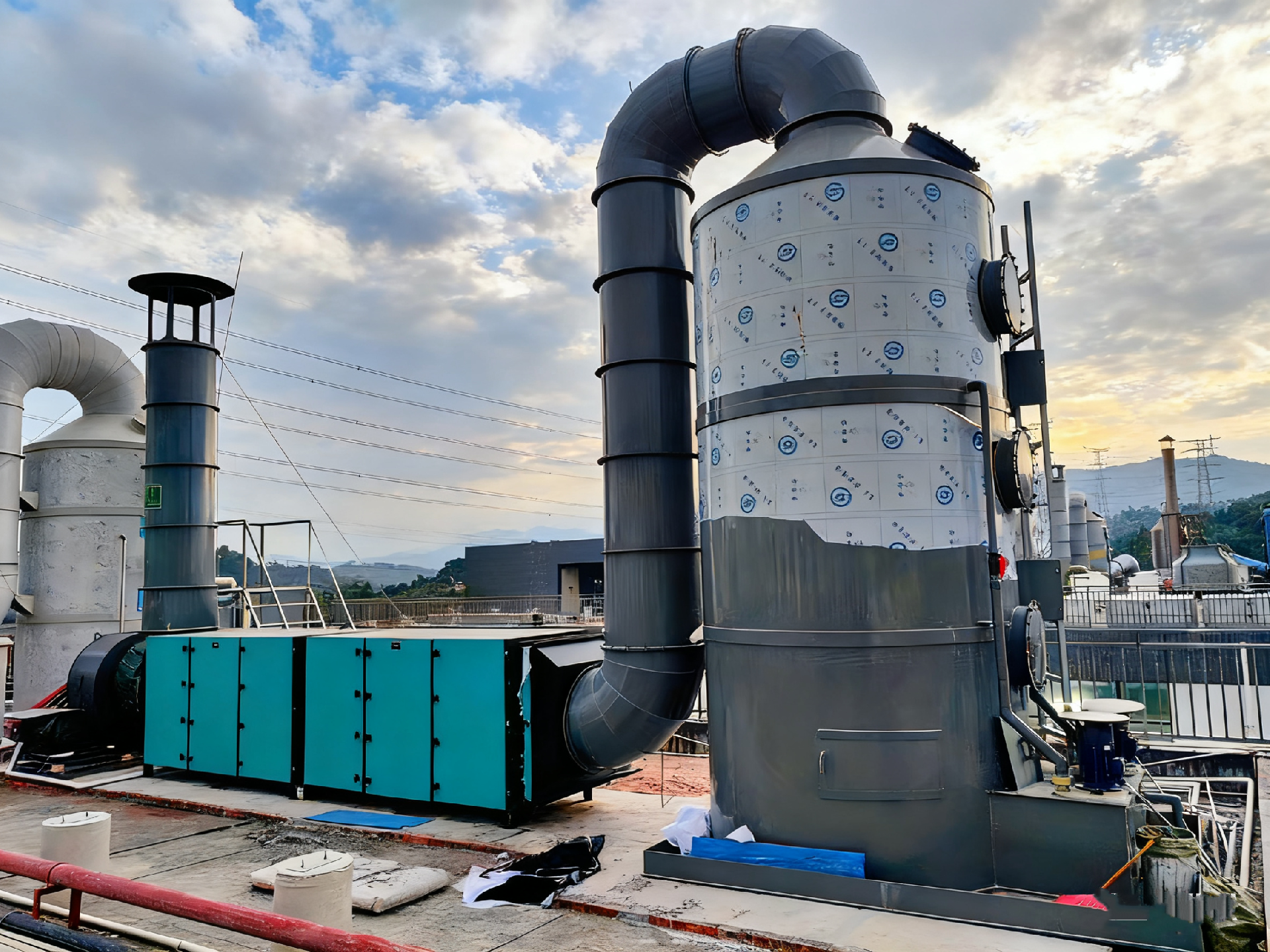
1. Project Overview
This project is a professionally built environmental protection industrial agglomeration area, located in the core industrial belt of Changping Town, with a planned area of 2.3 square kilometers. It mainly gathers environmentally related enterprises such as electroplating, electronic parts processing and surface treatment. Relying on complete environmental protection infrastructure, unified pollution control system and professional operation management team, the base provides integrated services of centralized pollution treatment, resource sharing and compliant discharge for settled enterprises. It effectively promotes the green transformation of regional industries and serves as a benchmark carrier for industrial development. At present, more than 80 enterprises have settled in the base, covering many fields such as precision electroplating and electronic component manufacturing. Various types of industrial waste gas are generated every day and require centralized and efficient treatment.
The settled enterprises are dominated by electroplating and electronic parts surface treatment industries. A large amount of composite acid mist waste gas is generated during pickling, passivation, etching and other processes. The waste gas has complex components, mainly including hydrogen chloride (HCl), sulfuric acid mist (H₂SO₄), nitric acid mist (HNO₃) and other acidic gases. Some enterprise waste gas contains a small amount of volatile organic compounds such as organic amines and benzene series, mixed with metal oxide particles and acid liquid droplets. Such waste gas is highly corrosive and irritating. Without unified and efficient treatment, it will not only corrode public facilities of the base and shorten the service life of production equipment of settled enterprises, but also endanger the health of employees, pollute the surrounding atmospheric environment and restrict the environmental upgrading development of the base. To implement the unified pollution control responsibility of the environmental protection base and realize deep purification of acid mist waste gas, the project management committee specially entrusts Zhonghuan Lvzhou to customize a special acid mist treatment design scheme with the core process of spray tower neutralization and two-stage activated carbon adsorption, which adapts to the waste gas treatment requirements of multiple enterprises and diverse working conditions in the base.
2. Pollutant Analysis and Hazards
2.1 Main Pollutants
Combined with the production characteristics of settled enterprises in the project base, the core pollutants of this project are composite acid mist waste gas including acidic gas, trace VOCs and metal particles. It is mainly derived from common processes such as electroplating and pickling in the base, with the characteristics of multi-source mixing and complex components. It can be divided into three categories. The first type is main acidic gas, including hydrogen chloride (40%-50%), sulfuric acid mist (25%-35%) and nitric acid mist (10%-15%), directly generated by electroplating and pickling processes. The second type is associated pollutants, containing trace organic amines (from electroplating additives), benzene series (from solvent cleaning), and metal oxide particles such as copper, nickel and chromium. The third type is acidic droplets with particle size of 0.1-8 microns, formed by acid liquid volatilization and spray atomization, which are easy to carry heavy metal ions with strong viscosity and high corrosivity.
2.2 Formation and Hazards of Pollutants
Such waste gas is mainly generated by chemical reaction between acid liquid and metal, acid liquid surface volatilization and atomization during spraying and stirring. Its hazards include corrosiveness, irritation and toxicity, which are reflected in three dimensions: production safety, human health and ecological environment.
Human health hazards: Acidic gases such as hydrogen chloride and hydrofluoric acid are highly irritating. Short-term inhalation will burn conjunctiva, nasal mucosa and respiratory mucosa, causing symptoms such as tearing, sore throat and cough. High-concentration inhalation may lead to pulmonary edema. Hydrofluoric acid can also penetrate through skin contact and cause bone damage. Metal ion droplets accumulate in the human body after inhalation, which may damage organs such as liver and kidney and increase the risk of occupational diseases.
Production safety risks: Acidic gas is highly corrosive, which will corrode metal parts of production equipment and precision instruments of circuit board production lines and shorten the service life of equipment. Adhering to factory steel structures, walls and electrical lines, it is easy to cause equipment failure and short circuit, even production interruption. Acid mist droplets will also pollute product surfaces, affect the quality of circuit boards and surface treatment parts, and increase rework rate and production cost.
Ecological environmental impact: Acid waste gas discharged into the atmosphere will combine with water vapor to form acid rain, acidify soil and water bodies, and damage surrounding vegetation ecology. Diffused gases such as hydrogen chloride and sulfuric acid mist will affect the growth of surrounding crops, causing yellow leaves and reduced yield. Droplets containing metal ions settle with rainwater, polluting groundwater and surface water. Heavy metals accumulate through the food chain, endangering the balance of the ecosystem and human health, while triggering environmental complaints and damaging enterprise reputation.
3. Design Basis and Principles
3.1 Design Basis
Environmental Protection Law of the People's Republic of China (Revised in 2015)
Atmospheric Pollution Prevention and Control Law of the People's Republic of China (Revised in 2018)
GB 16297-1996 Comprehensive Emission Standard of Air Pollutants
GBZ 2.1-2019 Occupational Exposure Limits for Hazardous Factors in Workplace Part 1: Chemical Hazardous Factors
GB 3095-2012 Ambient Air Quality Standard
HJ/T 387-2007 Industrial Waste Gas Adsorption and Purification Device
HJ 2001-2010 Technical Specification for Electroplating Wastewater Treatment Engineering (Involving Waste Gas Treatment)
GB 37822-2019 Standard for Non-Organized Emission Control of Volatile Organic Compounds
GB 50016-2014 Code for Fire Protection Design of Buildings (2018 Edition)
GB 50243-2016 Code for Acceptance of Construction Quality of Ventilation and Air Conditioning Engineering
GB 50235-2010 Code for Construction and Acceptance of Industrial Pipeline Engineering
National electrical engineering standards: GB 50054-2011 Code for Design of Low Voltage Power Distribution
GB 50034-2013 Standard for Lighting Design of Buildings
3.2 Design Principles
Accurate compliance principle: The discharged acid mist waste gas after treatment strictly complies with GB 16297-1996 and local environmental protection standards. The emission limits are set as follows: hydrogen chloride ≤10mg/m³, sulfuric acid mist ≤45mg/m³, nitric acid mist ≤20mg/m³, VOCs ≤30mg/m³, particulate matter ≤5mg/m³, meeting the base management requirements of unified standard and centralized compliance.
Dual purification principle: The combined process of spray tower neutralization and two-stage activated carbon adsorption is adopted. The spray tower neutralizes more than 90% of acidic gas and removes large particle droplets. The two-stage activated carbon further adsorbs residual acidic substances and trace VOCs to realize dual purification of neutralization and adsorption and ensure thorough treatment effect.
Anti-corrosion adaptation principle: The spray tower and front pipelines are made of FRPP anti-corrosion materials, and the activated carbon equipment is equipped with anti-corrosion carbon steel shell. The system has 20% air volume redundancy to adapt to production capacity fluctuation of base enterprises. Emergency buffer devices are equipped to deal with sudden waste gas emission.
Economic and efficient principle: Sodium hydroxide agent is selected for the spray tower with low cost and high neutralization efficiency. High iodine value columnar carbon is adopted for activated carbon with large adsorption capacity, and the replacement cycle is extended to 4-6 months. Adopting one-use-one-standby design to reduce operation and maintenance cost and downtime impact.
4. Design Objectives
Through the construction of combined treatment system of spray tower and two-stage activated carbon, this scheme achieves the following core objectives to help the base build an efficient and stable centralized pollution control system:
1. The total purification efficiency of acid mist waste gas is ≥99%. After treatment, hydrogen chloride ≤10mg/m³, sulfuric acid mist ≤45mg/m³, nitric acid mist ≤20mg/m³, VOCs ≤30mg/m³, particulate matter ≤5mg/m³, and pH value ranges from 6 to 9. All indicators are strictly up to standard to ensure stable and compliant exhaust emission.
2. A centralized exhaust funnel with a height of 20 meters is constructed. Multiple sampling platforms, standardized monitoring holes and online monitoring equipment are installed in accordance with specifications. The data is connected to the Dongguan environmental protection monitoring platform in real time to meet the requirements of environmental supervision and base operation management.
3. The acid mist concentration at the exhaust outlets of each enterprise workshop in the base is controlled within the limit of GBZ 2.1-2019, hydrogen chloride ≤7.5mg/m³, hydrofluoric acid ≤2mg/m³. Irritating odor is eliminated to improve the operating environment and reduce occupational disease risks.
4. The system realizes fully automatic operation with functions such as acid mist concentration over-limit alarm, activated carbon saturation early warning and automatic pH adjustment of spray liquid. The annual stable operation time is ≥8700 hours to adapt to the 24-hour continuous production demand of the base.
5. Process Design and Description of Acid Mist Waste Gas Treatment
5.1 Process Selection Basis
Acid mist waste gas has obvious characteristics such as complex components, strong acidity, trace VOCs and fluctuating emission volume. As a centralized environmental protection industrial base, extremely high requirements are put forward for the comprehensiveness, stability and adaptability of the waste gas treatment system. Based on the above conditions, this scheme selects the combined process of pre-treatment defogging, spray tower neutralization and two-stage activated carbon adsorption. This process is maturely applied in centralized pollution control of environmental protection bases with the following core adaptation advantages:
Comprehensive purification dimension: The spray tower efficiently neutralizes acidic gas through alkaline absorption liquid to solve core pollution problems. Two-stage activated carbon further adsorbs residual acidic substances and trace VOCs, avoiding incomplete treatment of single process and realizing collaborative purification of multiple pollutants.
Stable and reliable operation: The spray tower can adapt to acid concentration fluctuation by adjusting pH value. Activated carbon adsorption has stable removal effect on trace pollutants. The combination of the two effectively resists the impact of waste gas emission from base enterprises and ensures that the treatment effect is not affected by working condition changes.
Suitable for centralized pollution control: The system processing air volume covers the existing and reserved production capacity demand of the base. Valves can be switched to realize synchronous waste gas treatment of single or multiple enterprises. Modular equipment design facilitates capacity expansion with the increase of settled enterprises in the later stage.
Perfect environmental protection closed loop: Spray waste liquid is disposed in a standardized manner after sedimentation and heavy metal removal. Waste activated carbon is regenerated by qualified institutions to avoid secondary pollution, which conforms to the base management concept of full-process environmental protection.
5.2 Technological Process
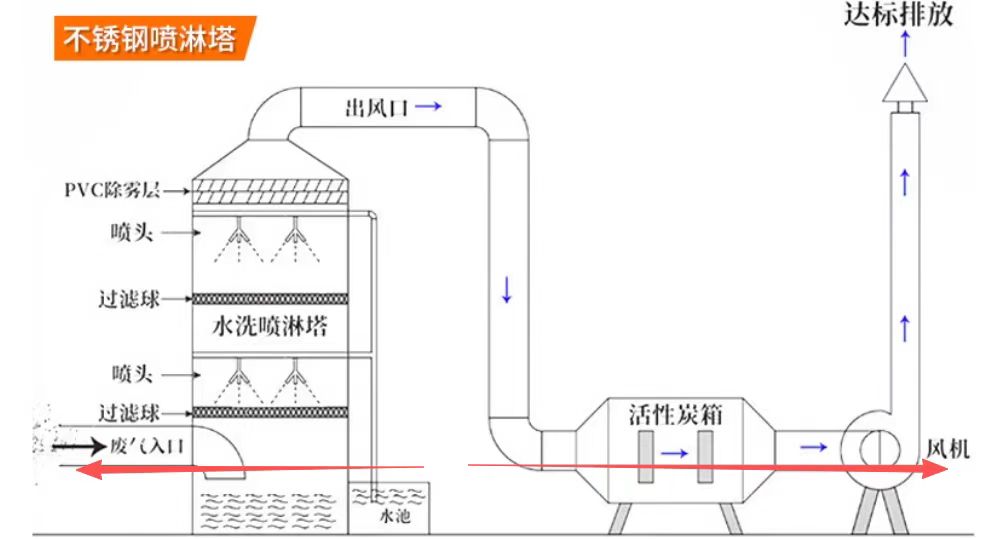
Acid mist waste gas treatment process of spray tower:
Acid mist waste gas from each enterprise → Gas collecting hood in enterprise workshop → Base centralized ventilation pipe network → Pre-treatment defogger (removing large particle droplets) → Spray absorption tower (alkaline liquid neutralization) → Primary activated carbon adsorption tower (adsorbing residual acid gas) → Secondary activated carbon adsorption tower (adsorbing VOCs and trace acid mist) → High-efficiency defogger → Induced draft fan → 20-meter centralized exhaust funnel → Compliant discharge
Supporting system: Spray liquid pH/liquid level automatic control system → Activated carbon saturation monitoring device → Automatic chemical dosing equipment → Waste liquid sedimentation tank → Emergency storage tank → Online monitoring platform
5.3 Detailed Process Description
Centralized and efficient gas collection: The base adopts a two-stage gas collection mode of enterprise-end collection and base-end aggregation. Side suction or closed gas collecting hoods are equipped for pickling and electroplating tanks in each enterprise workshop to ensure the waste gas collection efficiency ≥95%. The waste gas is aggregated into the treatment system through the base uniformly planned FRPP anti-corrosion ventilation pipe network. The wind speed in the pipe network is controlled at 13-16m/s to avoid acid mist condensation deposition and blockage.
Pre-treatment defogging: The waste gas firstly enters the inertial defogger. Through air flow impact and centrifugal separation, acidic droplets and metal particles with particle size ≥1 micron are removed, and the defogging efficiency is ≥92%. It reduces the load of the subsequent spray tower and avoids the deposition of metal ions in the tower affecting the neutralization effect.
Spray tower neutralization: The pre-treated waste gas enters the counter-current spray absorption tower. Step ring packing is filled inside the tower to increase the gas-liquid contact area. The spray system sprays 2%-3% sodium hydroxide solution to fully react with acidic gas (such as HCl+NaOH=NaCl+H₂O), removing more than 90% of core acidic pollutants such as hydrogen chloride and sulfuric acid mist. The pH value inside the tower is monitored in real time, and the chemical concentration is accurately adjusted through automatic dosing device to ensure stable neutralization efficiency.
Two-stage activated carbon adsorption: The waste gas after spray treatment enters the two-stage activated carbon adsorption system. The primary adsorption tower is filled with high iodine value (≥1000mg/g) columnar activated carbon to adsorb residual acidic gas and part of metal ions. The secondary adsorption tower adopts special modified activated carbon to targetedly adsorb trace VOCs and organic amines in the waste gas, ensuring the total purification efficiency reaches more than 99%. The adsorption tower adopts one-use-one-standby design. When the resistance of the operating tower is ≥1800Pa, automatic switching is realized to guarantee continuous operation.
Deep purification and operation maintenance: The adsorbed gas is intercepted residual water mist by high-efficiency wire mesh defogger, and then sent to the 20-meter-high exhaust funnel for discharge by induced draft fan. The waste liquid generated by the spray tower is discharged into the sedimentation tank and disposed as hazardous waste after removing heavy metal sediment. Waste activated carbon is collected in a sealed manner and regenerated or safely disposed by professional institutions. System operation data is uploaded to the base central control room and environmental protection department platform in real time to realize remote monitoring and intelligent operation and maintenance.