
 +86 15853145085

 全国服务热线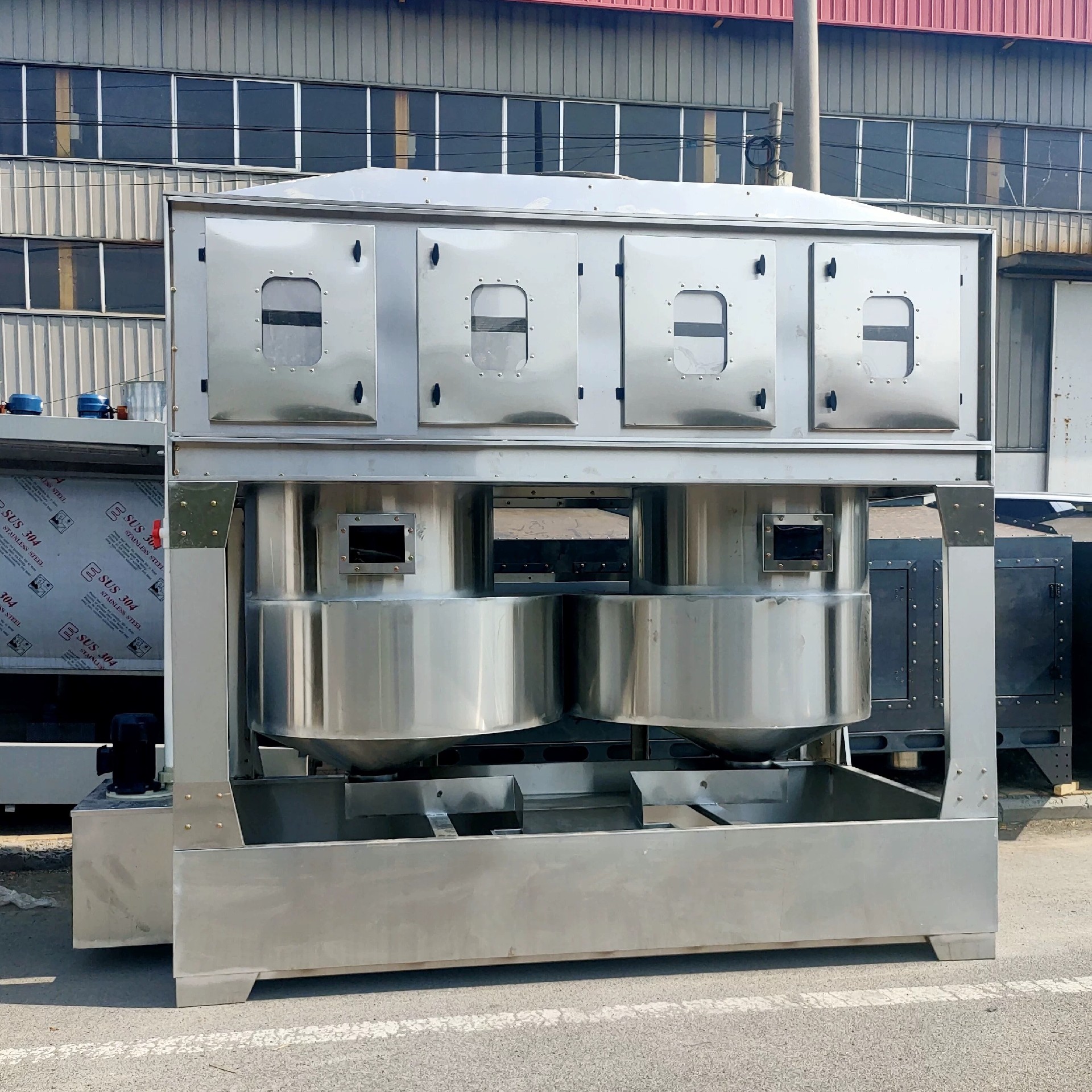
The cyclone hybrid spray tower is an efficient industrial waste gas treatment equipment, which integrates three core technologies: cyclone centrifugal force, spray adsorption and turbulent mixing. The detailed introduction is as follows:
Working Principle
After entering the cyclone tower through the air inlet pipe, industrial waste gas passes through the flow guiding device at the bottom of the tower. The device guides the waste gas to form a high-speed rotating spiral airflow with a velocity of 10-15m/s. The centrifugal force generated by high-speed cyclone throws large-diameter dust particles toward the tower wall, and the particles fall into the circulating water tank at the bottom under gravity to complete preliminary dust removal. At the same time, the top spray system atomizes circulating water or special adsorption liquid into tiny droplets of 5-10μm through high-pressure atomizing nozzles. Driven by cyclone airflow, these atomized droplets form a spray airflow opposite to the rotation direction of waste gas. Intense turbulent mixing is generated in the reaction zone in the middle of the tower, enabling sufficient collision, adsorption and dissolution between waste gas and spray liquid to remove pollutants such as dust and harmful gases.
Structural Characteristics
The tower body adopts a cylindrical structure to reduce airflow resistance and ensure stable cyclone movement. The interior of the tower is divided into four functional zones: air inlet zone, flow guiding zone, reaction zone and demisting zone. The pipe inclination angle of the air inlet zone is controlled at 30-45° to ensure smooth air intake and form initial swirling flow. The guide vane angle in the flow guiding zone is 15-20°, and the cyclone intensity can be adjusted by changing the vane angle. The reaction zone accounts for 60%-70% of the total tower height, providing sufficient space for gas-liquid reaction. A high-efficiency demister is installed in the demisting zone to capture tiny liquid droplets entrained in airflow and avoid secondary pollution. In addition, the circulating water tank at the bottom is equipped with a liquid level control system and chemical dosing device, which can adjust the concentration and pH value of spray liquid in real time according to waste gas treatment requirements.
Technical Advantages
Compared with traditional spray towers, the cyclone hybrid spray tower has 3-5 times larger gas-liquid contact area, and the pollutant removal efficiency is increased by more than 40%. Meanwhile, its unique structural design reduces blockage probability and improves equipment stability and reliability. The water in the tank can be recycled to save water resources.
Application Scope
It is suitable for waste gas and dust purification in various industrial fields, especially for paint mist treatment of spraying waste gas and dust treatment of grinding and polishing processes.
Application Fields of Cyclone Hybrid Spray Tower
Core Conclusion: With the characteristics of high-efficiency gas-liquid mass transfer, centrifugal dust removal and anti-blocking performance, the cyclone hybrid spray tower is widely used for the treatment of dust, paint mist, acid-base waste gas and VOCs precursors in various industries. It is especially suitable for working conditions with high humidity, high viscosity and fluctuating dust concentration.
Core Application Fields and Typical Scenarios
Coating Industry (Core Scenario)
It is applied to waste gas treatment of spraying booths and drying rooms in automobiles, furniture, construction machinery, household appliances and other industries. It mainly removes paint mist (oil-based / water-based paint), VOCs such as benzene series, esters and alcohols, as well as dust. It is applicable for advanced purification after water curtain cabinets and pre-treatment of circulating air systems.
Machining and Metal Surface Treatment
It treats welding and cutting flue gas, grinding and polishing dust (stainless steel, aluminum alloy, castings), and sandblasting derusting dust. It is also used for the treatment of acid-base mist (HCl, H₂SO₄, NaOH, etc.) and cyanide waste gas generated in pickling, phosphating and electroplating production lines.
Chemical and Pharmaceutical Industry
It is used for acid and alkaline waste gas (SO₂, NOₓ, NH₃, H₂S) treatment, organic waste gas absorption and dust recovery in the production of fine chemicals, pesticides, dyes and pharmaceutical intermediates. It also controls odor pollutants (hydrogen sulfide, ammonia) in fermentation workshops.
Building Materials and Metallurgical Industry
It removes dust (silicon dust, calcium carbonate dust) from ceramics, glass, cement and stone processing, and conducts desulfurization and denitrification pretreatment for kiln flue gas. It is also used for flue gas purification and pickling waste gas treatment in iron and steel plants and non-ferrous metal smelting industries.
Electronics and Semiconductor Industry
It treats acid-base mist (HCl, HF, NaOH) and organic waste gas generated during PCB etching, electroplating, developing and stripping processes. It also removes dust and solvent waste gas in semiconductor packaging procedures.
Other Industries
It is used for pretreatment of printing and packaging (ink waste gas, paper dust), rubber and plastic (vulcanization flue gas, dust), food processing (oil fume, dust, odor), woodworking industry (wood powder, adhesive VOCs), and waste incineration or landfill (odor, acidic waste gas).
Selection and Application Key Points
This equipment is preferentially used for the collaborative treatment of medium and high concentration dust and water-soluble / semi-water-soluble waste gas. It is often combined with activated carbon adsorption, catalytic oxidation (CO), RTO and other processes to meet emission standards.
For spraying and grinding working conditions, it is necessary to control the pH value of circulating liquid, salvage paint residue and clean the demister regularly. Corrosion-resistant materials (PP, FRP, 316L stainless steel) shall be adopted for acid-base waste gas conditions.
For high-salt and high-viscosity working conditions such as spraying and electroplating, it is recommended to install automatic slag removal, automatic chemical dosing and circulating liquid cooling systems to extend equipment service life.
Working Principle of Cyclone Hybrid Spray Tower
The core working principle of the cyclone hybrid spray tower is the synergistic effect of cyclone centrifugal dust removal, high-pressure atomization spraying and gas-liquid turbulent hybrid mass transfer. Multiple purification procedures are adopted to efficiently capture and remove dust, paint mist and water-soluble harmful gases. The specific steps are as follows:
Air Intake and Swirl Initiation
Industrial waste gas enters the air inlet zone at the bottom of the tower through an inclined (30-45°) air inlet pipe. Guided by 15-20° guide vanes in the flow guiding zone, the waste gas forms a high-speed spiral upward airflow of 10-15m/s. Centrifugal force throws large-diameter dust and paint mist particles to the tower wall, and the particles slide down into the bottom circulating water tank under gravity to complete preliminary coarse dust removal.
Atomization Spraying and Reverse Airflow Formation
The high-pressure spray system at the top of the tower atomizes circulating water or special adsorption liquid (acid-base neutralization liquid, absorbent) into tiny droplets of 5-10μm through atomizing nozzles. Driven by cyclone airflow, these droplets form reverse spray airflow. A violent turbulent mixing field is formed in the reaction zone (accounting for 60-70% of the total tower height) in the middle of the tower.
Sufficient Gas-Liquid Reaction and Pollutant Removal
Reverse gas and liquid flow collide, shear and mix violently in the reaction zone, and the gas-liquid contact area is increased to 3-5 times that of traditional spray towers. Tiny dust, paint mist and water-soluble harmful gases (HCl, SO₂, NH₃, H₂S) fully contact with liquid droplets and are captured through inertial collision, interception, adsorption, dissolution and neutralization. Pollutants converge with droplets and fall back into the circulating water tank to complete deep purification.
Demisting and Standard Discharge
The purified airflow enters the demisting zone at the top of the tower. The high-efficiency demister captures tiny liquid droplets entrained in the airflow to avoid secondary pollution and fan water carrying. The qualified gas is finally discharged through the air outlet.
Auxiliary Circulating Liquid System
The bottom circulating water tank is equipped with liquid level control, pH monitoring and automatic chemical dosing devices, which can adjust the concentration and pH value of spray liquid in real time to maintain stable treatment efficiency. Paint residue and dust in the tank are salvaged regularly. The circulating liquid can be reused with fresh water and chemicals supplemented as required to save water resources.
Supplementary Explanation
Core Efficiency Enhancement Logic: High-speed swirling flow strengthens centrifugal separation; reverse spraying and turbulent mixing greatly improve gas-liquid mass transfer efficiency. The pollutant removal efficiency is more than 40% higher than that of traditional spray towers.
Influence of Key Parameters: Guide vane angle, inlet airflow velocity, atomization particle size, spray pressure and reaction zone height directly affect cyclone intensity and gas-liquid contact effect, which shall be matched according to actual working conditions.