 +86 15853145085

 全国服务热线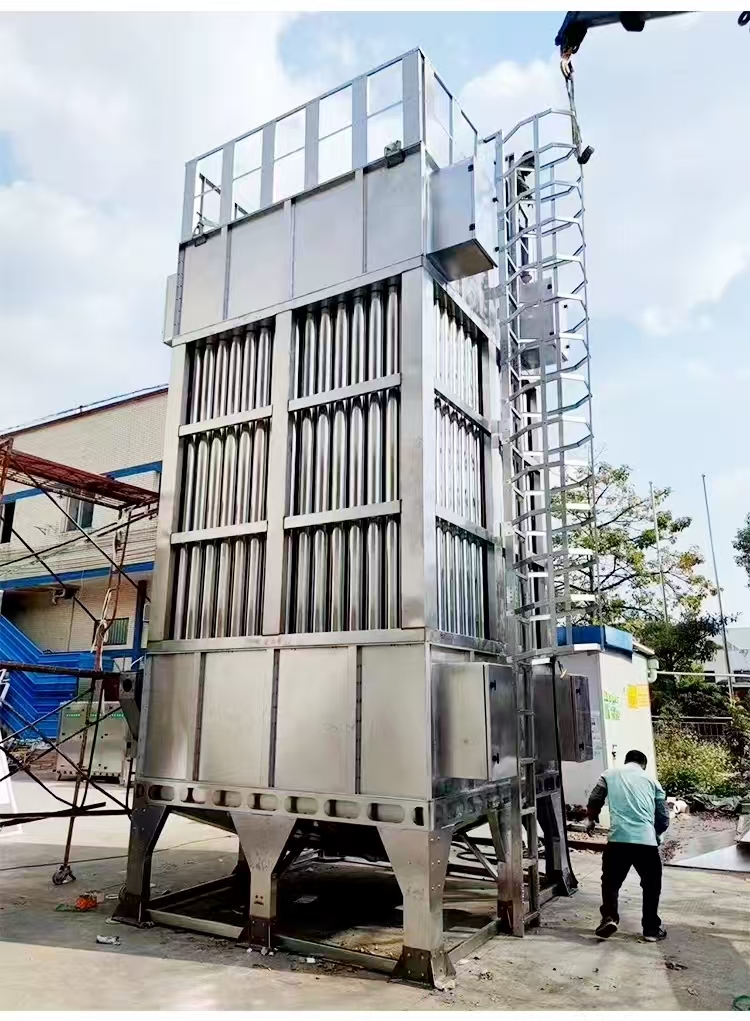
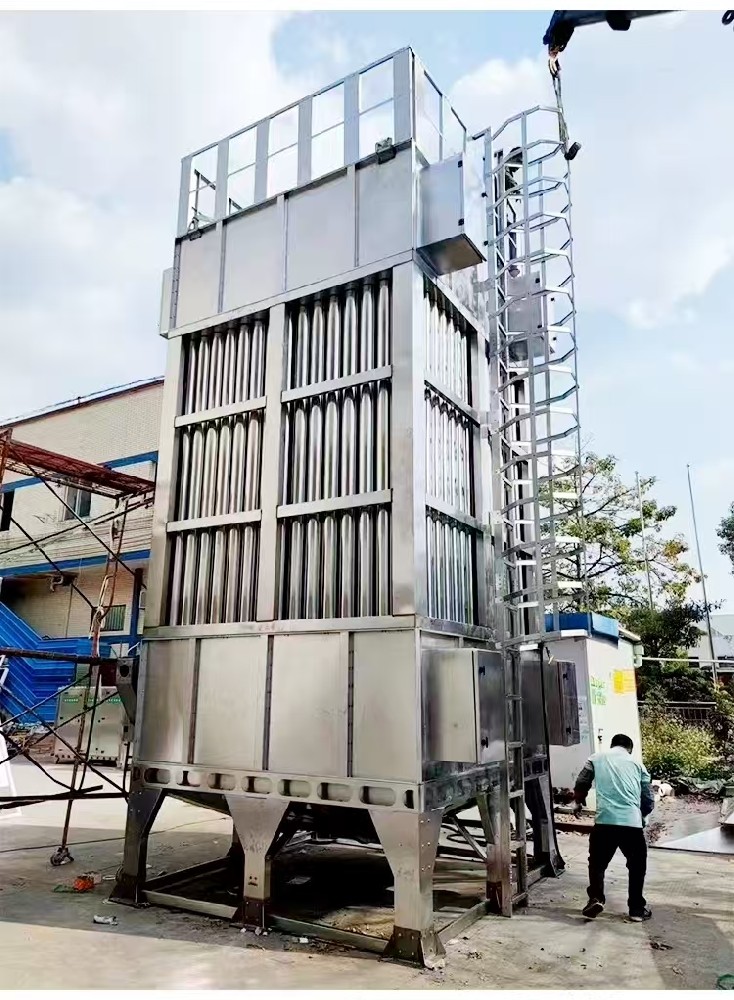
General introduction: A high voltage electrostatic precipitator is an efficient industrial dust removal equipment that uses high-voltage direct current and electrostatic field force to capture solid particles in gas.
Detailed introduction is as follows:
Working Principle
Ionization: High voltage direct current is applied between discharge electrodes and collecting electrodes. A strong electric field is generated near the discharge electrodes to ionize gas molecules into a large number of free electrons and positive ions.
Charging: When dust-laden airflow passes through the strong electric field area, particulate matter captures free electrons and ions to carry negative charges.
Migration and adsorption: Under the action of electric field force, negatively charged dust particles migrate to the positive collecting electrodes and adhere to the electrode surface by collision.
Dust cleaning: After dust accumulates on the collecting electrode, the dust layer falls into the ash hopper by rapping or wet cleaning. The purified gas is discharged from the outlet.
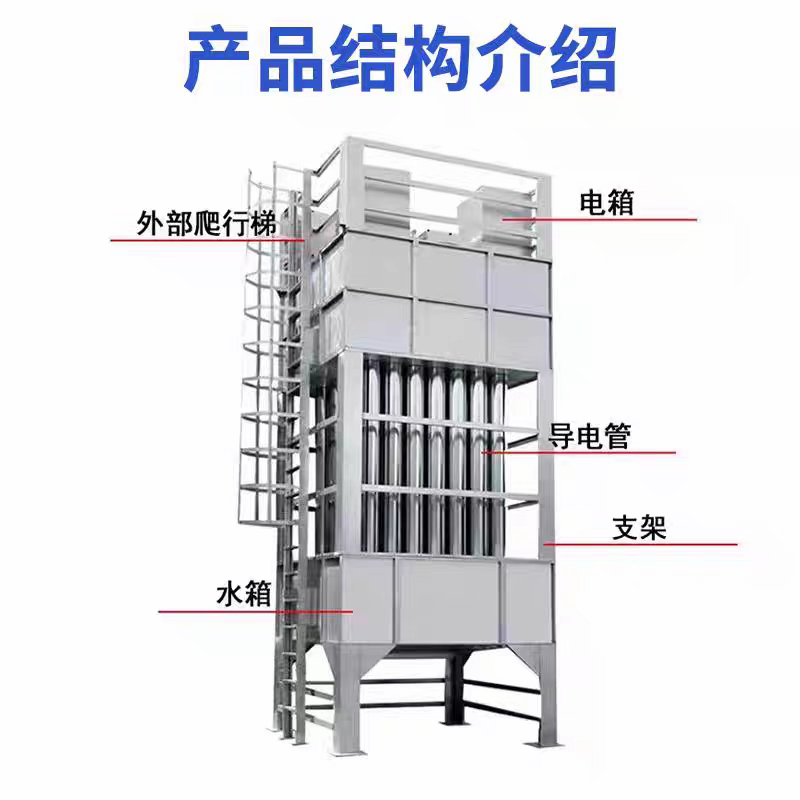
Structural Composition
Discharge electrode system: Consists of corona wires, frames, supporting insulators and rapping mechanisms. Special-shaped wires such as thorn wires and spiral wires are adopted to improve ionization efficiency.
Collecting electrode system: Composed of collecting plates or tubes, supporting structures and rapping devices. Plate-type electrodes are widely used, while tube-type electrodes are commonly used in wet electrostatic precipitators.
High voltage power supply system: Includes high voltage transformers, rectifiers and control cabinets to provide stable high-voltage direct current.
Shell and gas inlet & outlet device: Equipped with gas boxes and flow distribution devices to ensure uniform airflow for efficient dust collection.
Ash hopper and dust discharge device: Collect and discharge captured dust. Heaters are installed to prevent condensation. Star-shaped ash valves and screw conveyors are common discharge devices.
Auxiliary system: Contains heat preservation, heating and maintenance platforms to ensure stable operation and convenient maintenance.
Main Classification
Tube type: Adopt tubular collecting electrodes, mostly used for wet electrostatic precipitators or low-concentration and small-air-volume working conditions.
Plate type: Adopt plate collecting electrodes, divided into horizontal type and vertical type. Horizontal plate precipitators are widely used for large flue gas volume.
Performance Characteristics
Advantages: Extremely high dust removal efficiency of over 99% for fine particles; large gas treatment capacity; low airflow resistance and energy consumption; adaptable to high-temperature flue gas; recyclable valuable dust.
Disadvantages: High initial investment; large equipment volume and floor space; sensitive to dust specific resistance; requiring professional operation and maintenance of high-voltage electric control system.
Application Fields
Widely applied in coal-fired power plants, steel industry, cement industry, non-ferrous metal smelting, chemical industry, waste incineration and papermaking industry for the treatment of industrial dust-containing flue gas.